

Istanbul 2, Turkey – April 2014
With our truck safely parked on the edge of the Bosporus, we were a short walk from Sultanahmet Park and two of the most impressive mosques in the city, but our first stop was the famous Pudding Shop, a small café and restaurant that has hosted travelers for decades. Even Bill Clinton had stopped by in the 60’s and revisited during his presidency. Officially called Lale Restaurant, it got its nickname because overland travelers could not remember the name but only that it was famous for its pudding.
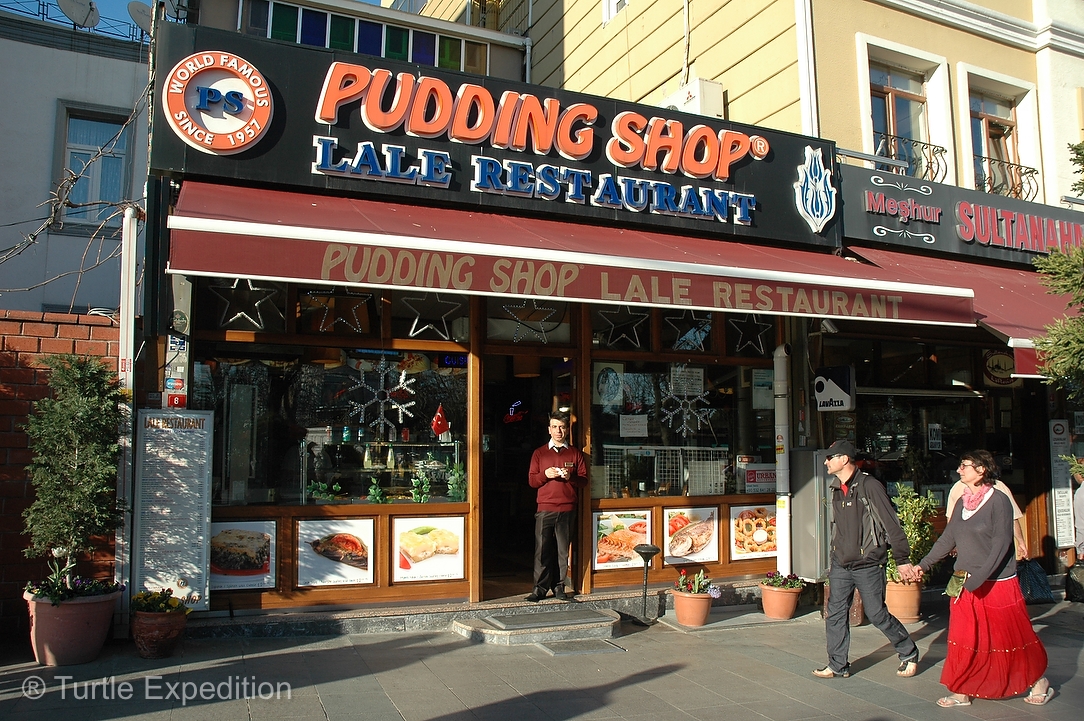
A famous stepping-stone from Europe to Asia, the Pudding Shop has seen a long stream of overland travelers headed east and returning with tales of adventure.
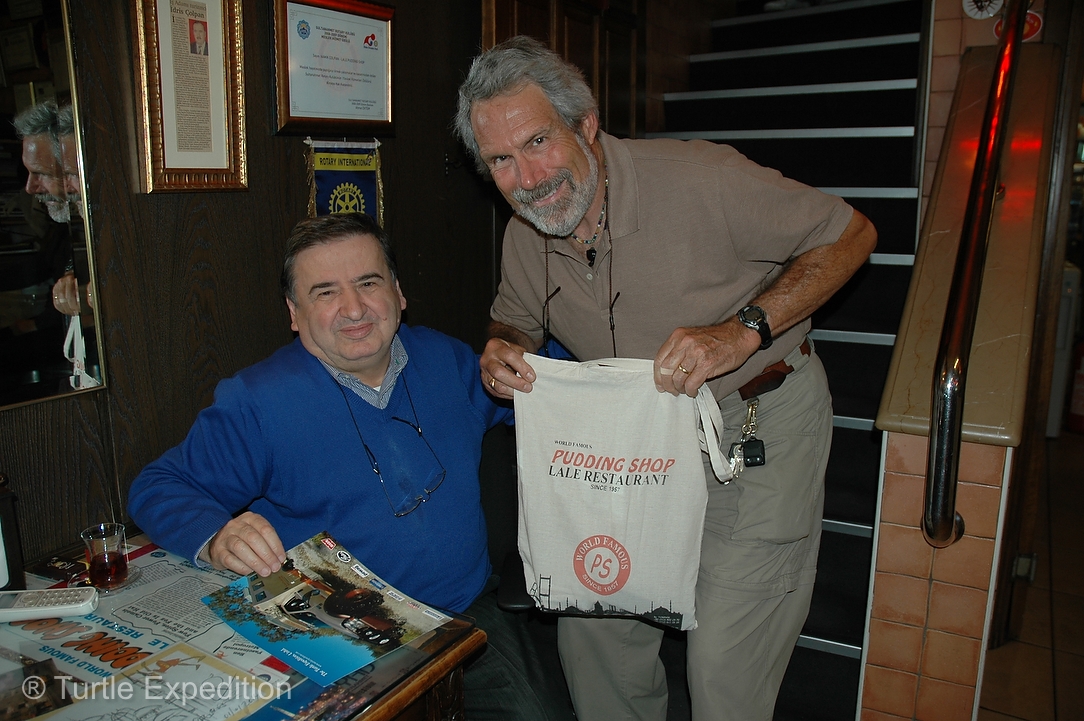
It was here, as I sipped a cup of thick Turkish coffee in 1969, that a blue 109 Land Rover Dormobile parked across the street and popped up the top. At that moment, a seed was planted in a process I now clearly recognize as The Secret. It took a couple of years to germinate and still a second trip to Turkey before that blue Land Rover found me in a used car showroom in San Francisco. Named La Tortuga Azul, (The Blue Turtle), as they say, “The rest is history”. The Turtle Expedition, Unlimited was born. It had been over 40 years since I had strolled the streets of Istanbul. I am happy to report that much has not changed and Mr. Namık Çolpan, the son of one of the founders of the Pudding Shop, welcomed us with customary Turkish warmth.
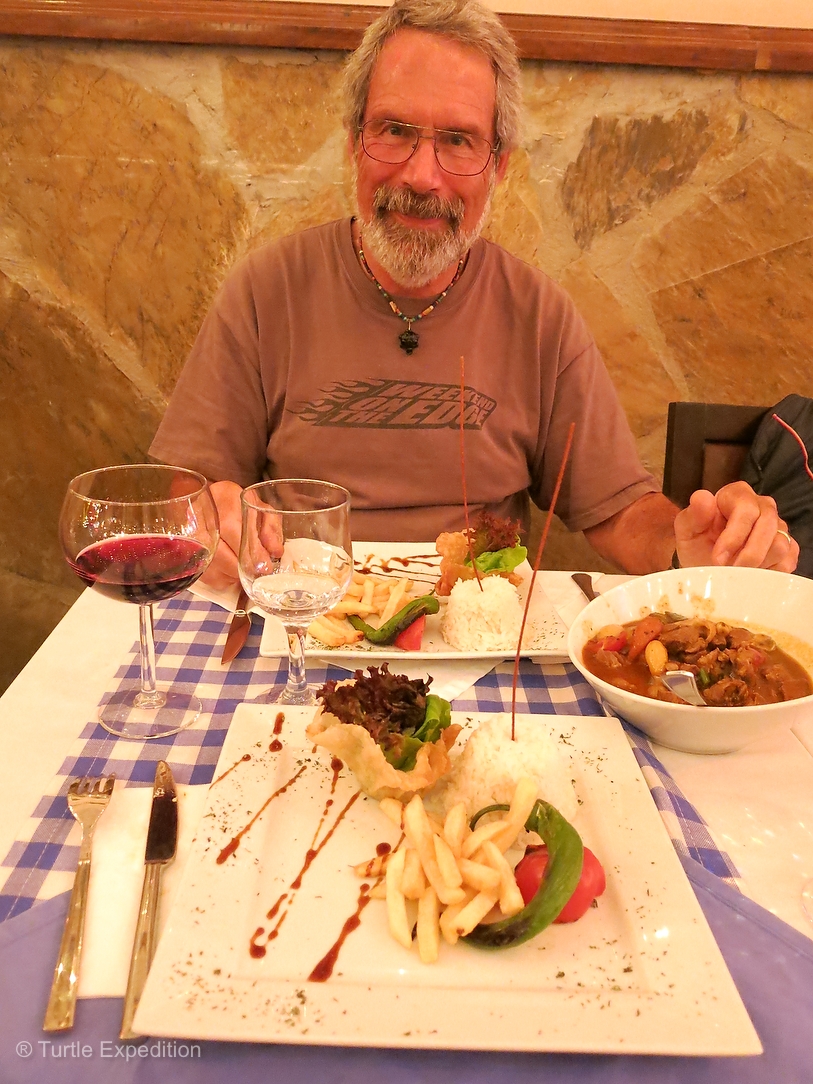
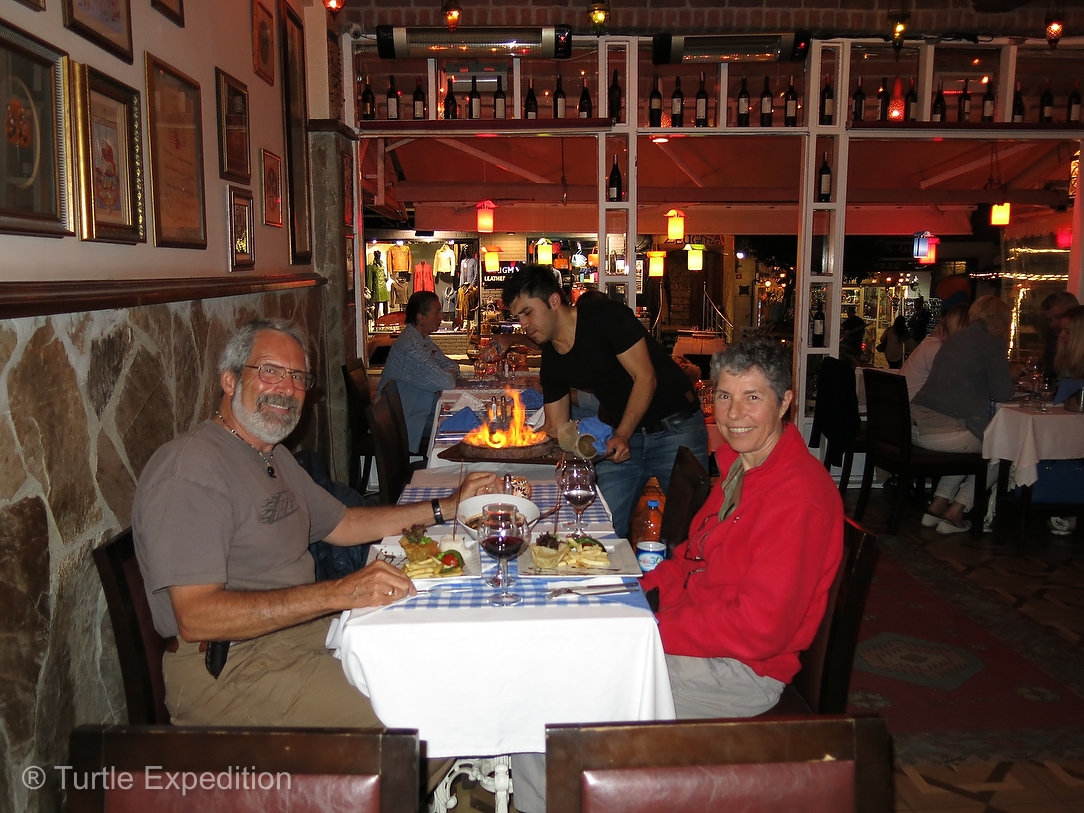
This dinner looked world class and was very delicious!
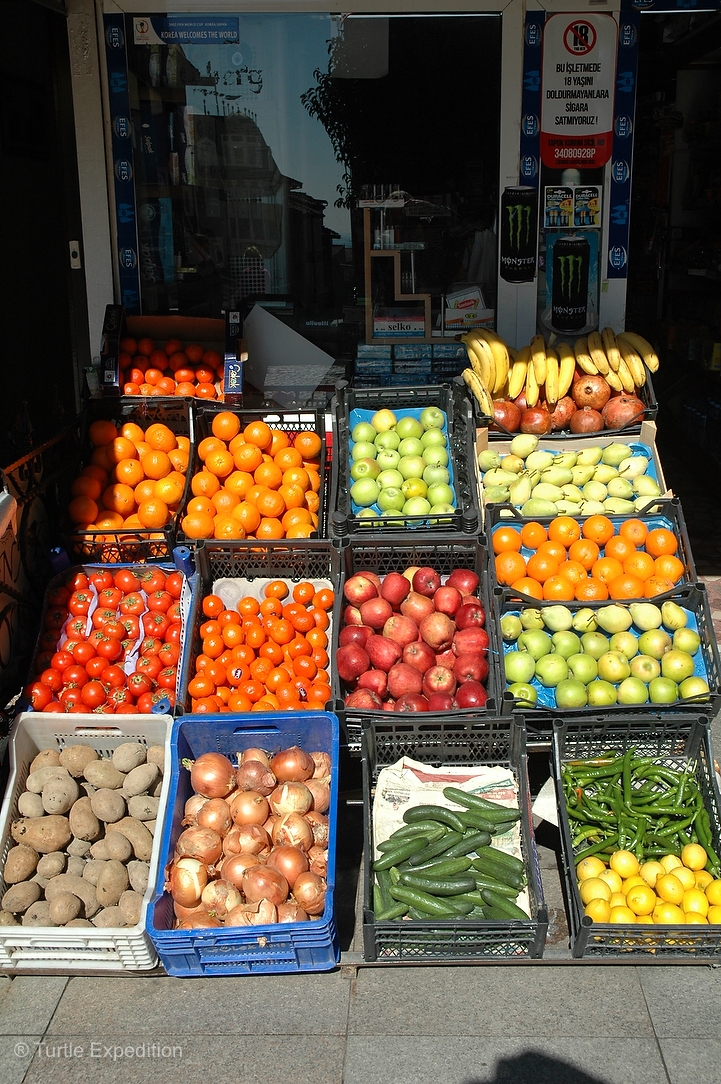
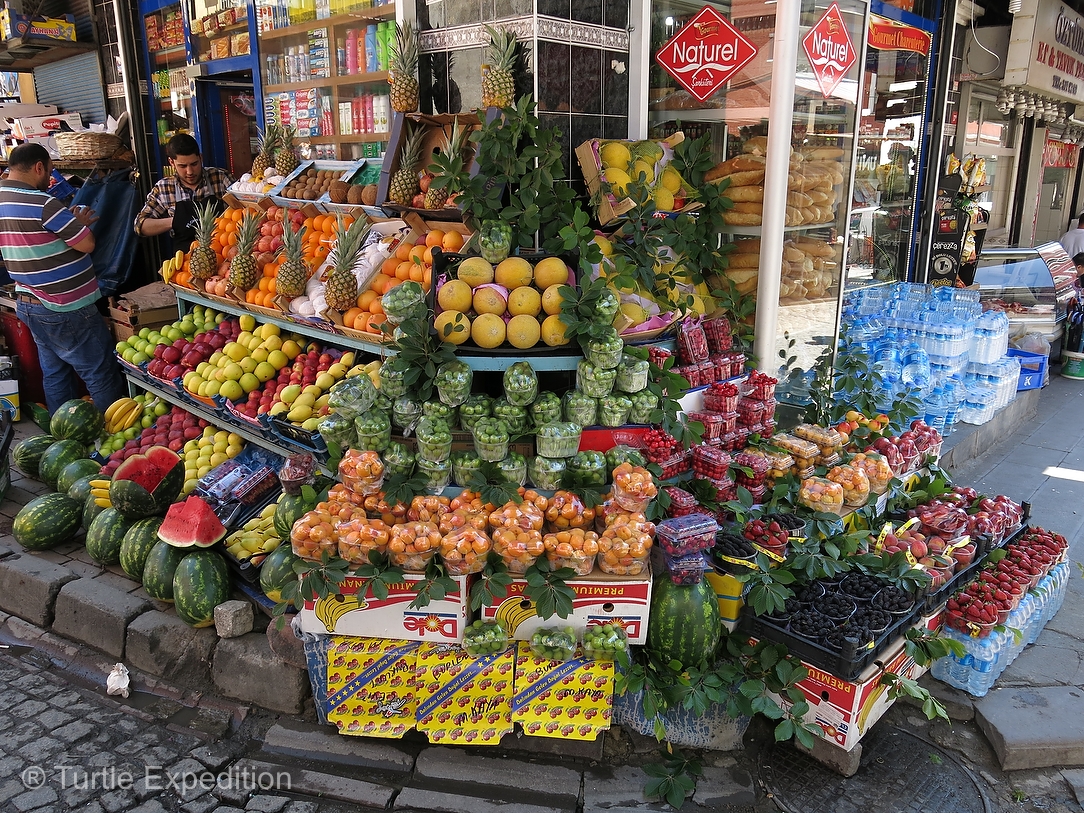
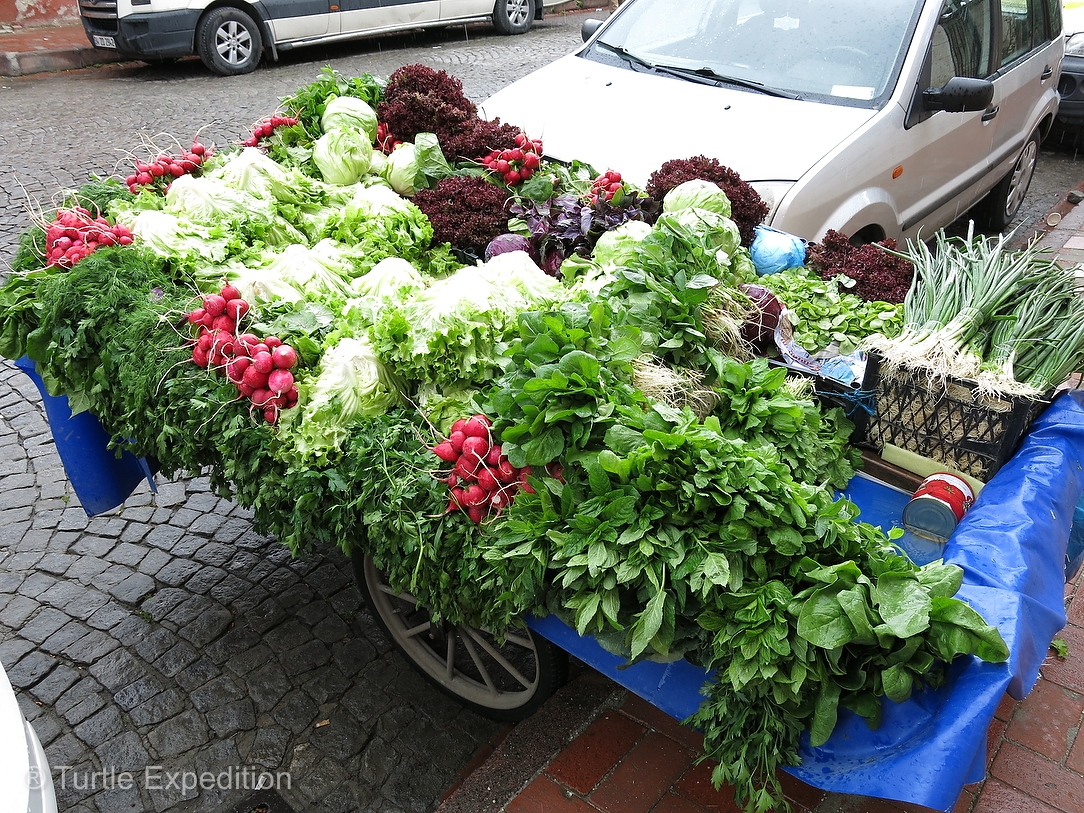
Food was on our mind and shopping for fruit and veggies was easy in the small street stands and little grocery stores. Of course we do most of our own cooking, but sampling a few of the local restaurants is part of travel, and the Turkish have been refining their recipes for a couple of thousand years.
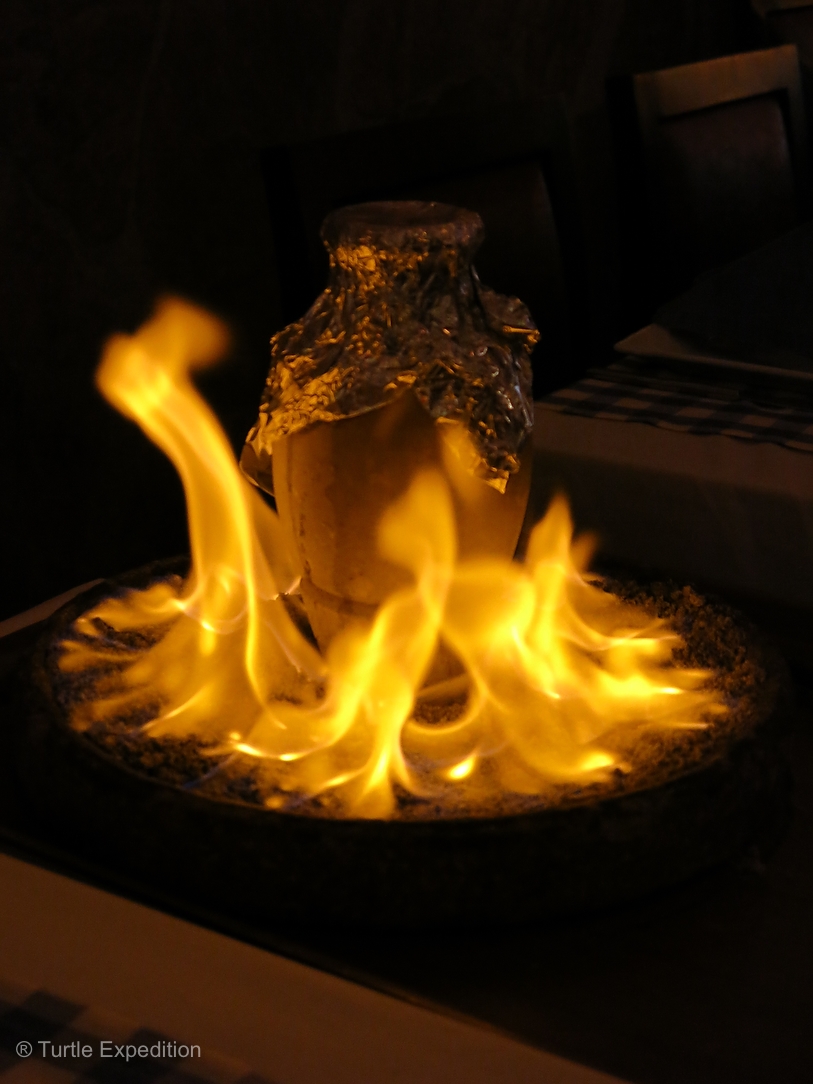
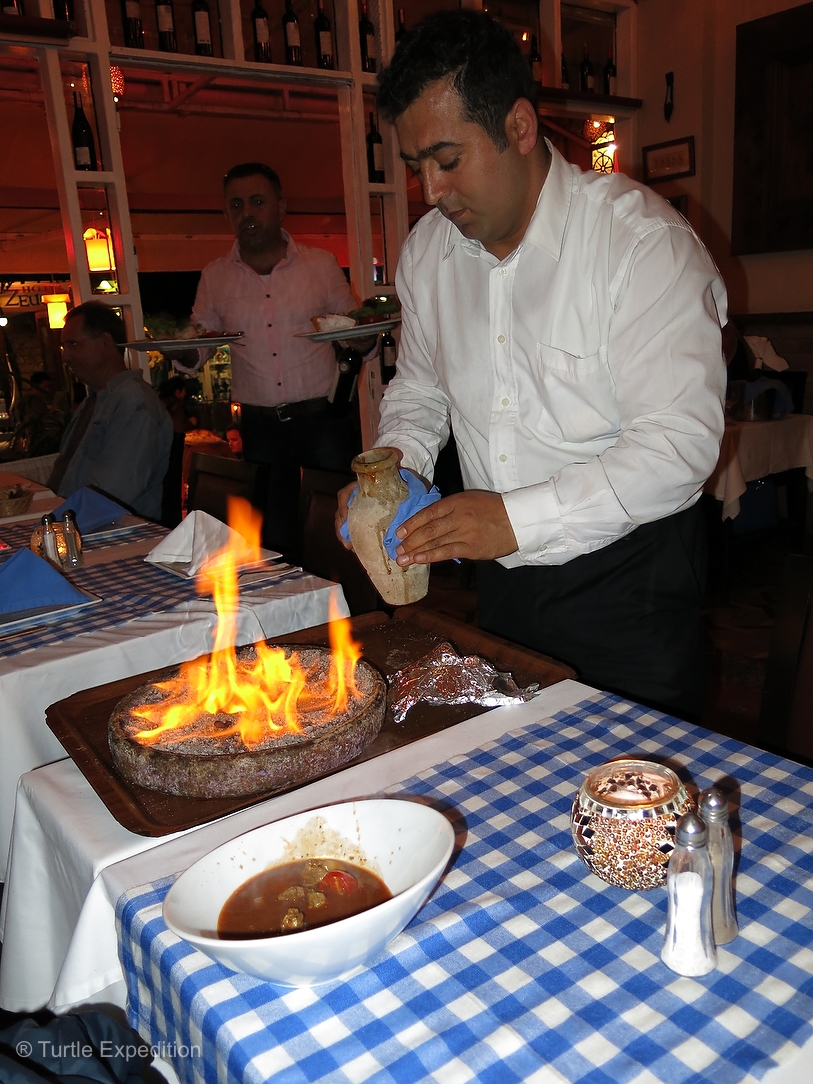
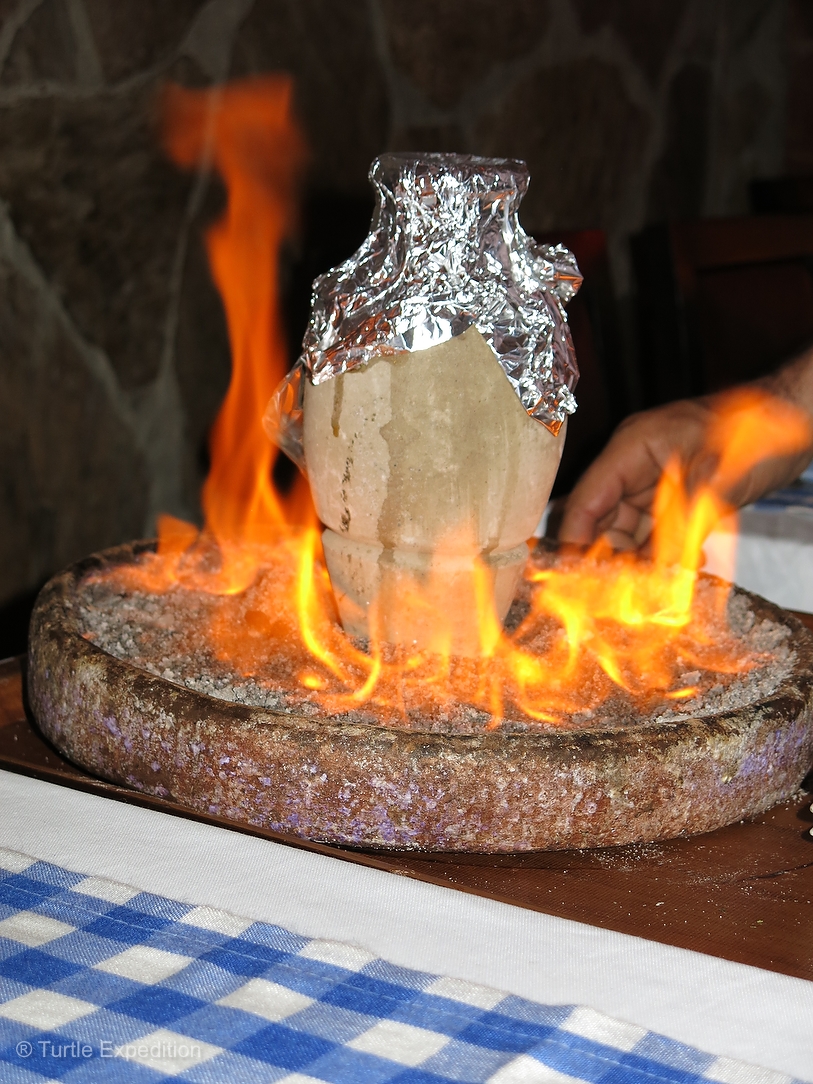
A Shepherd’s Pie prepared at the table.
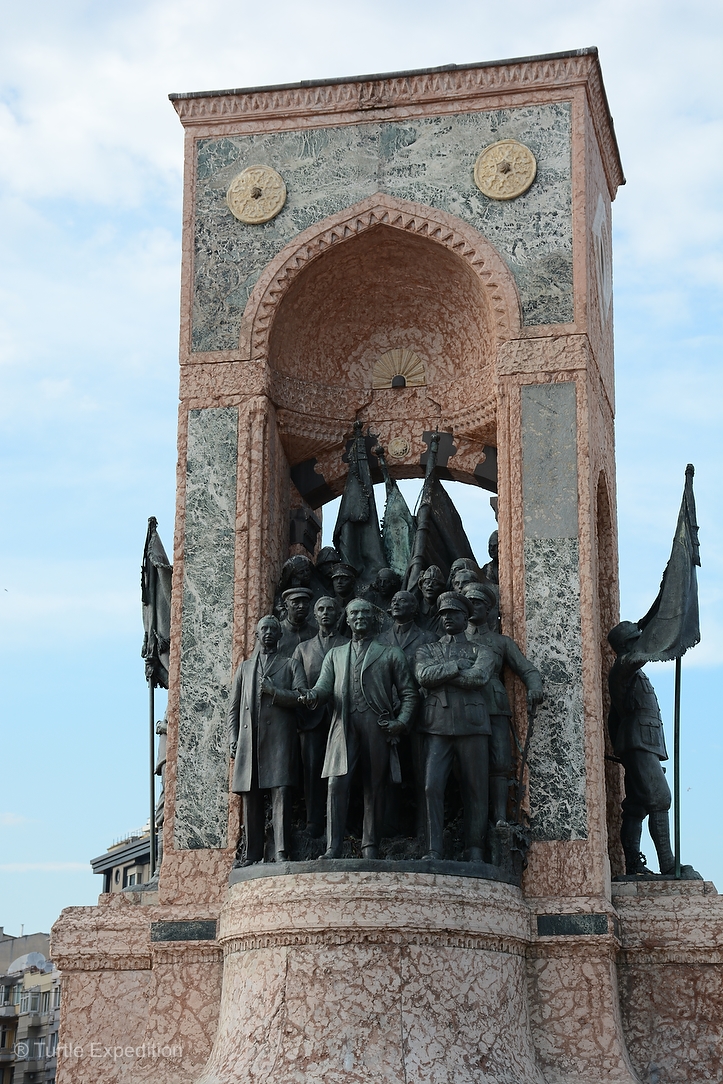
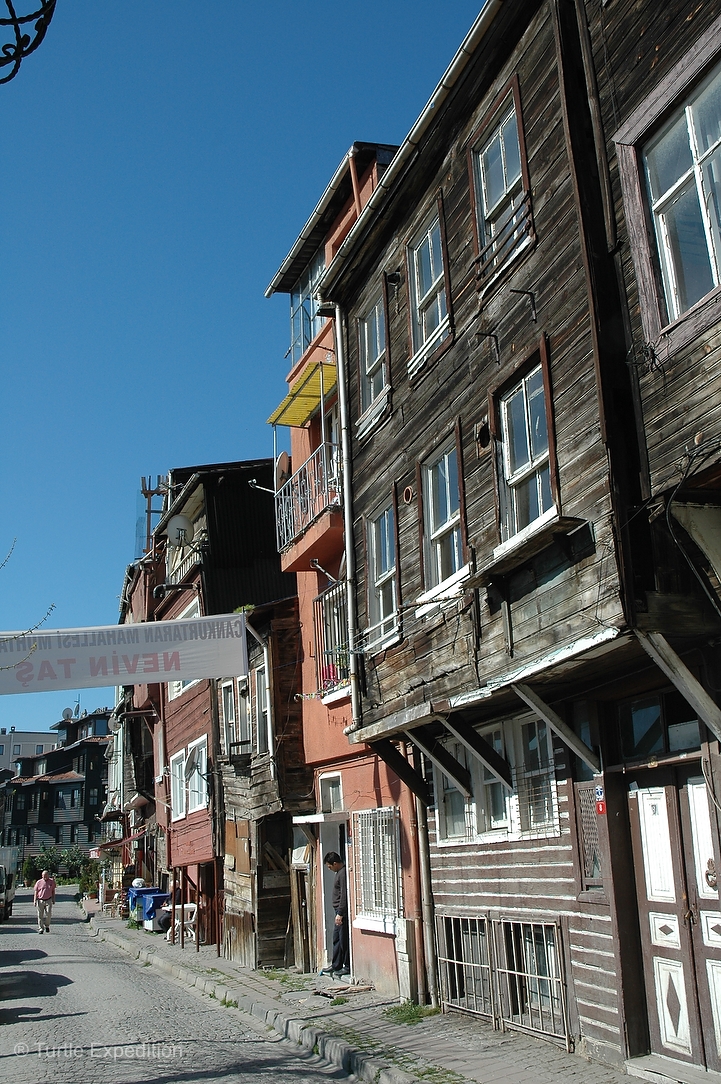
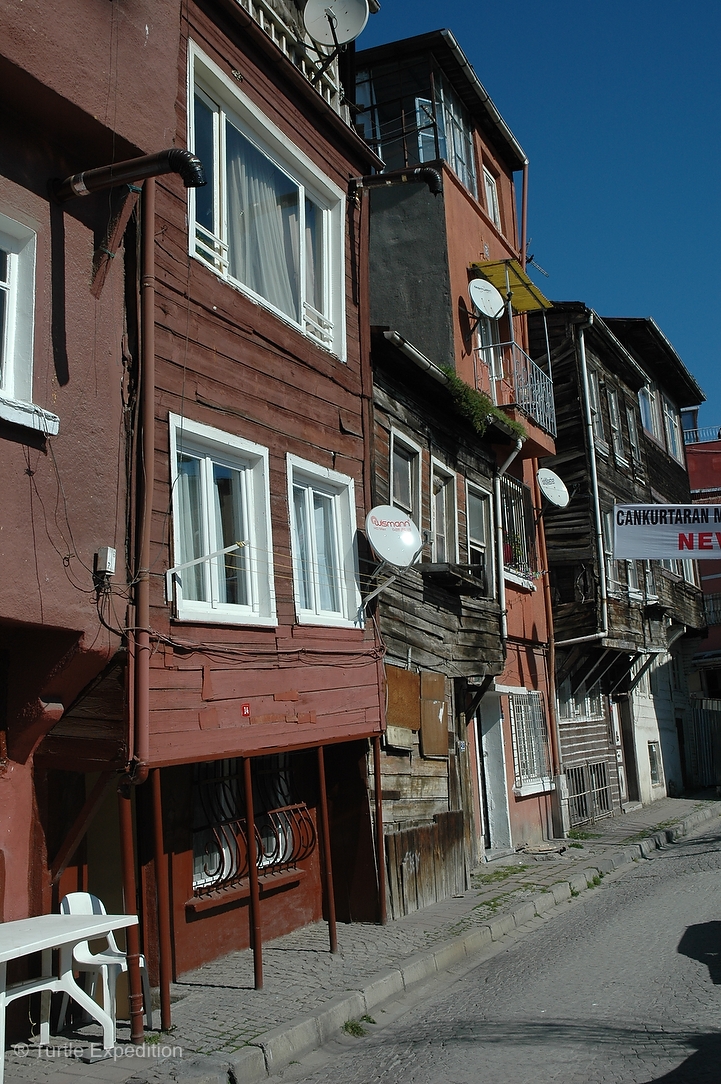
Walking down a few side streets the old wooden buildings showed the age of this historic city. Lonely Planet guidebook in hand, we were able to identity some of the points of interest like the grand Republic Monument. Commissioned by the great reformer, Mustafa Kemal Atatürk to the Italian sculptor Pietro Canonica and unveiled in 1928, it honored the leaders of the struggle for independence and the formation of the Turkish Republic in 1923. Previously, under Shari’a (Islamic religious law) in force during the Ottoman Empire, public monuments were not allowed—they were considered “effigies” (portrayals of beings with an immortal soul) and therefore forbidden as idolatry. Mustafa Kemal Atatürk wanted to make the point that Turkey was now a modern and secular republic with division of state and religion, and introduced many political, economic, and cultural reforms. He officially renamed the city “Istanbul”, (historically it was either Constantinople, Byzantium or Istanbul), and encouraged women to wear western clothing but interestingly enough, forced men to dress like westerners.
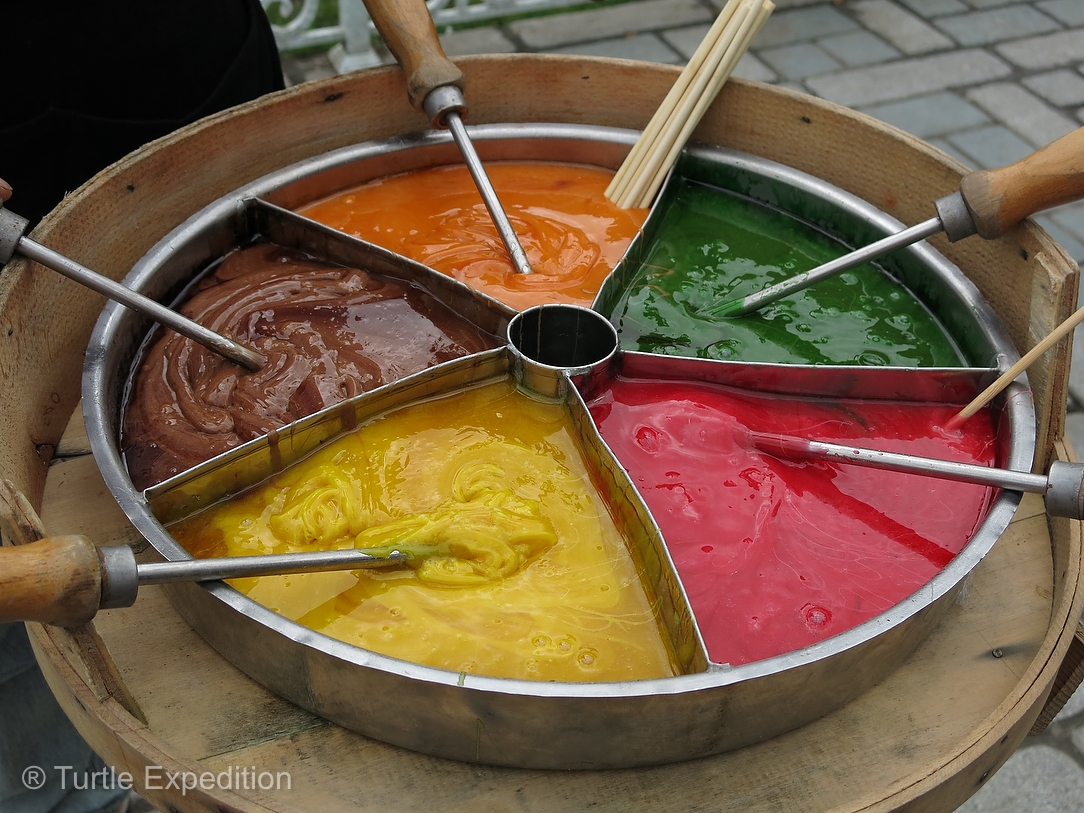
Turkish sweets are very popular
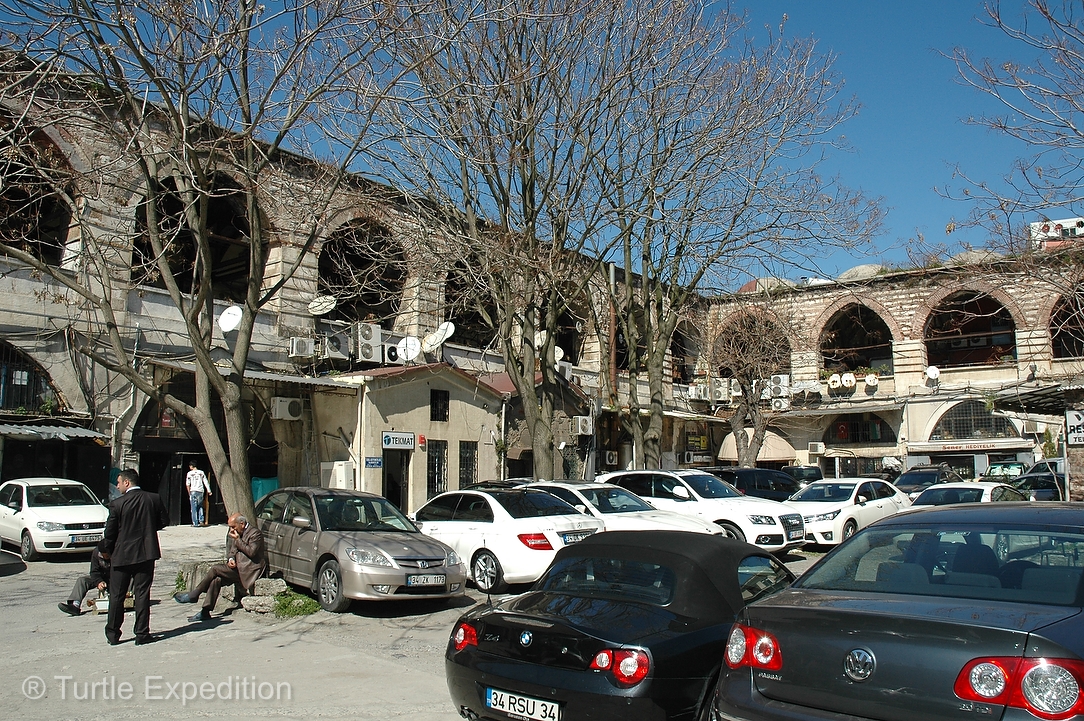
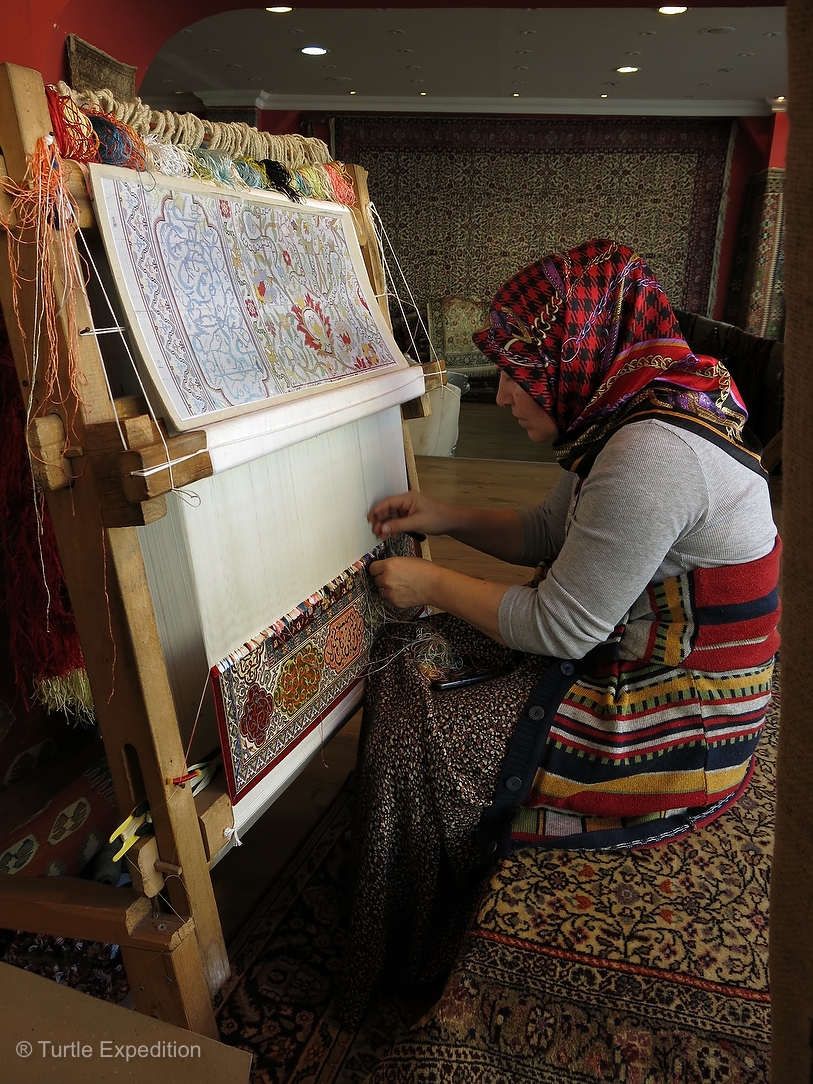
We couldn’t resist poking through the archway into of what appeared to be an old caravanserai where traders along the Silk Road could tend to their animals and trade goods. Now it was a parking lot with various shops. One woman was busy weaving a beautiful carpet. We guessed it could take years to finish, one thread at a time.
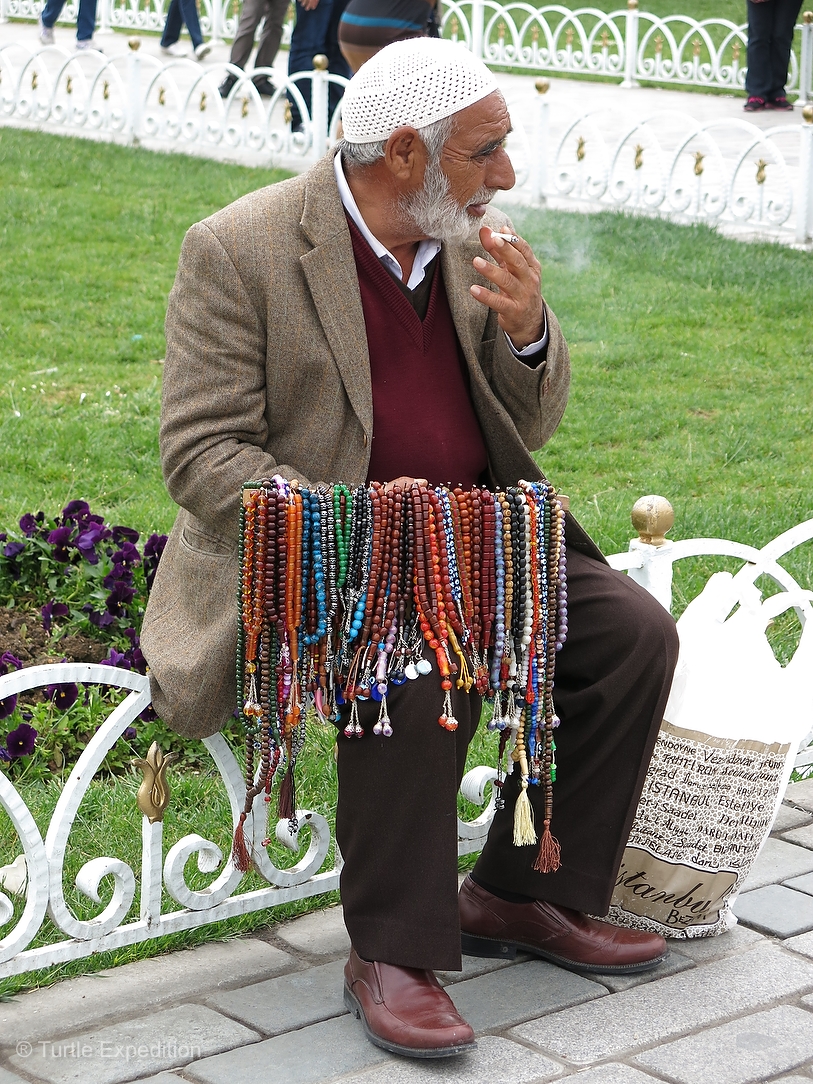
One of many vendors in the Sultanahmet Park.
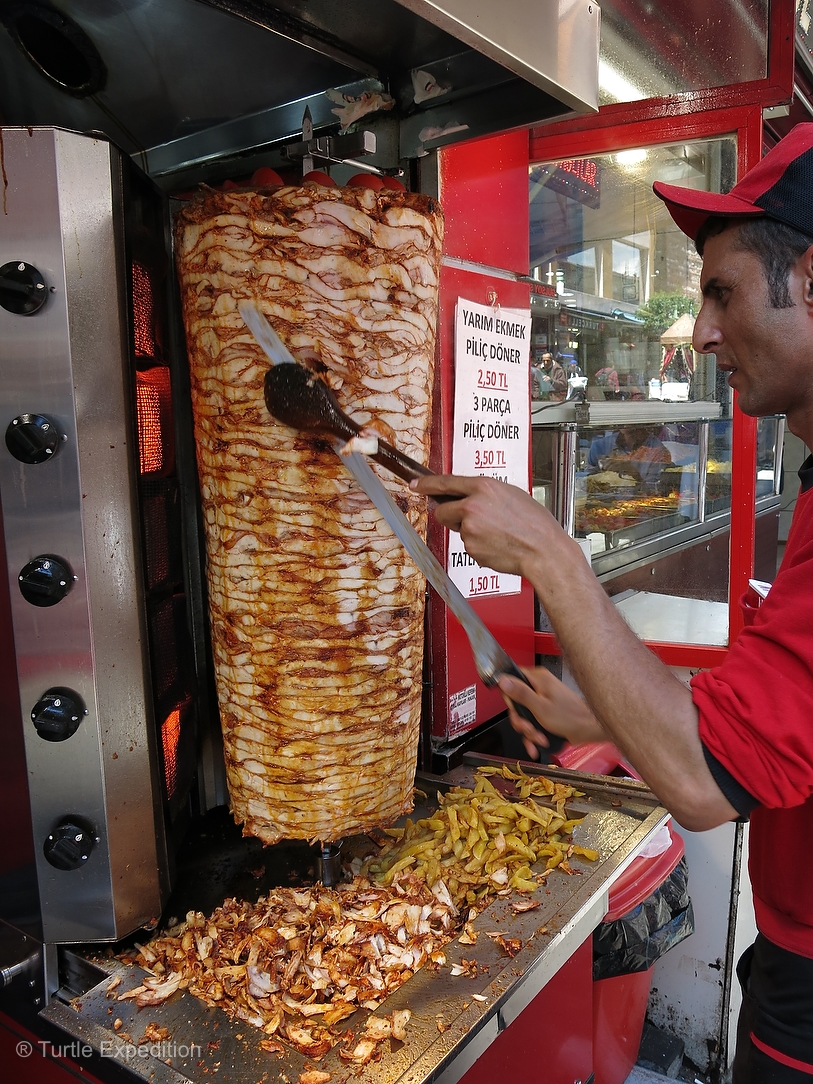
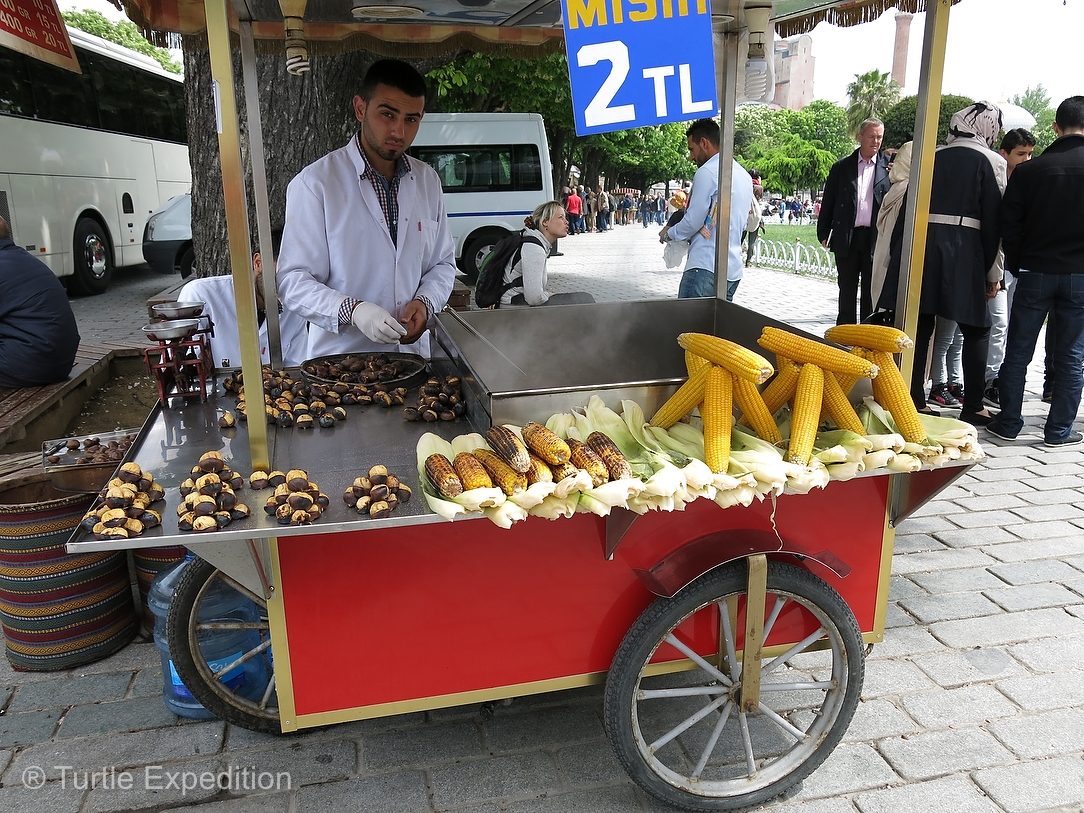
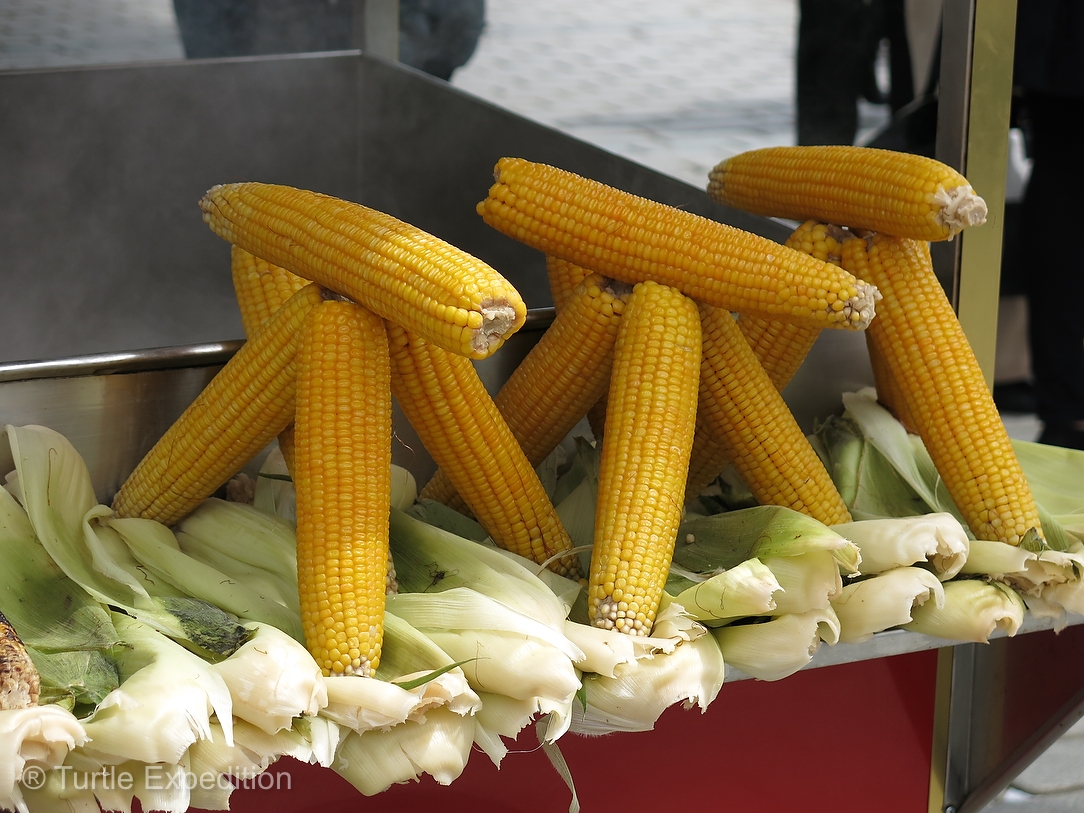
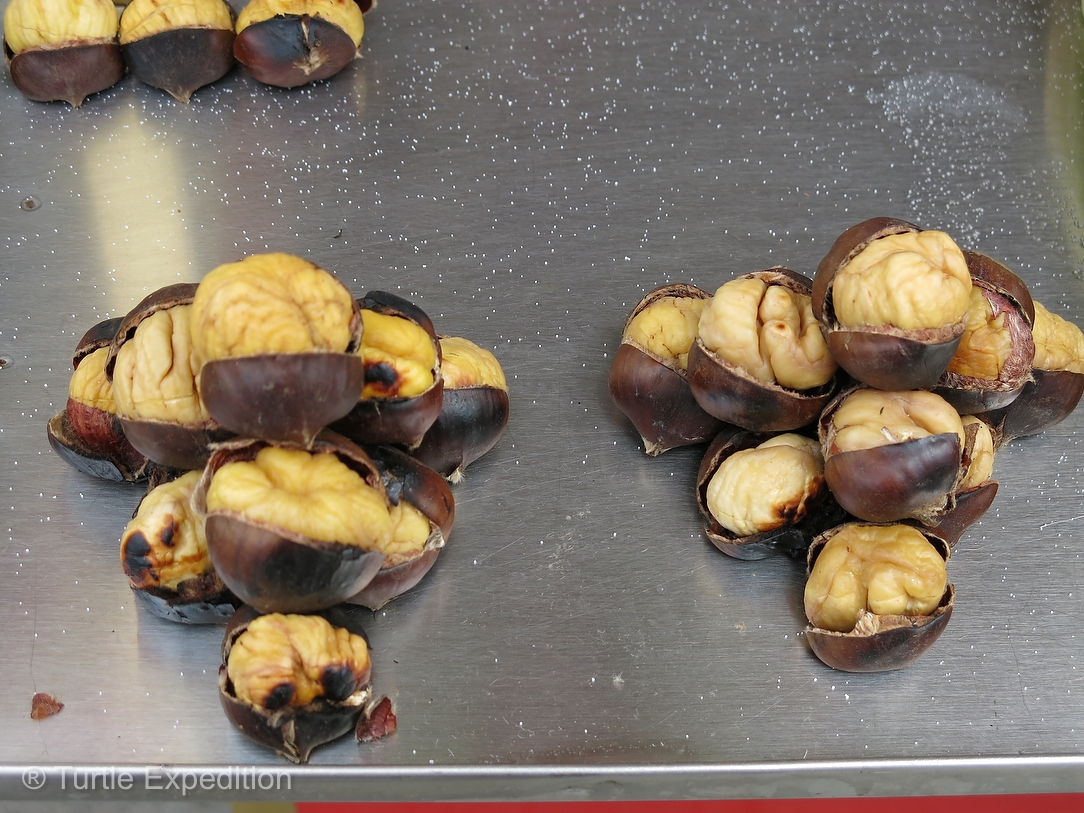
Wherever we went the sweet smell of roasting corn on the cob and chestnuts was in the air. A quick sandwich at one of many “shish kebob” shops was mandatory.
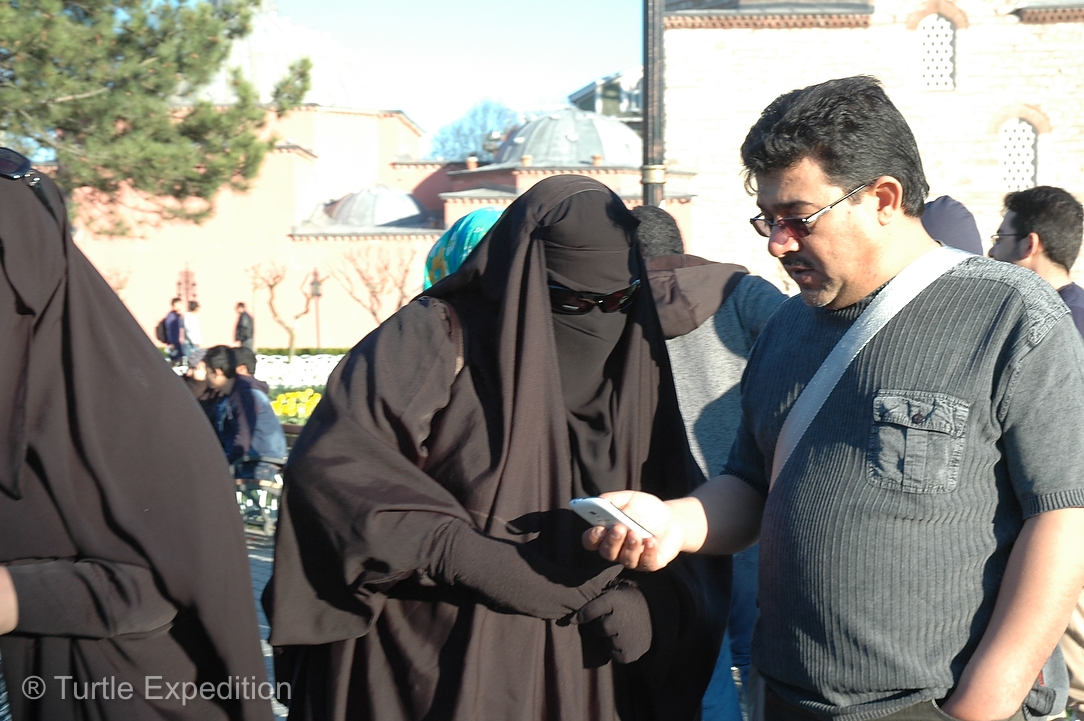
While this is very definitely an Islamic country, we saw extremely few women in full chadors in this fabulous city. Sometimes called “the blacks”, we were told that they were probably rich tourists from Saudi Arabia. Many local residents of Istanbul don’t particularly like them. “They look like terrorists.” One commented. They were not, of course, but it was interesting to watch the women trying to eat a sticky piece of Turkish Delight or sip a cup of tea lifting their face veil with one hand every time.
-
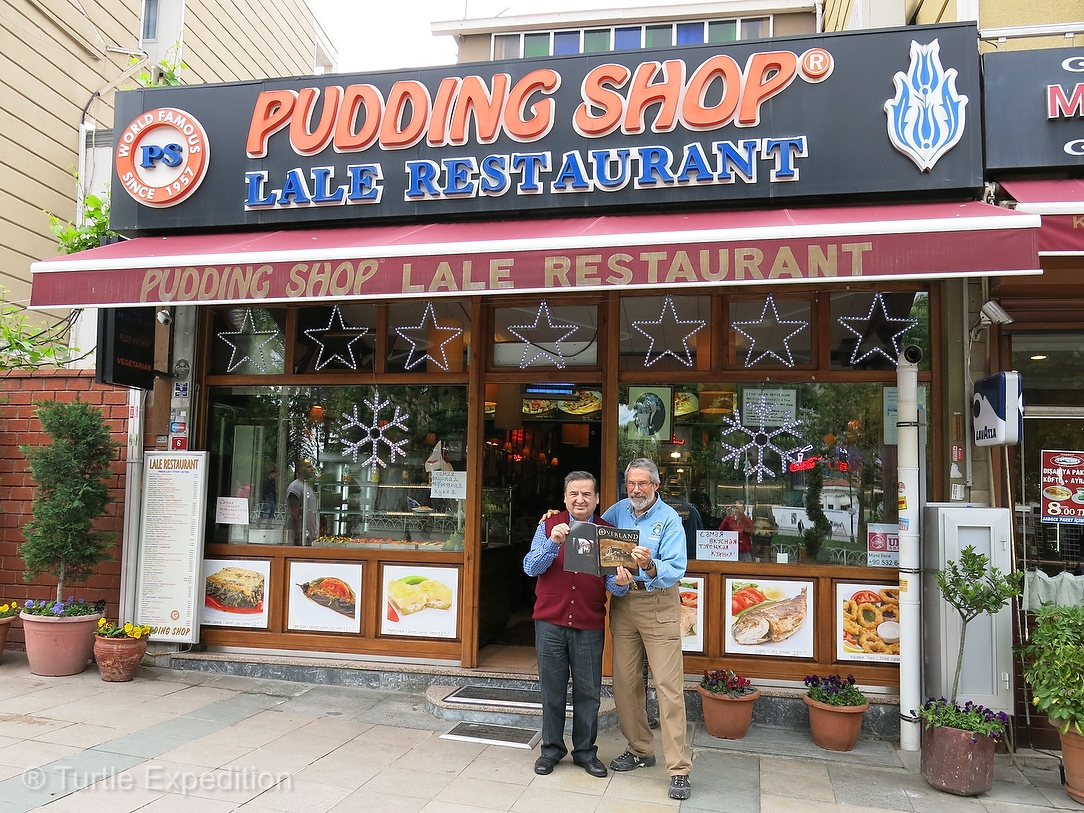
- The Pudding Shop is actually a nickname for the Lale Restaurant in the Sultanahmet neighborhood because travelers could not remember the name, only the pudding it was famous for.
-
- Mr. Namık Çolpan, the son of one of the founders of the Pudding Shop, was delighted that I had returned after 40 years. He told us he himself had traveled to India on the “hippie trail”, curious to find out why so many Westerners took that route.
-
- Shopping for fruit and veggies in the small street stands and little grocery stores was a joy.
-
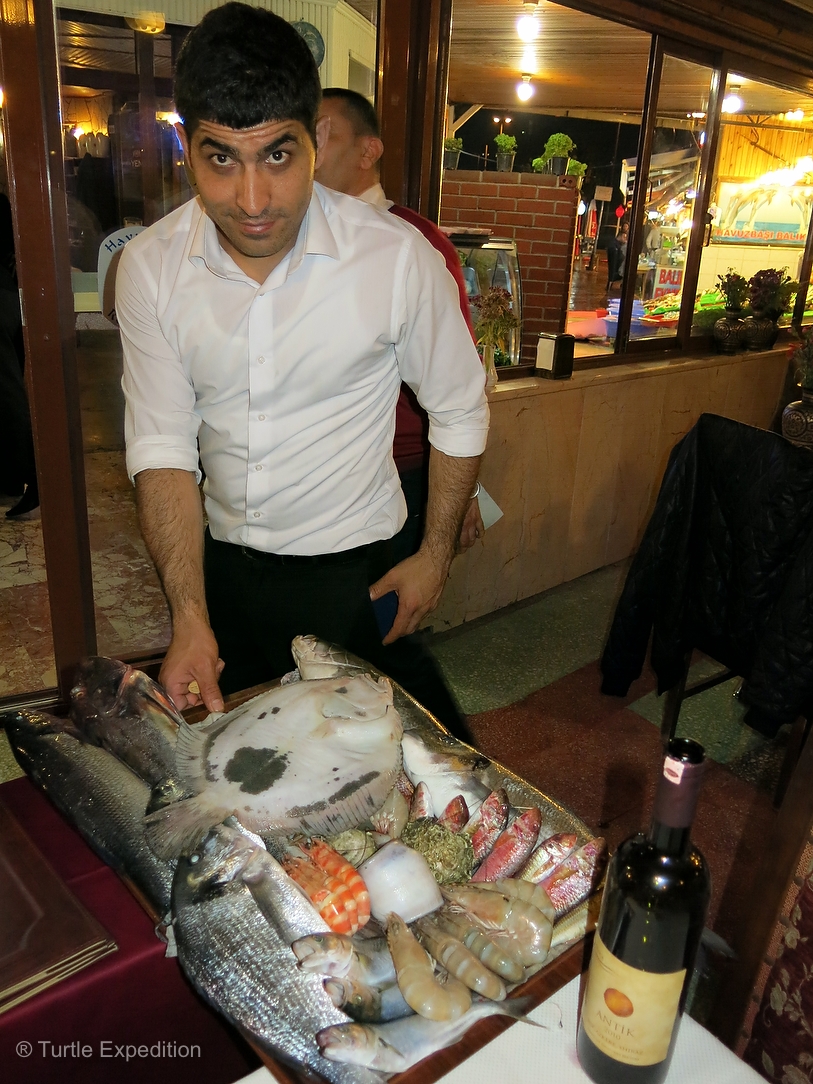
- An interesting menu in a local restaurant. Choose what you want and know that it is fresh. You don’t need to read Turkish to order dinner.
-
- We enjoy an appetizer and a glass of wine while dinner was being cooked right next to our table.
-
- A delicious Shepard’s Stew was cooked in a clay pot in an open fire .
-
- The classic “shish kebob” fast food joints were a constant temptation around lunchtime.
-
- The Republic Monument was unveiled in 1928 to honor the leaders of the struggle for independence and the formation of the Turkish Republic in 1923.
-
- A carpet store owner told us that this had been an old caravanserai where traders along the Silk Road could tend to their animals and trade goods. It was conveniently located near the Grand Bazaar.
-
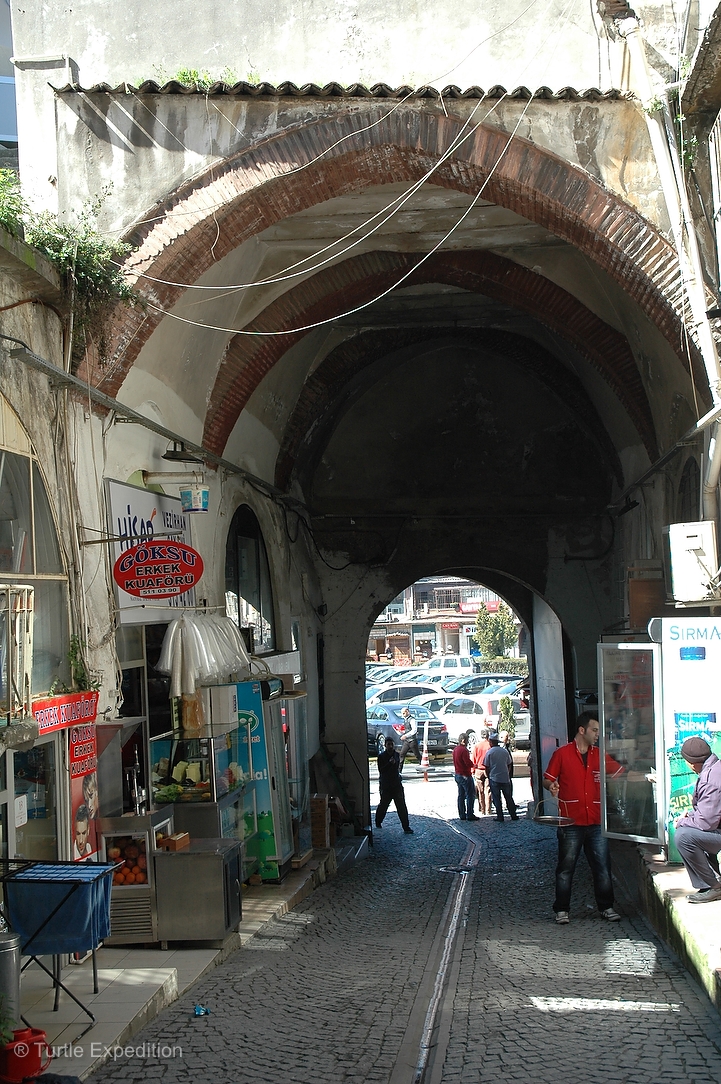
- Many of the old wooden buildings on side streets reflected the personality of this historic city.
-
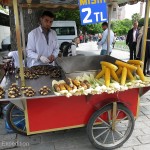
- The sweet smell of fresh roasting corn and plump chestnuts in the air was hard to resists for an afternoon snack.
-
- This woman was busy weaving a beautiful carpet. We guessed it could take years to finish, one thread at a time.
-
- Not the norm on the streets of Istanbul, the extreme dress of the rich Saudi Arabian tourists are not particularly appreciated by locals any more than they would be on the streets of any western city.