

Istanbul 4, Turkey – April 2014
Some of the most amazing examples of engineering and architecture in the world are places of worship. We had seen a few of the most impressive; St. Paul’s Cathedral in London, England, the National Palace in Mafra, Portugal, the Basilica La Sagrada Familia in Barcelona, Spain, the Cathedrál de Cordoba in Cordoba, Spain, the Vatican in Vatican City, Italy, just to name a few, but standing in a class by themselves are the imposing mosques of Istanbul, and we just happened to be camped beneath the most famous one, The Blue Mosque, (called Sultanahmet Camii in Turkish). Known as the Blue Mosque because of blue tiles surrounding the walls of interior design, it was built between 1609 and 1616 during the rule of Ahmed I. Since it is an active mosque, it’s closed to non-worshippers for a half hour or so during the five daily prayers, so timing was important for a visit.
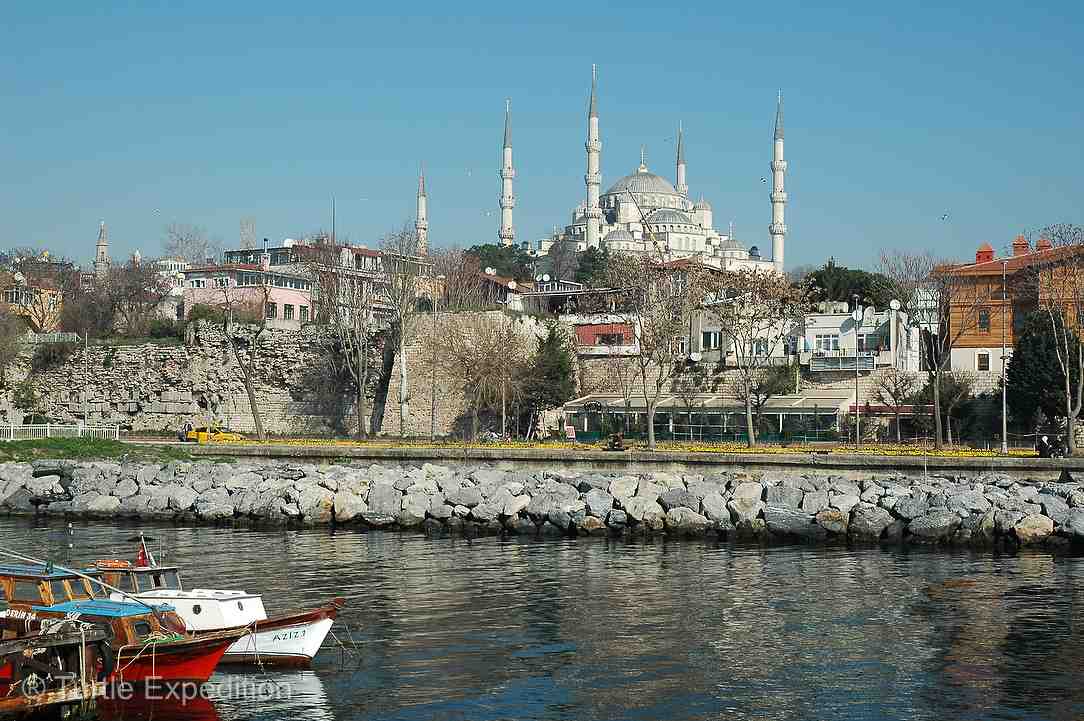
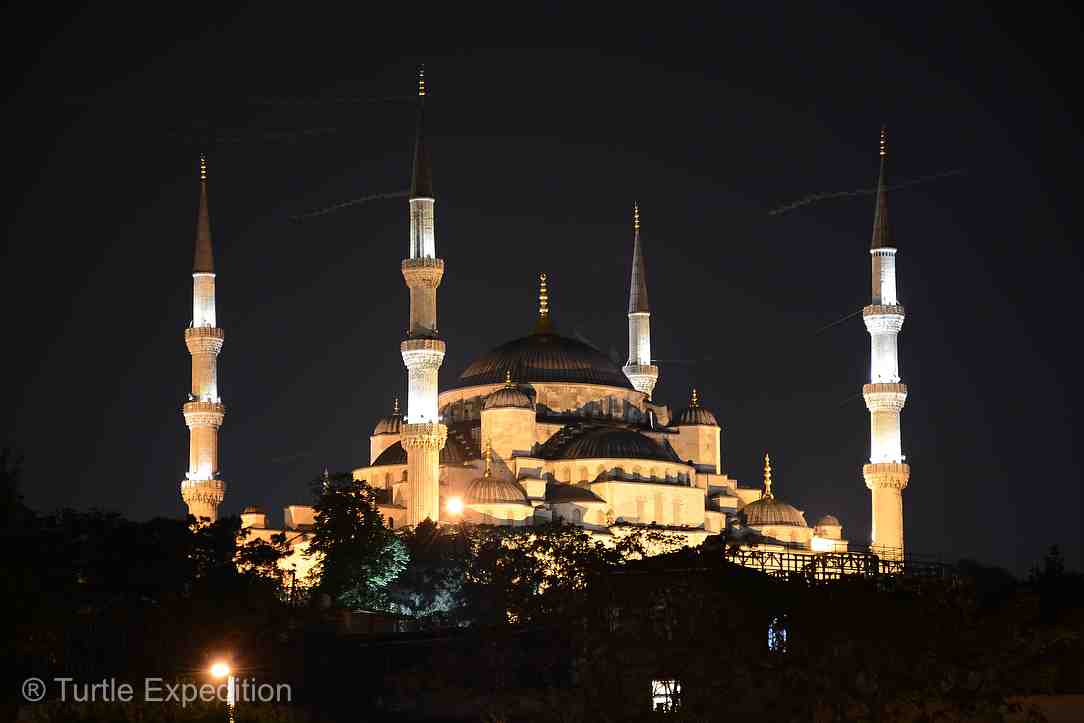
From our camping spot on the Bosporus we had a great view of the Blue Mosque.
The equally beautiful Hagia Sophia (from the Greek: Ἁγία Σοφία, “Holy Wisdom”; Latin: Sancta Sophia or Sancta Sapientia; Turkish: Ayasofya), has an interesting history. From the date of its construction in 537 until 1453, it served as an Orthodox cathedral and seat of the Patriarch of Constantinople, except between 1204 and 1261, when it was converted to a Roman Catholic cathedral under the Latin Empire.
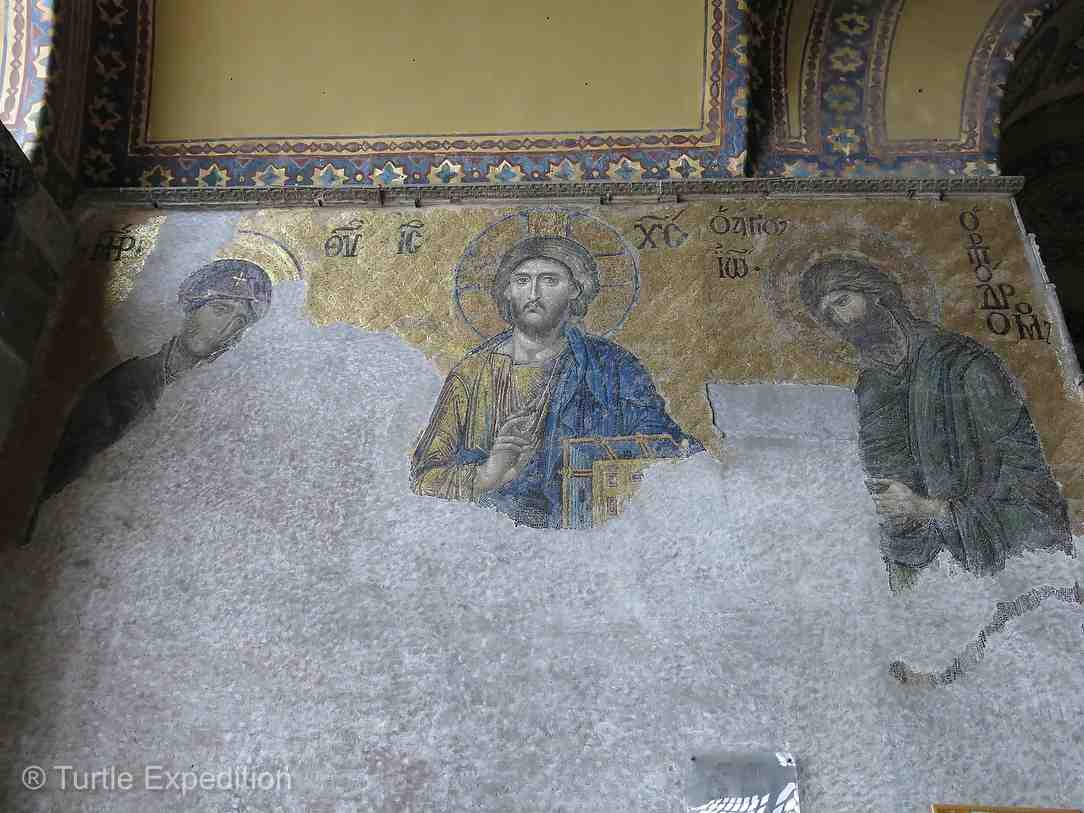
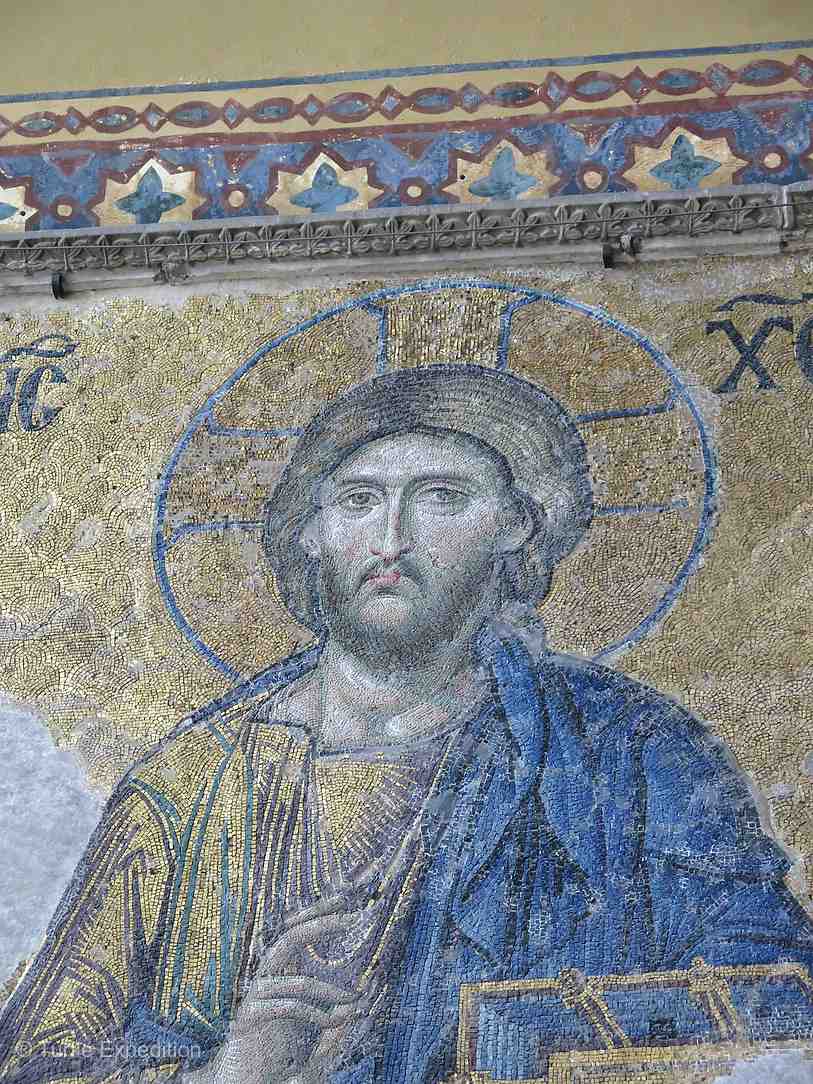
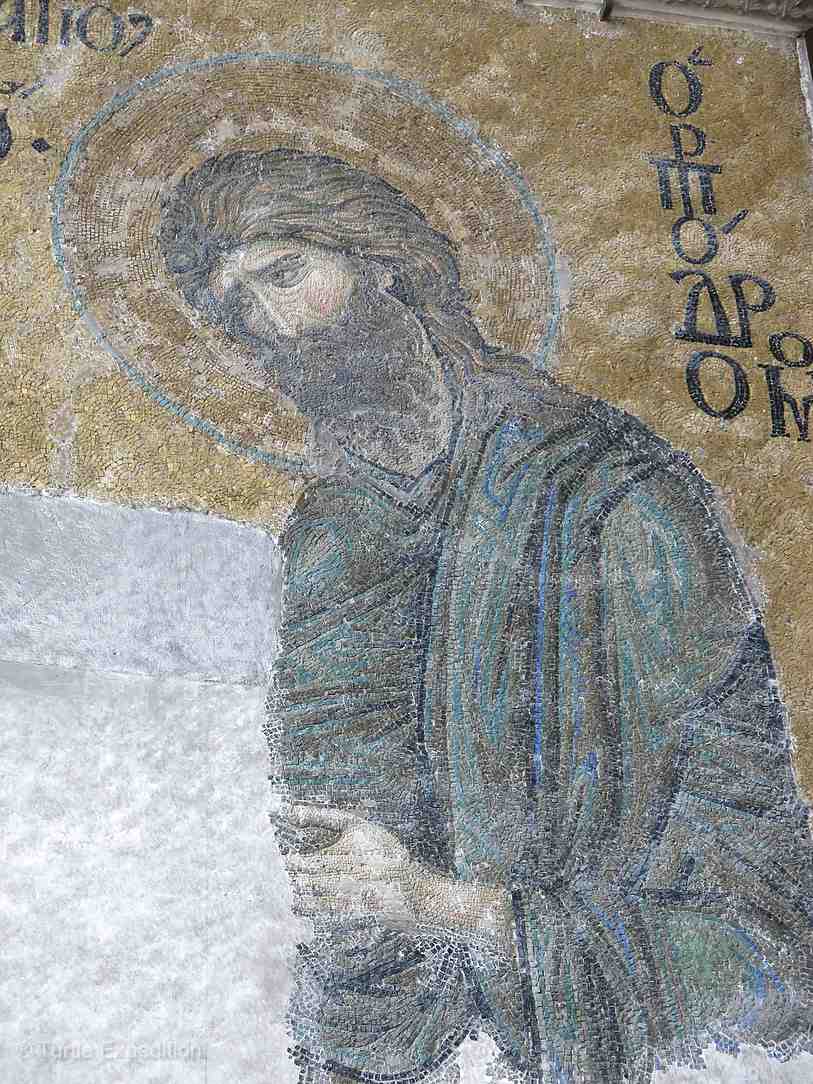
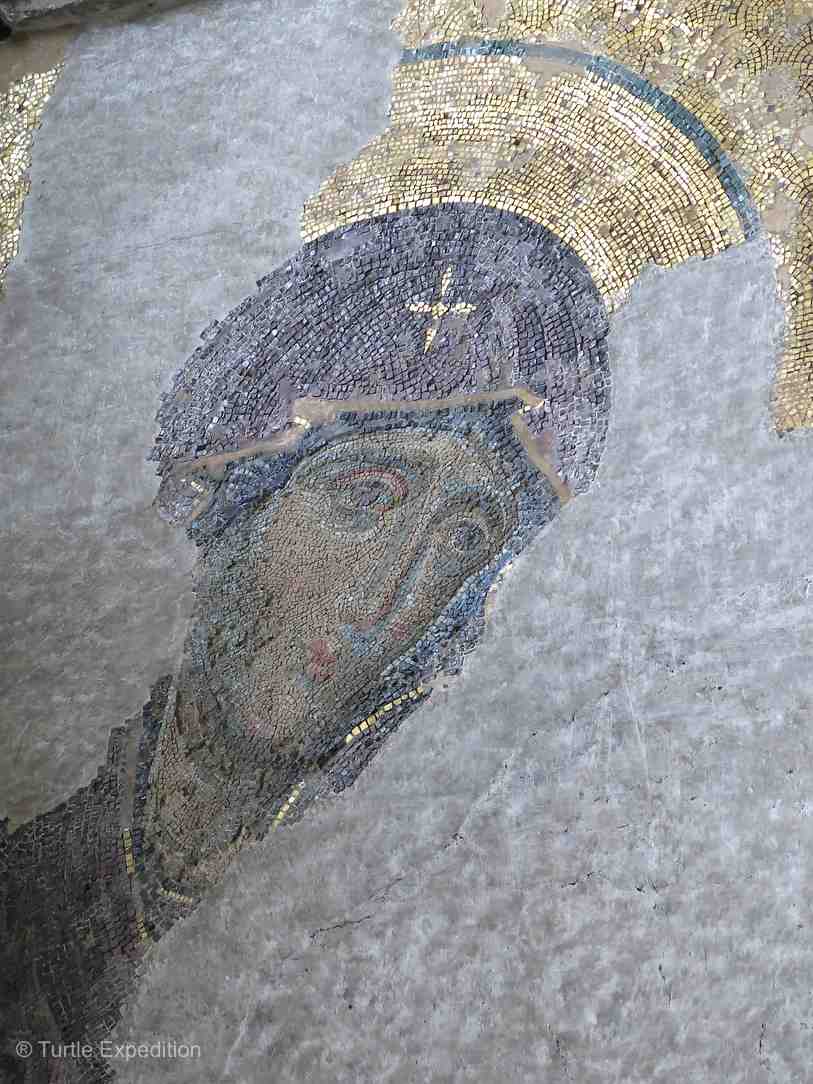
In 1453, Constantinople was conquered by the Ottoman Turks under Sultan Mehmed II who ordered this main church of Orthodox  Christianity converted into a mosque. The bells, altar, iconostasis, and sacrificial vessels and other relics were removed and the mosaics depicting Jesus, his Mother Mary, Christian saints and angels were also removed or plastered over. Fortunately many have been restored. In 1931 it was secularized and was opened as a museum in 1935. Today Hagia Sophia is the second-most visited museum in Turkey.
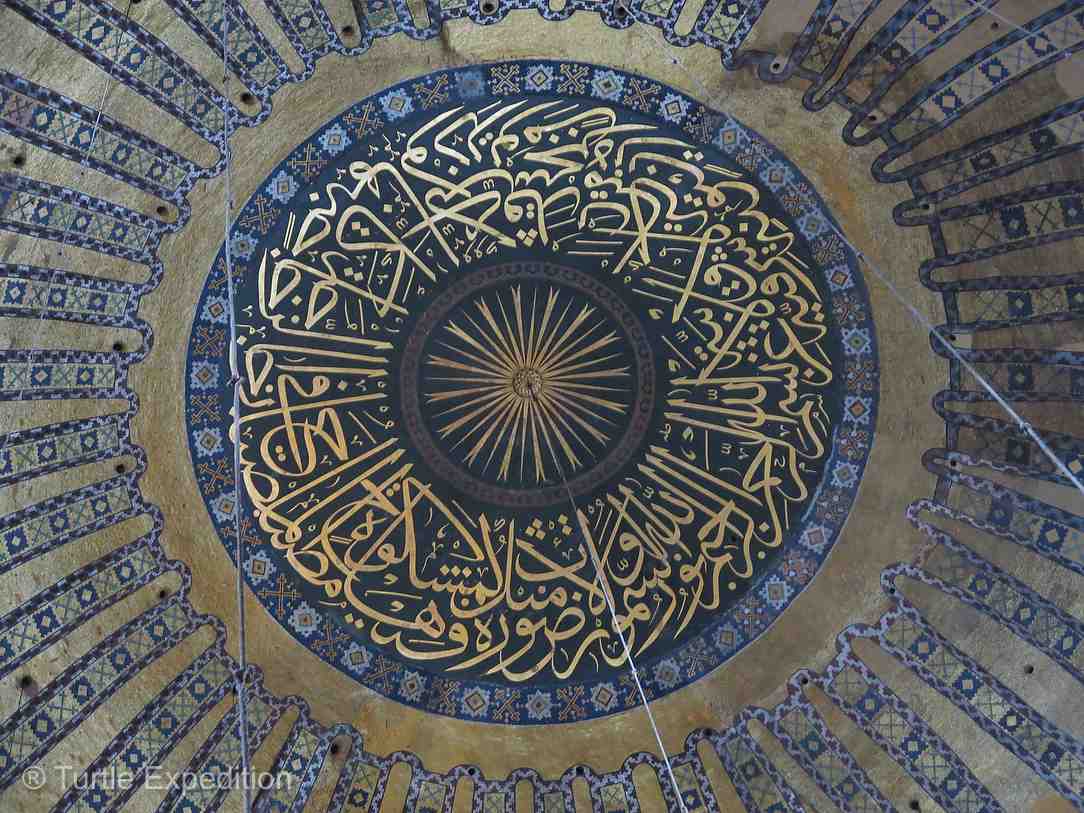
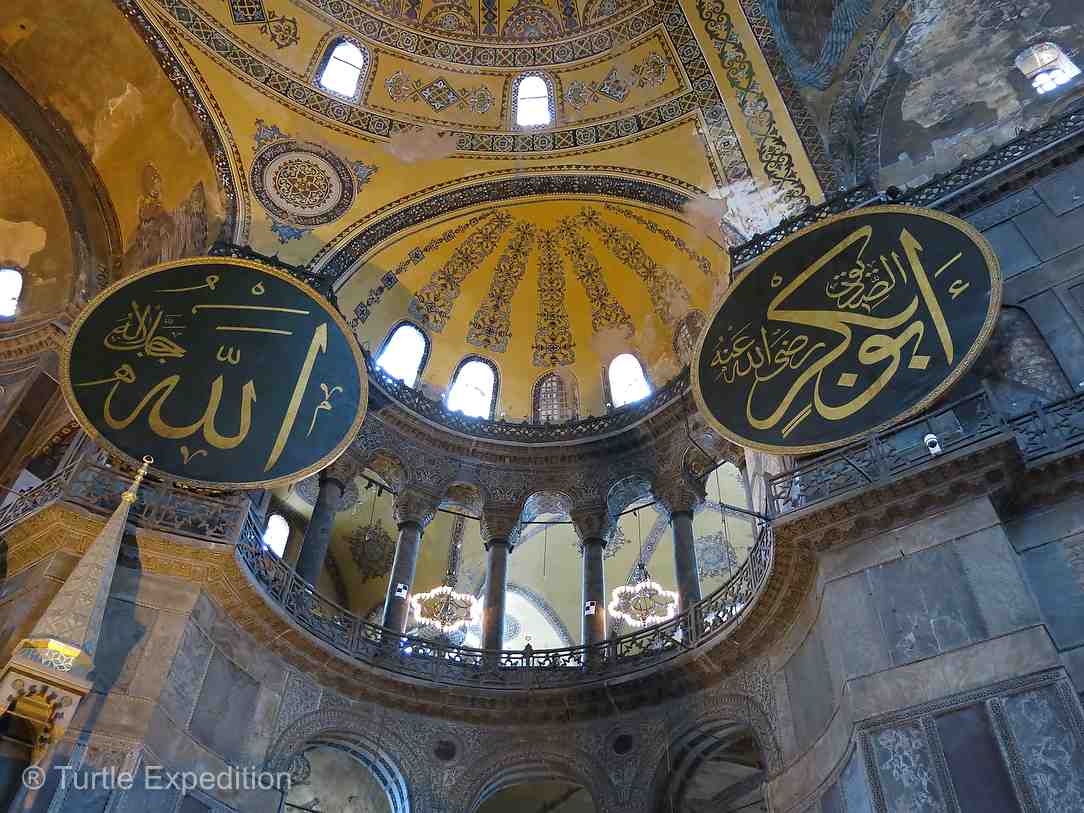
Famous in particular for its massive dome, it is considered the epitome of Byzantine architecture and is said to have “changed the history of architecture”. It remained the world’s largest cathedral for nearly a thousand years, until the Seville Cathedral in Spain was completed in 1520.
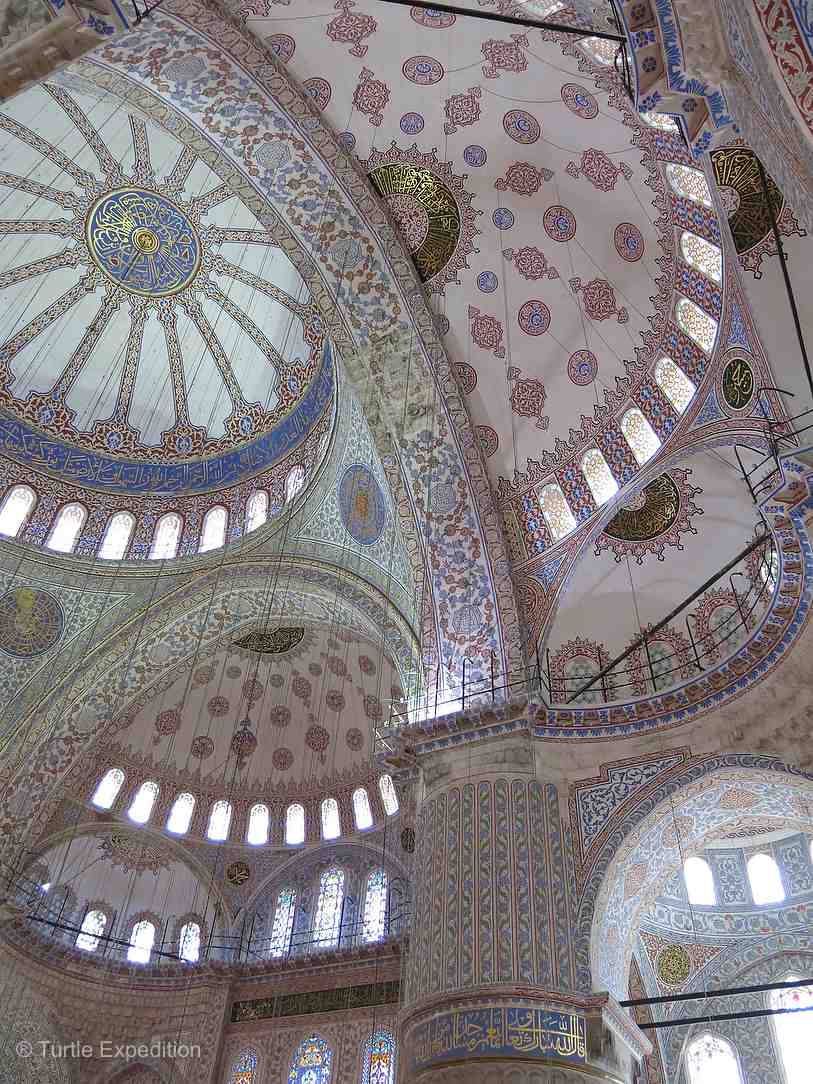
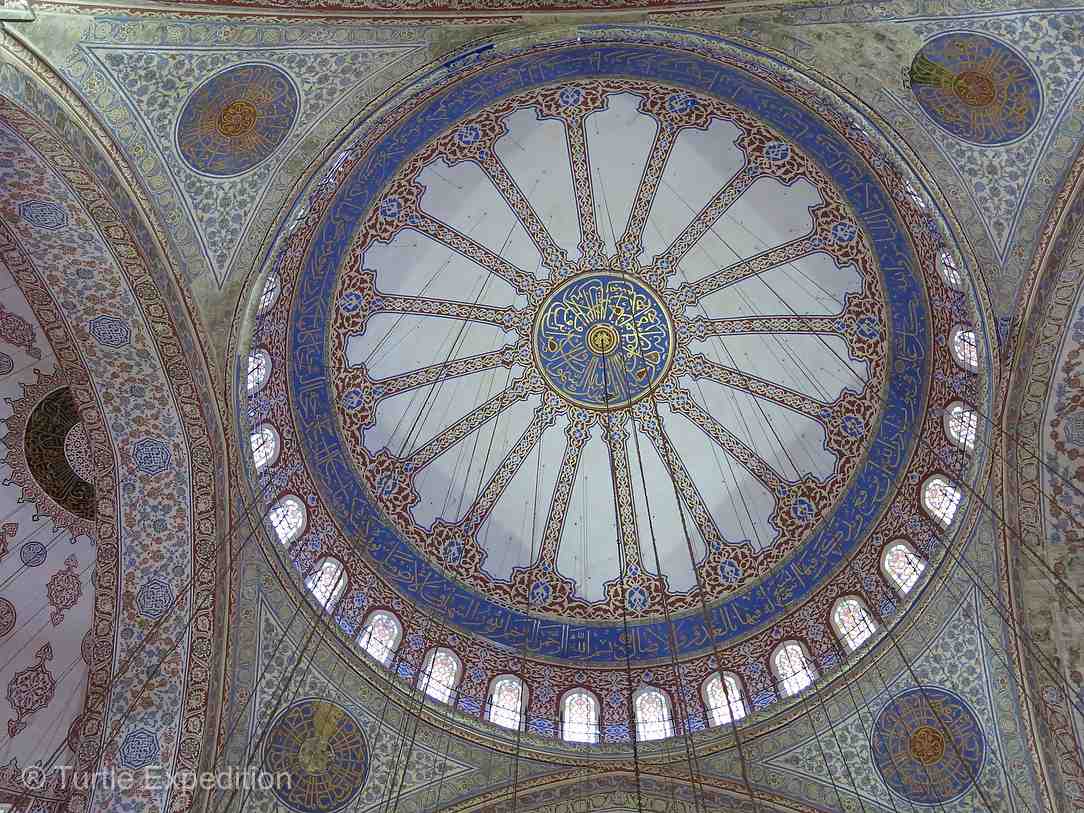
The colors and patterns of the various domes in the Blue Mosque were exquisite.
Back when the Hagia Sophia was first transformed into a mosque, Fatih Sultan Mehmet The Conqueror, (Seventh Sultan Of The Ottoman Empire), and his followers prostrated themselves for the first Friday prayer, however, there was a slight problem, since the direction of the building was not facing toward Kaaba, the center of Islam’s most sacred mosque in Mecca.
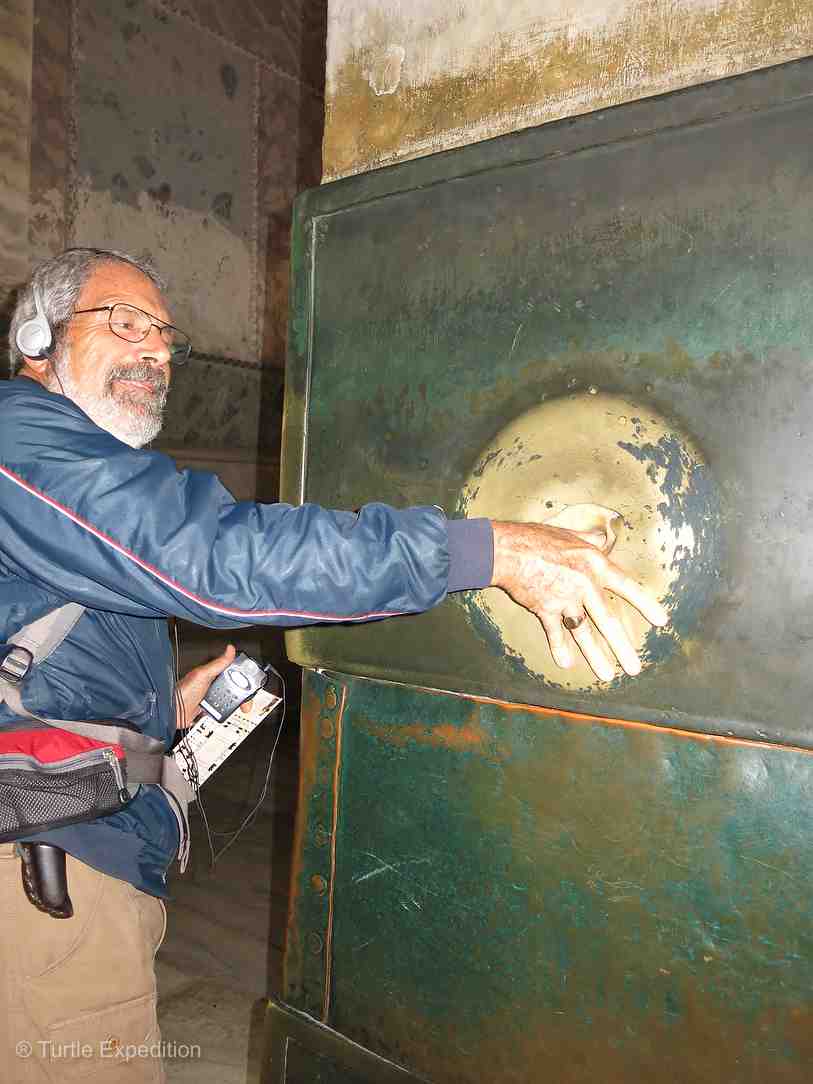
There is an interesting column at the northwest of the building with a hole in the middle covered by bronze plates. It’s called the “perspiring column” or the “wishing column”. According to one legend, the dampness in the small hole is believed to be a tear of Virgin Mary. Rumors appeared during the East-Roman period that it had a healing effect on humans. People believed that they would get better if they put their fingers into that hole on the column and then rub them to the place where disease was felt. You can also just make a wish. We did.
-
- The view of the Blue Mosque from our camp on the Bosporus was magical.
-
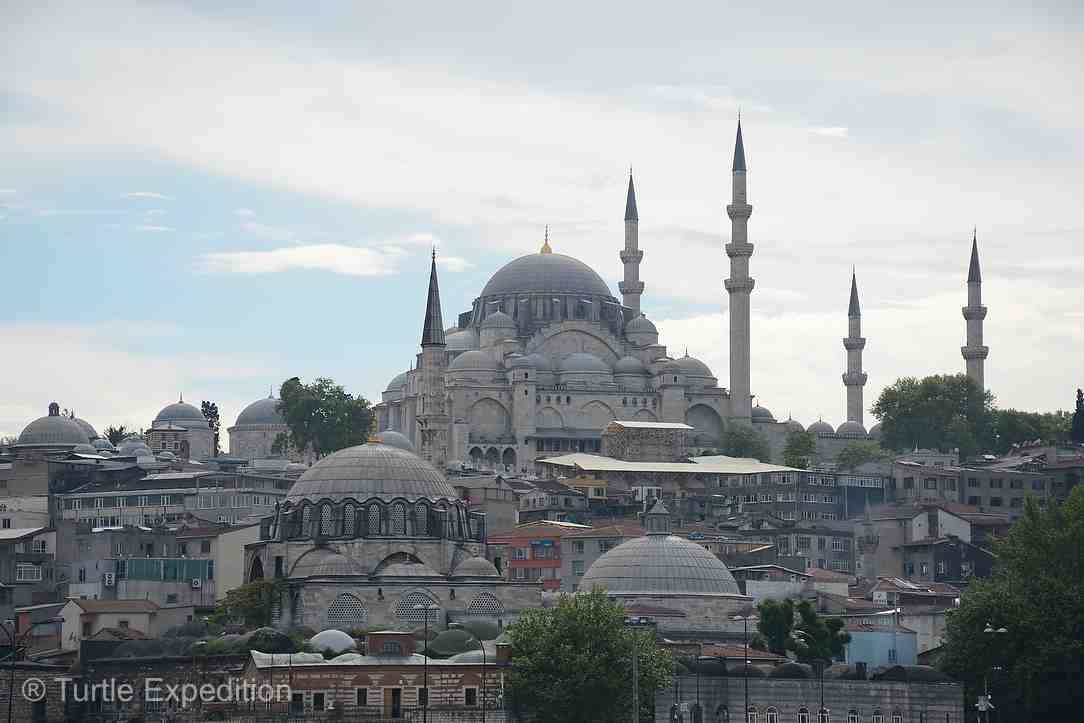
- The Süleymaniye Mosque is one of the more beautiful images of Istanbul.
-
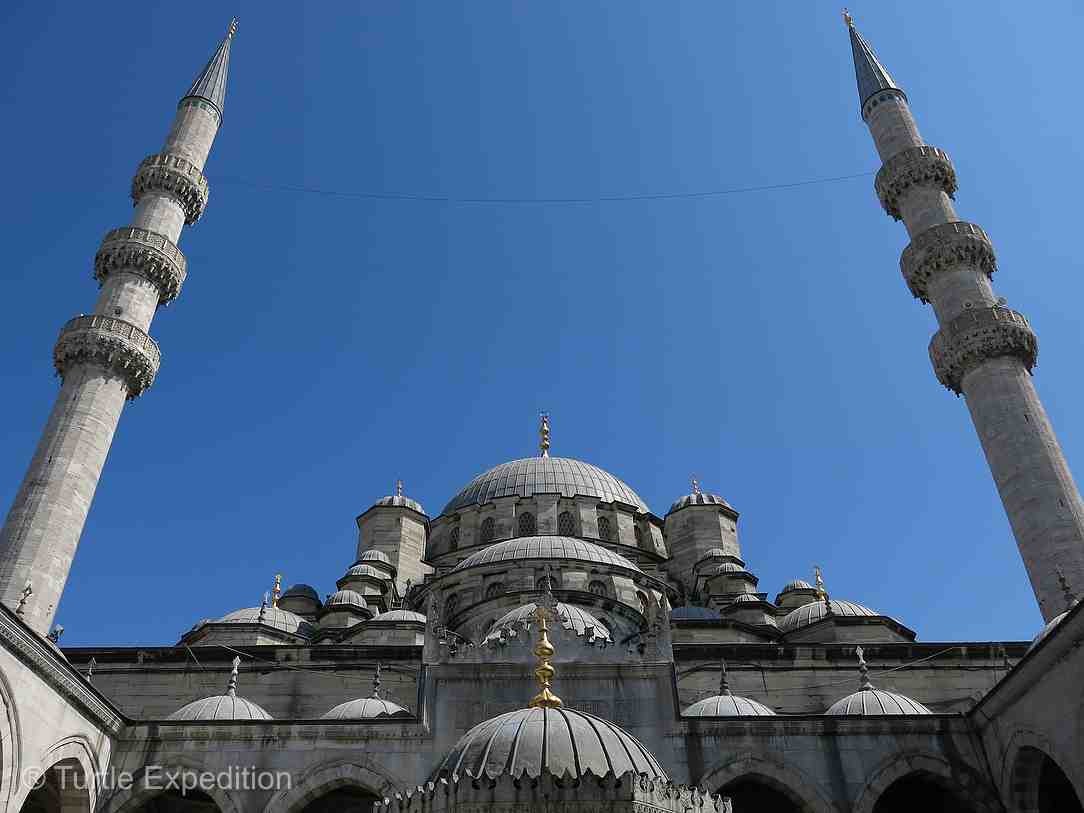
- The perfect symmetry of the New Mosque was intriguing.
-
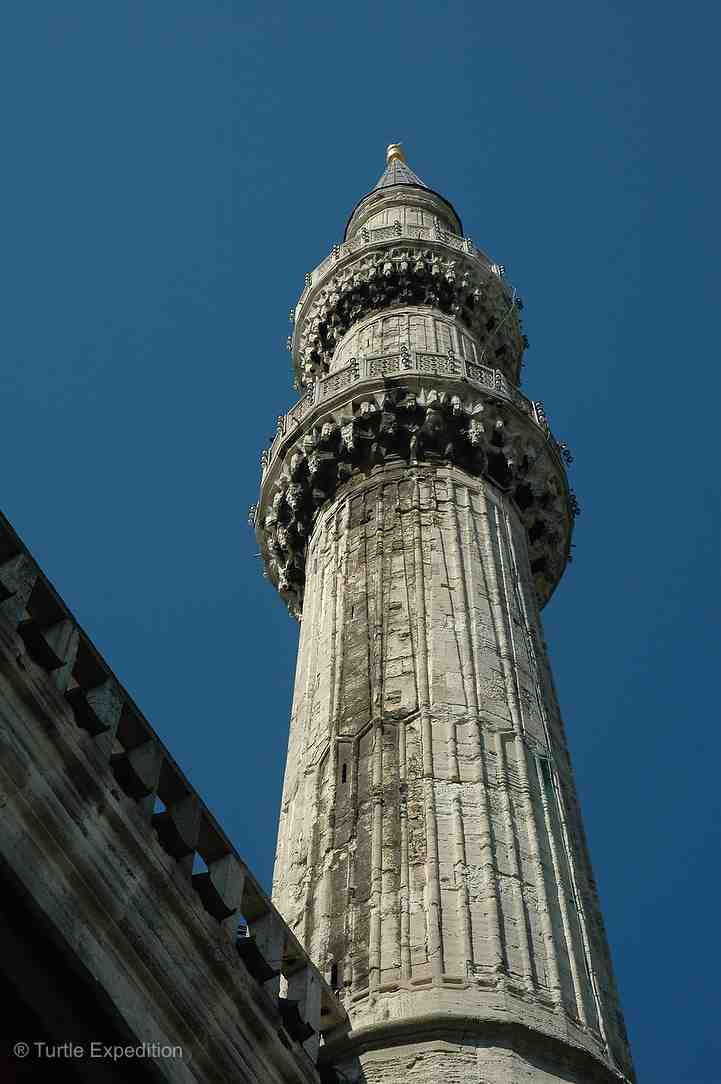
- From these minarets we could hear the calls of prayer in the early morning hours and throughout the day.
-
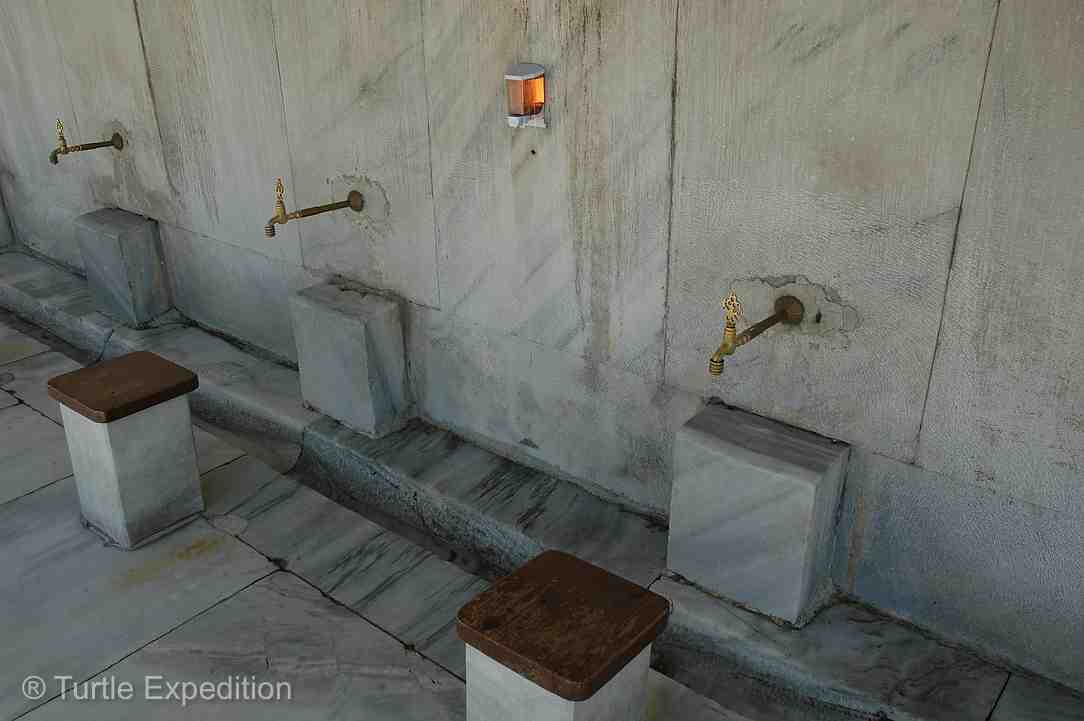
- All mosques have a washing area for worshippers before they enter to pray.
-
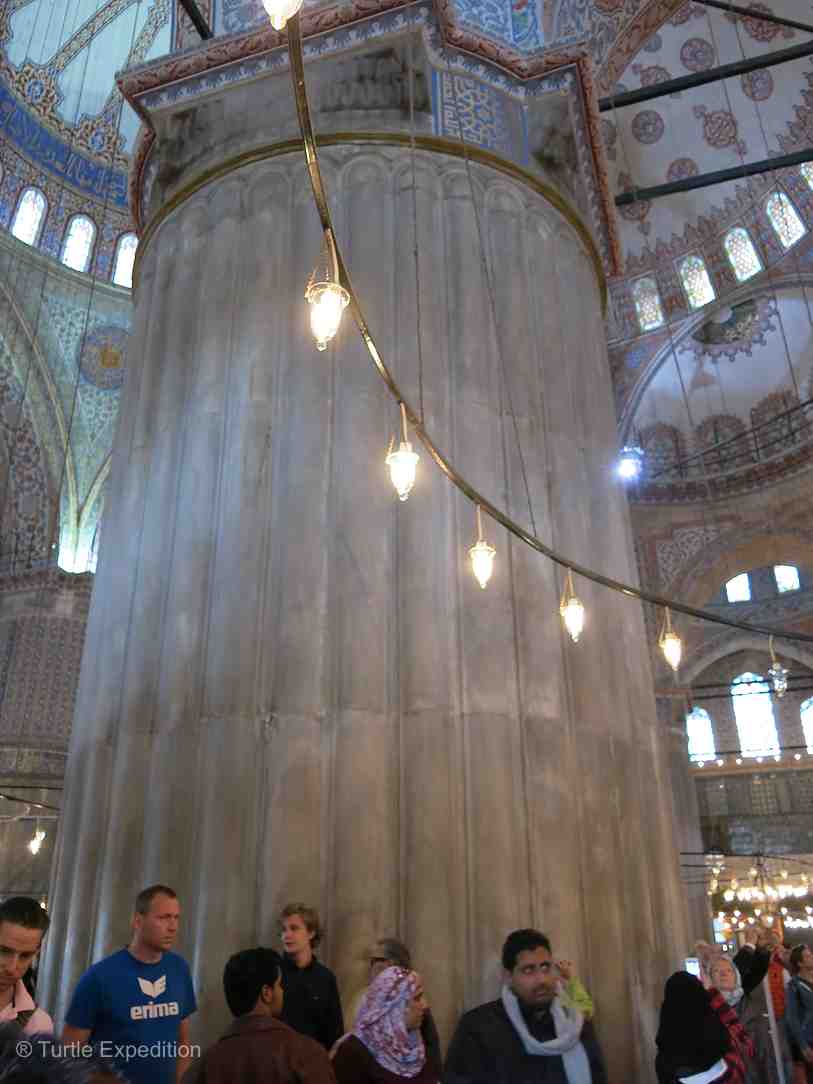
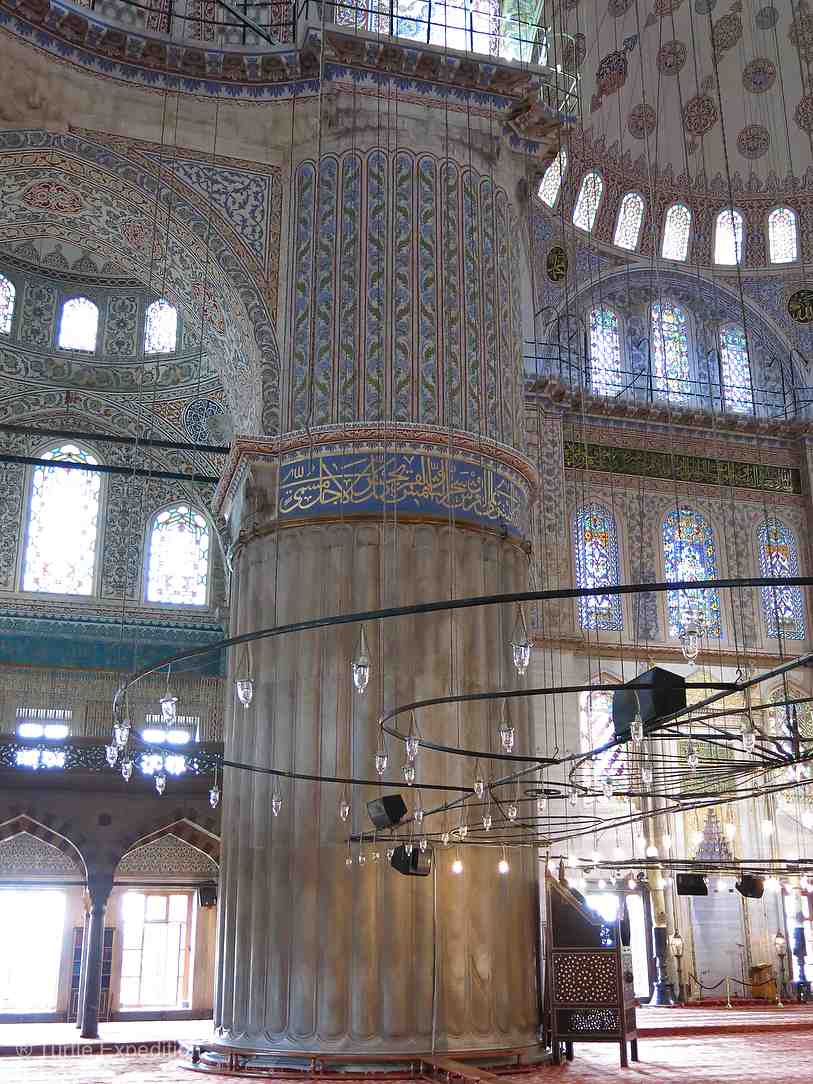
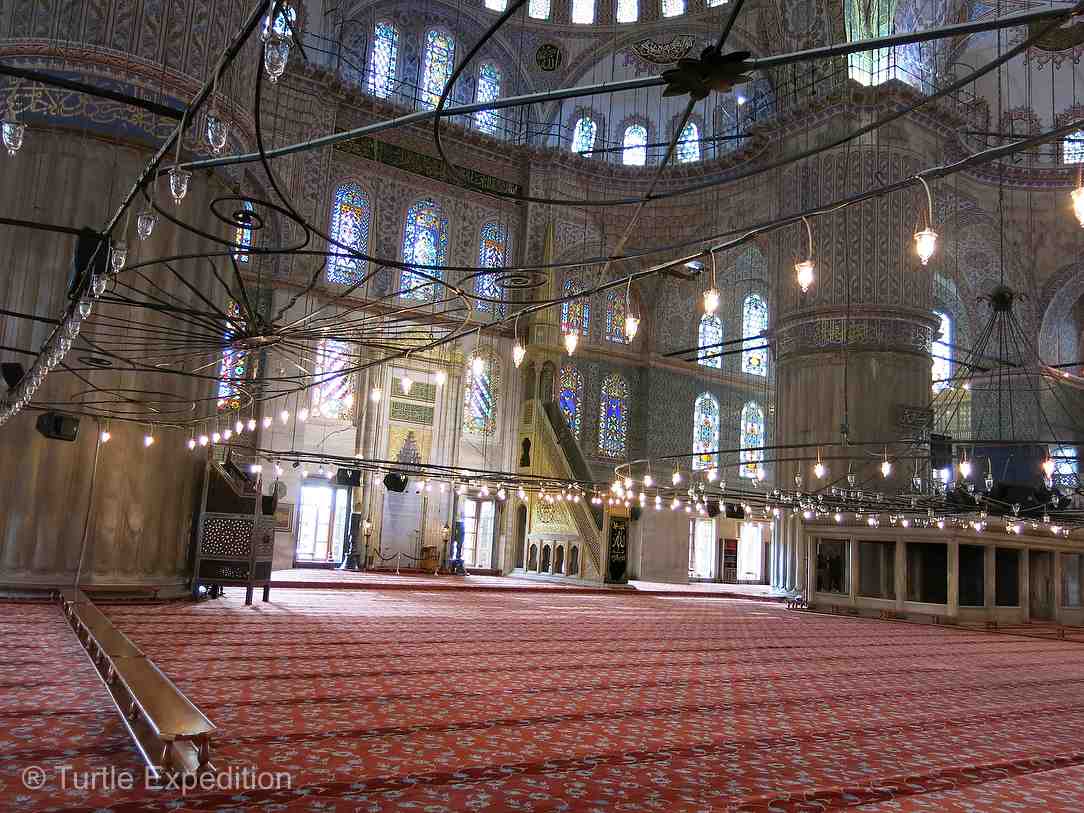
- The interior and details of the Blue Mosque was entrancing.
-
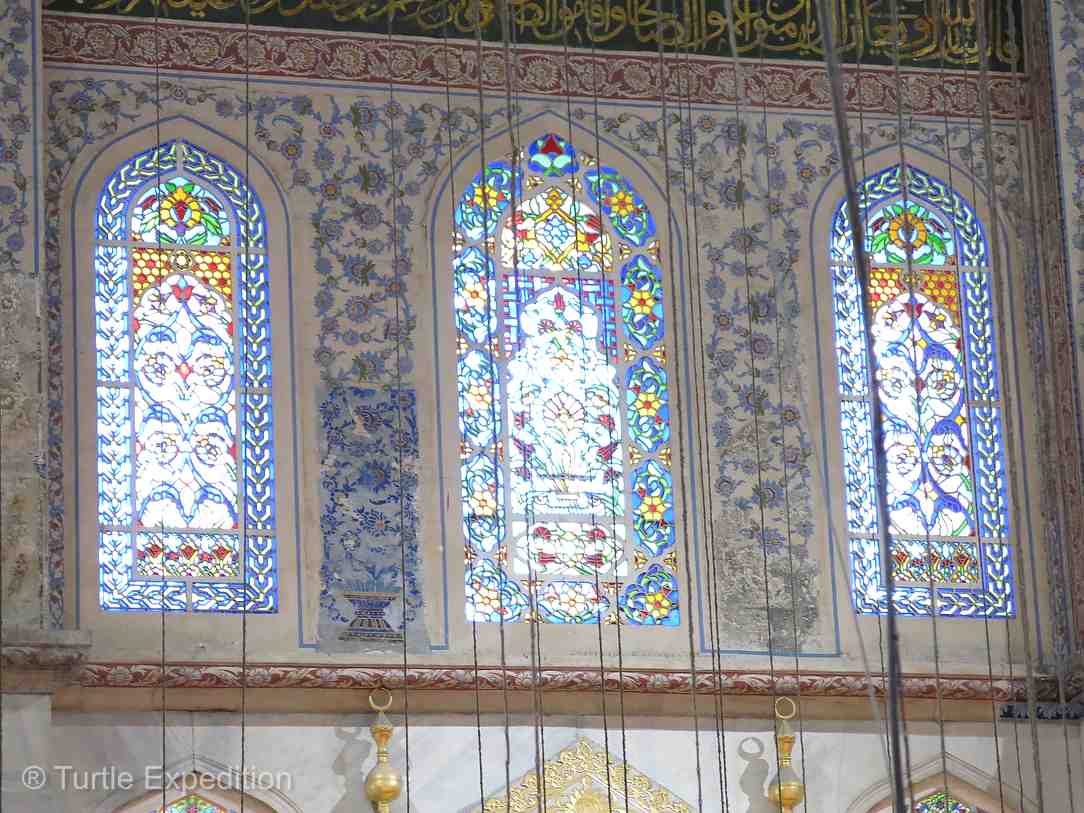
- Beautiful stain glass windows filtered in the morning light.
-
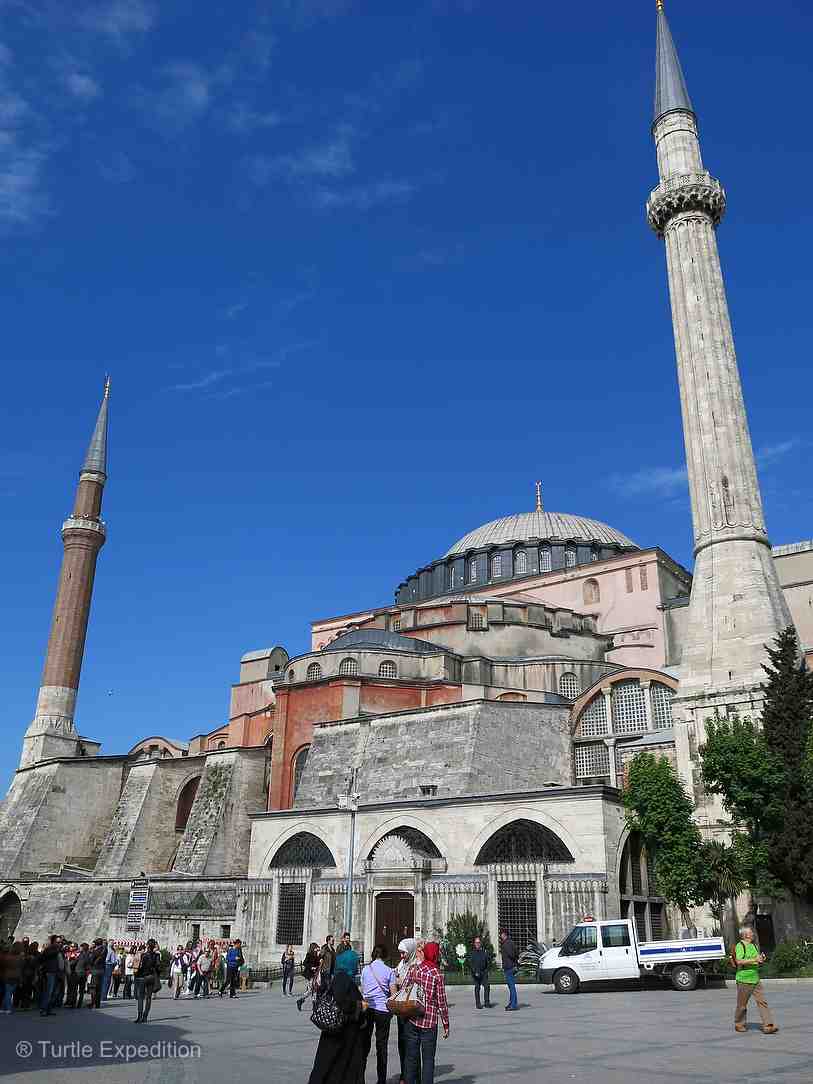
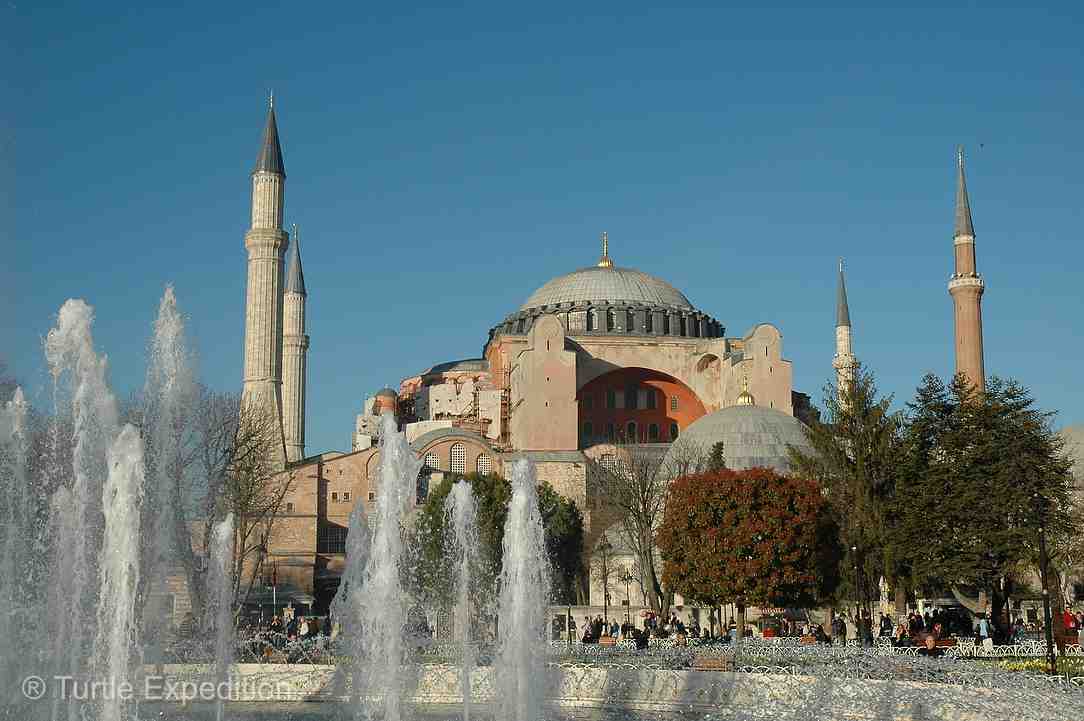
- The Aya Sophia, now a museum, stood as the largest cathedral in the world for one thousand years.
-
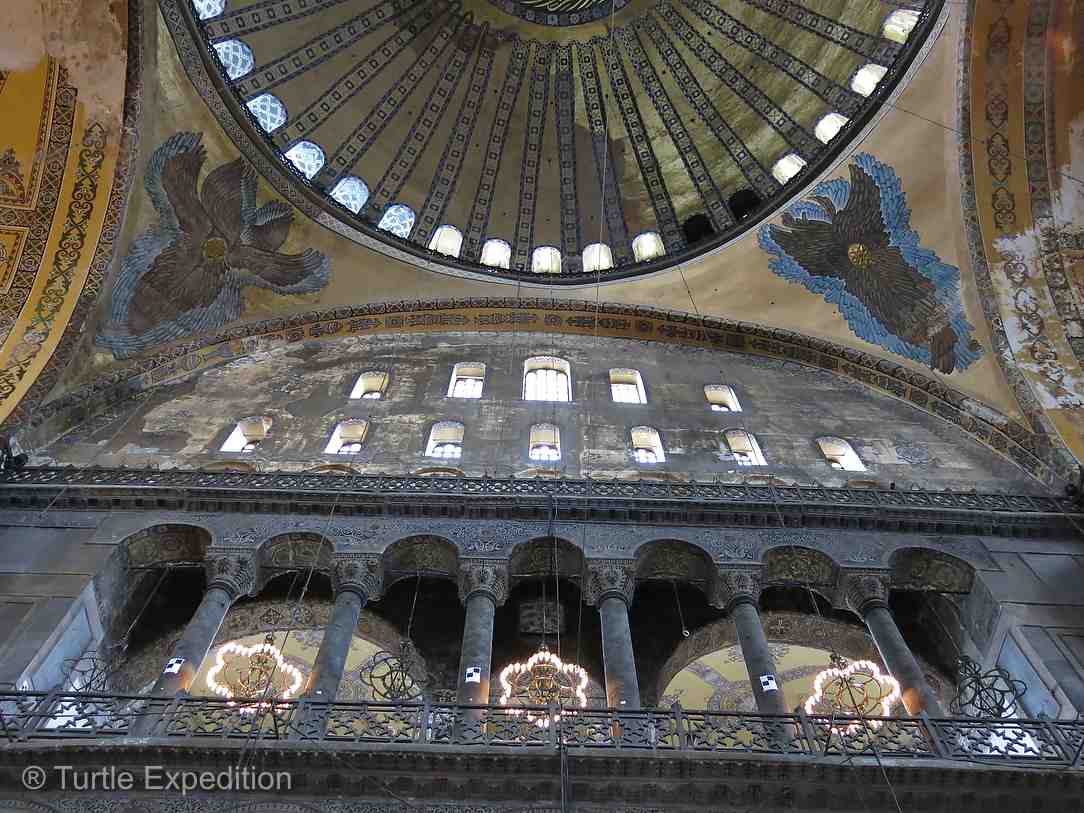
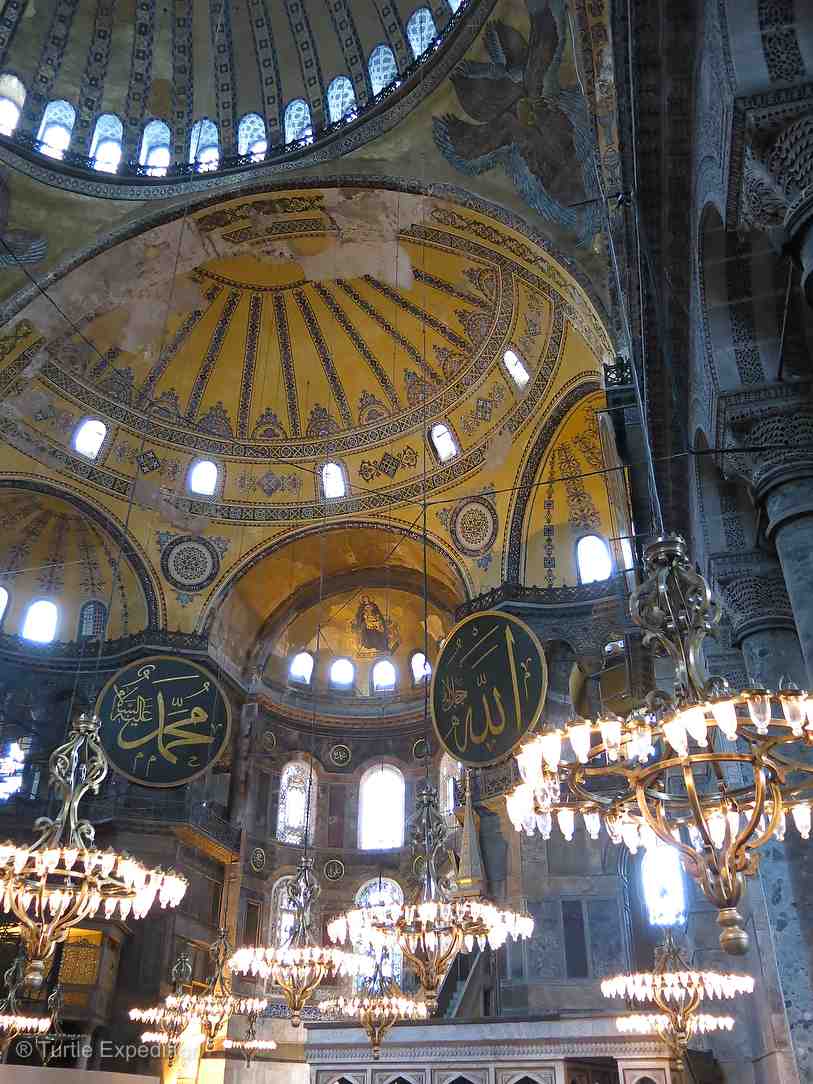
- The many beautiful domes of the Aya Sophia were spectacular.
-
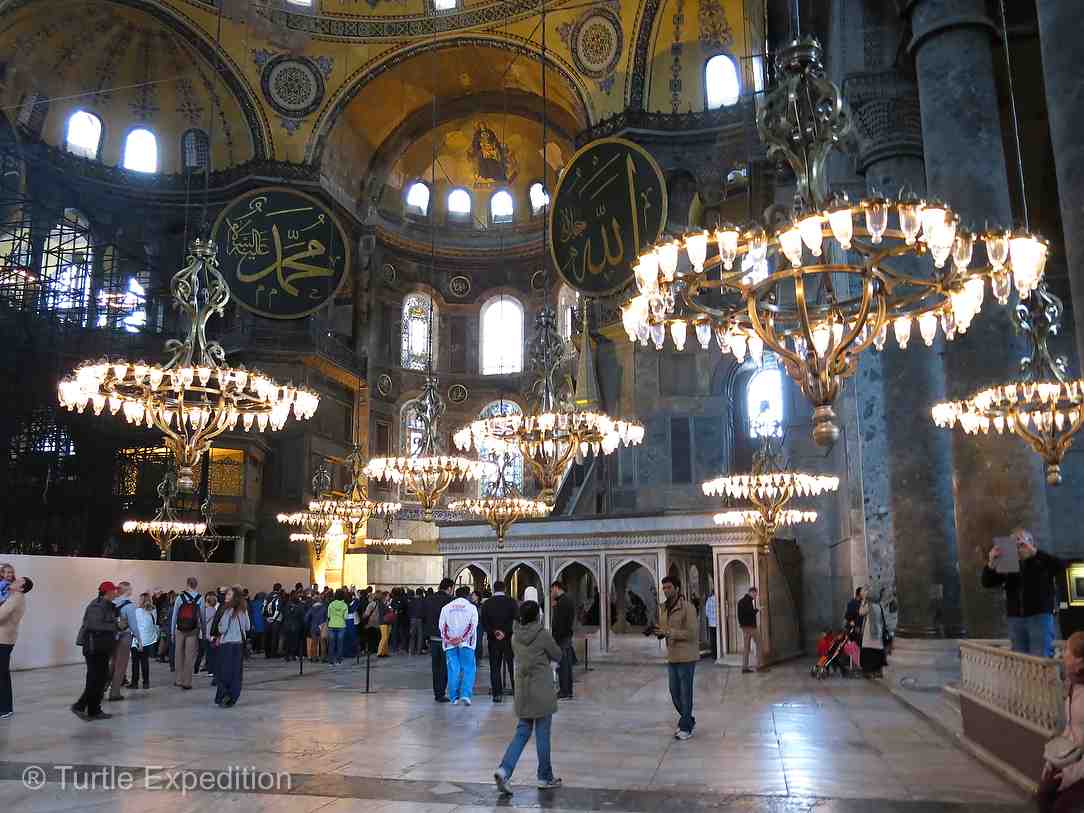
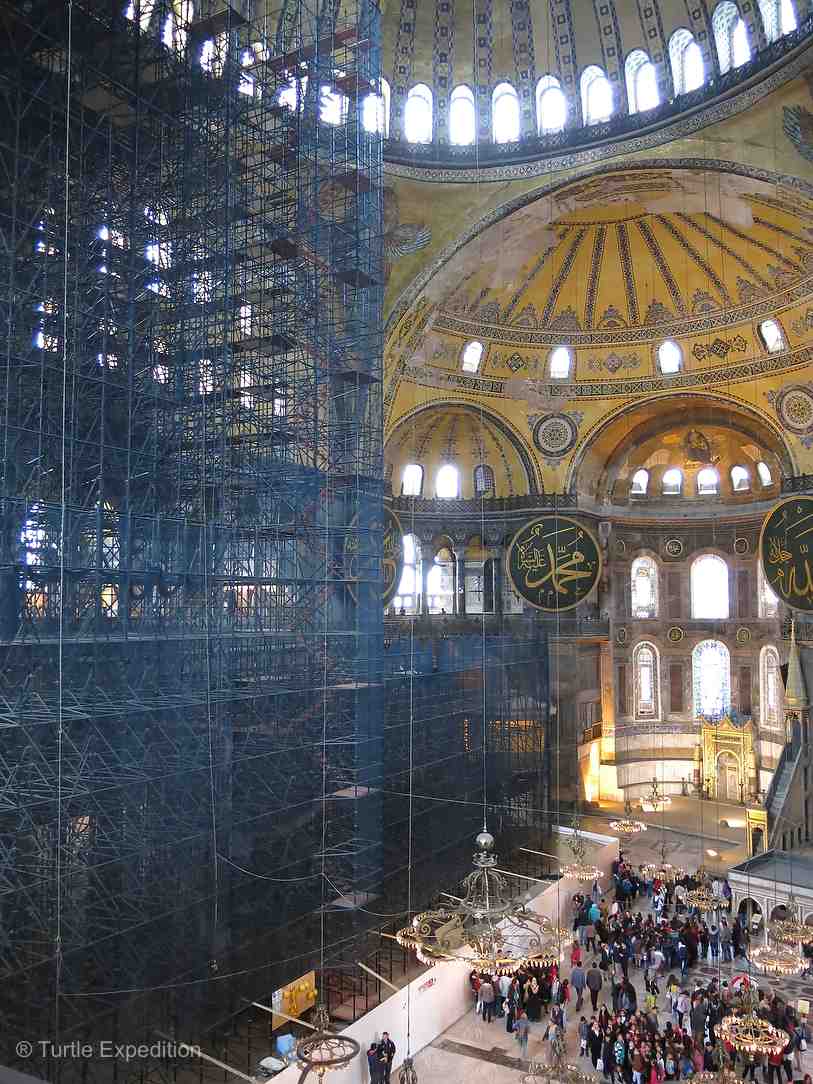
- The chandeliers gave an interesting atmosphere to the huge interior.
-
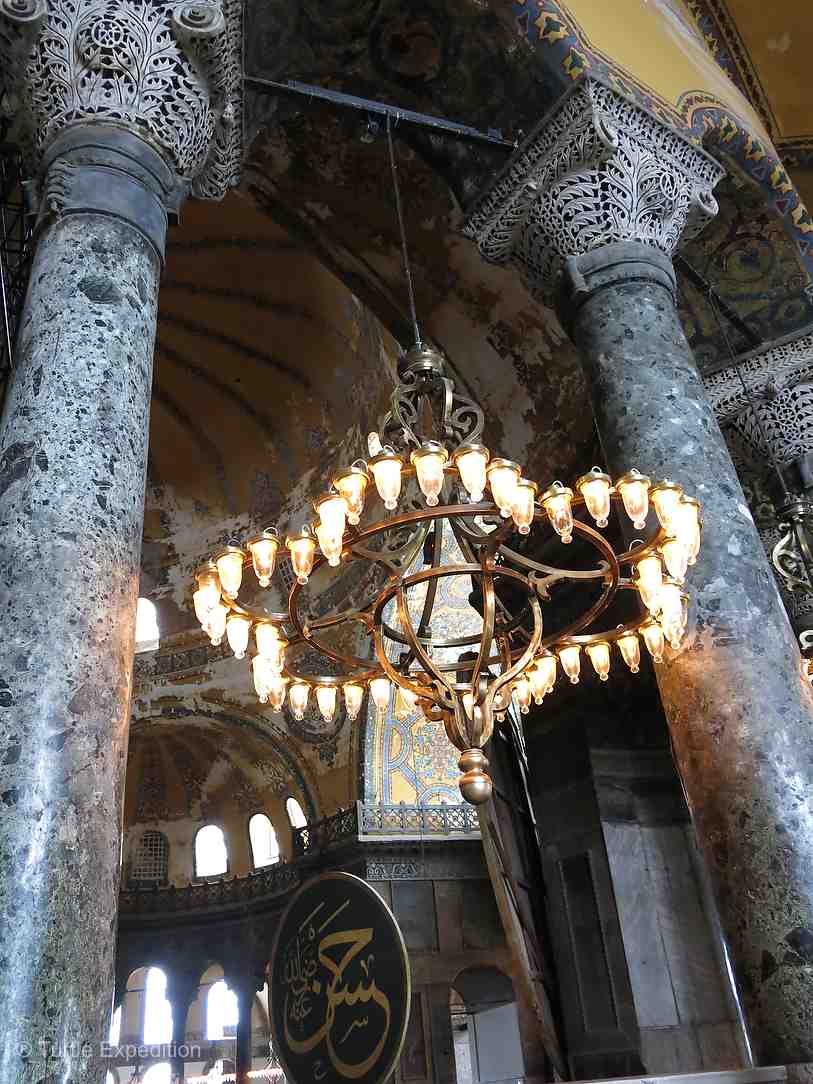
- We wondered if Barcelona’s architect Antoni Gaudi got his inspiration here for the chandelier above the alter of La Sagrada Familia.
-
- Now under restoration, the profusion of windows was an interesting element of Aya Sophia’s Byzantine architecture.
-
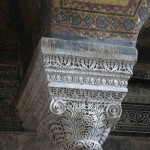
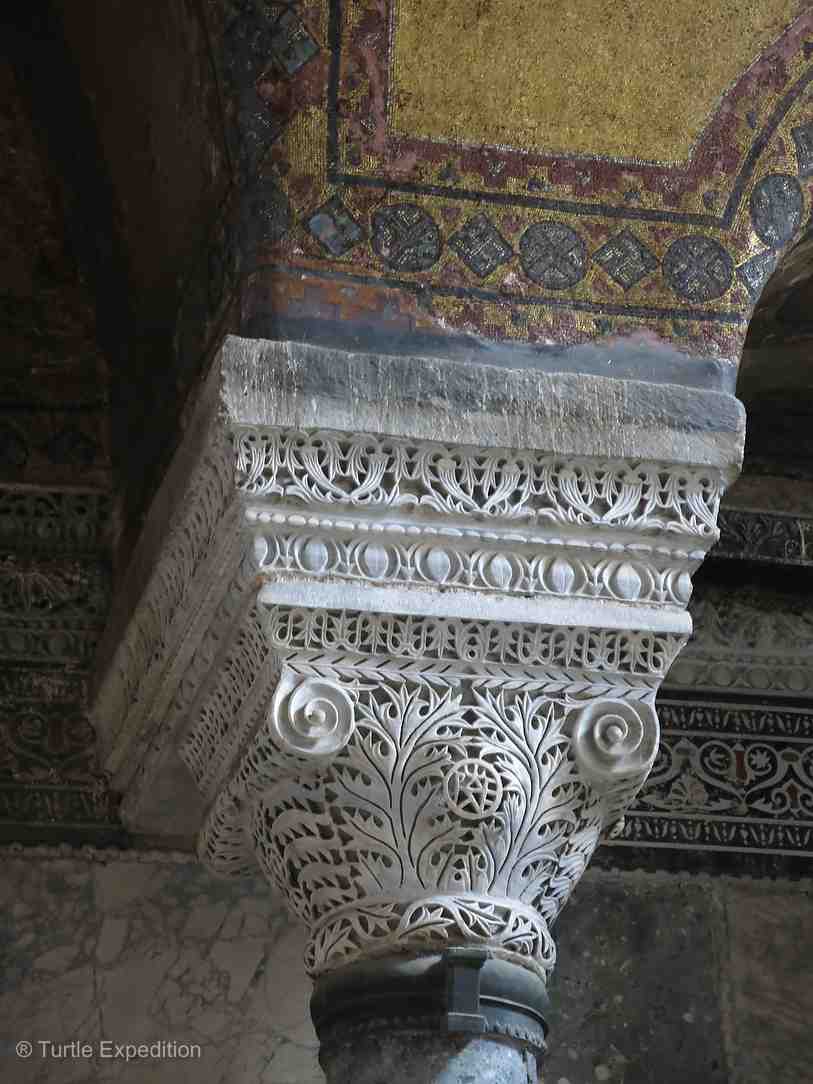
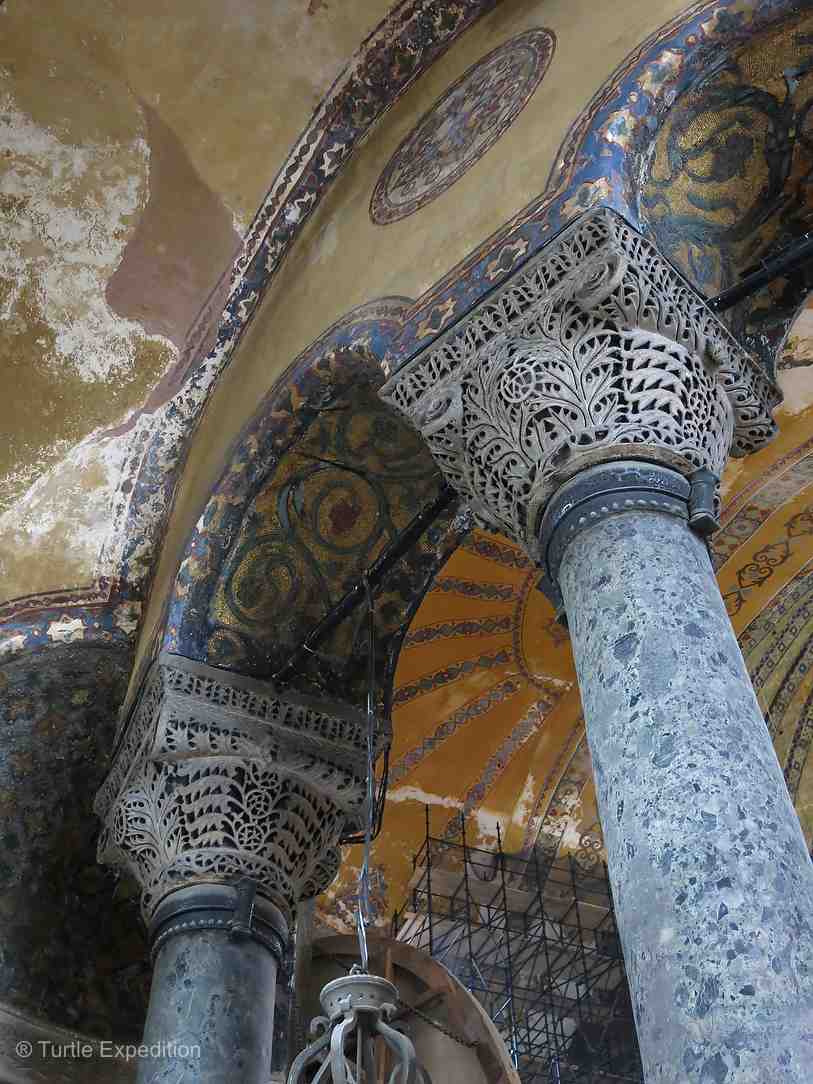
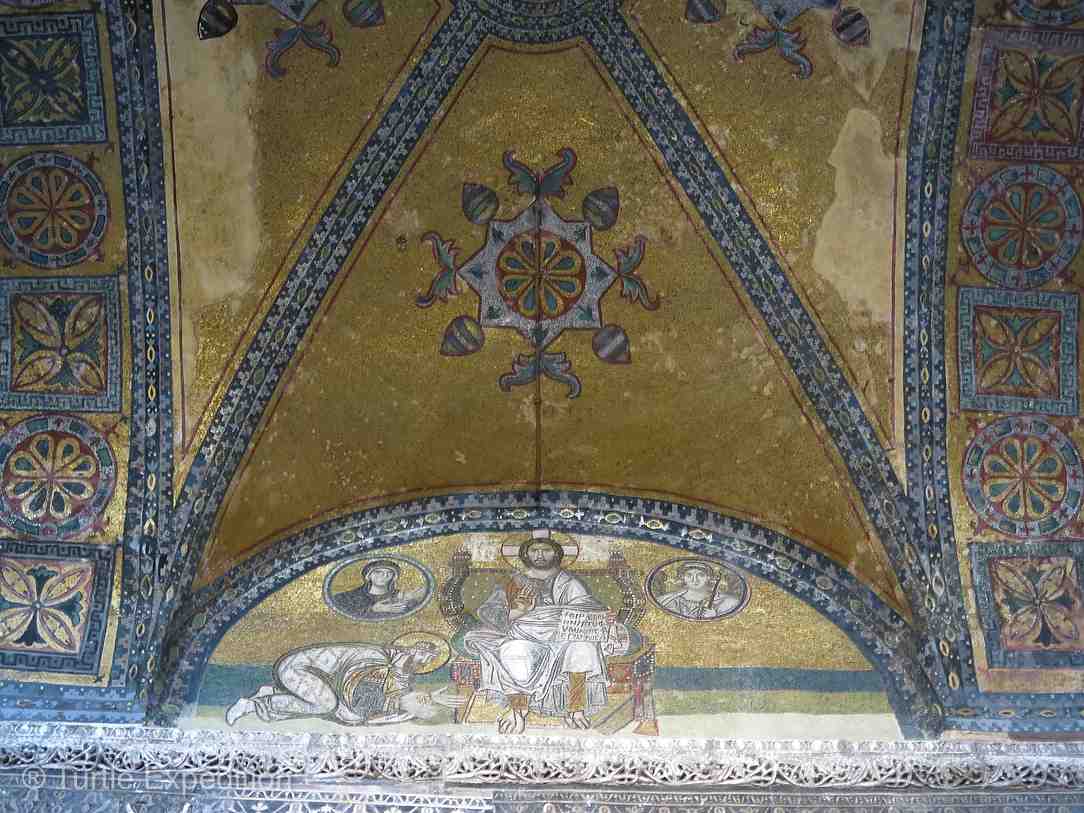
- Beautiful marble columns with intricately carved heads called capitals supported the massive walls of Aya Sophia.
-
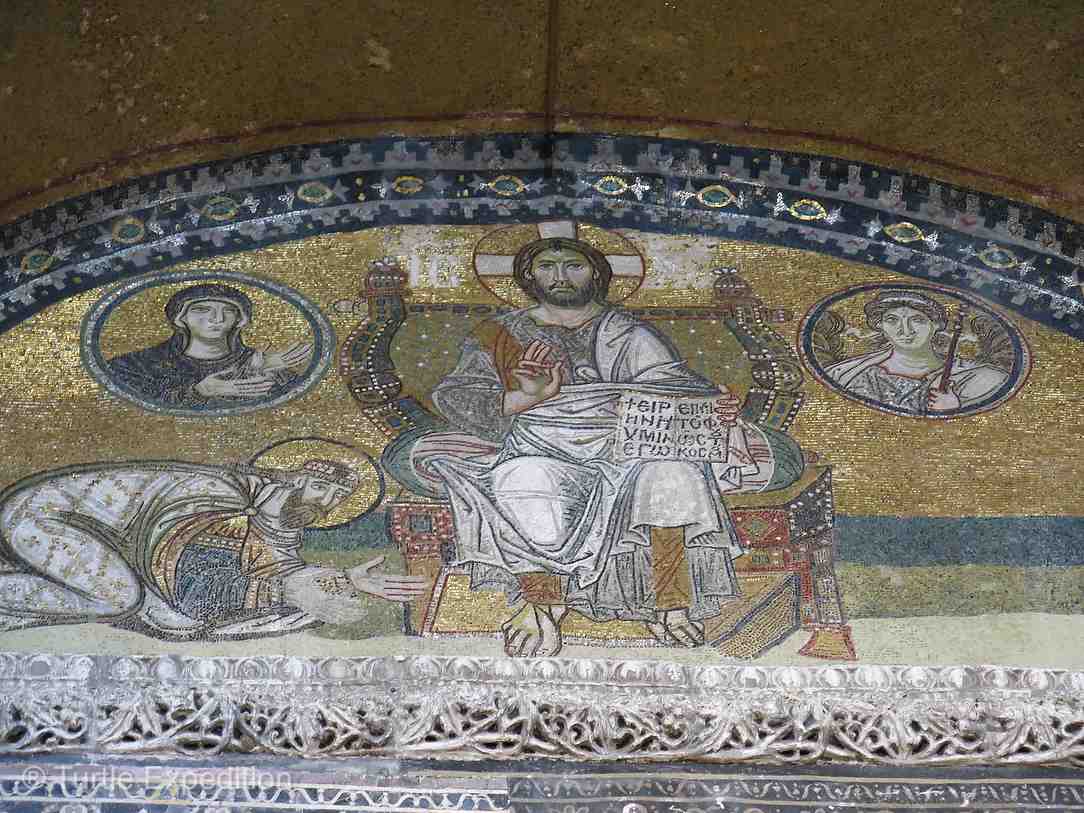
- This mosaic panel from the 9th century shows the all-sovereign Christ on the throne, Virgin Mary and Archangel Gabriel in the medallions and a prostrating emperor that is either Leon VI (886-912) or Basil I (867-886).
-
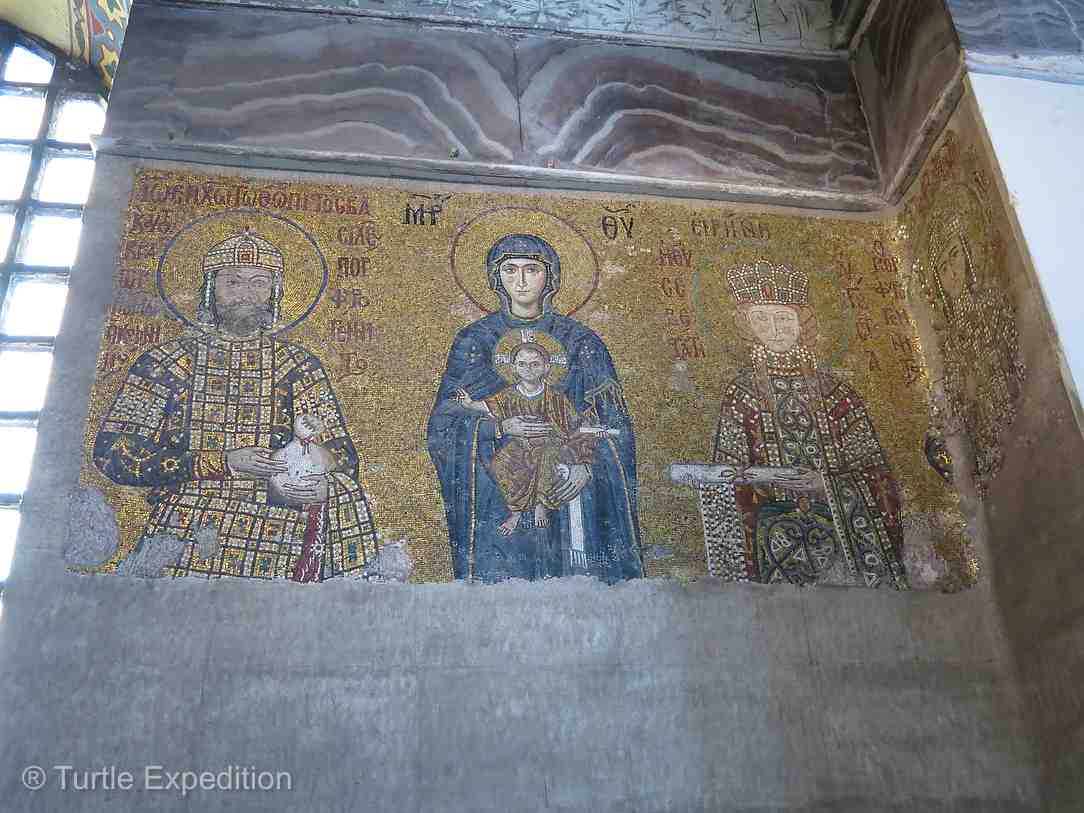
- The intricacies of these mosaics were astounding. In the middle, Virgin Mary is holding Jesus, Emperor John II Komnenos is on her left, his wife the Empress Eirene on her right and their son Alexios is pictured above the buttress.
-
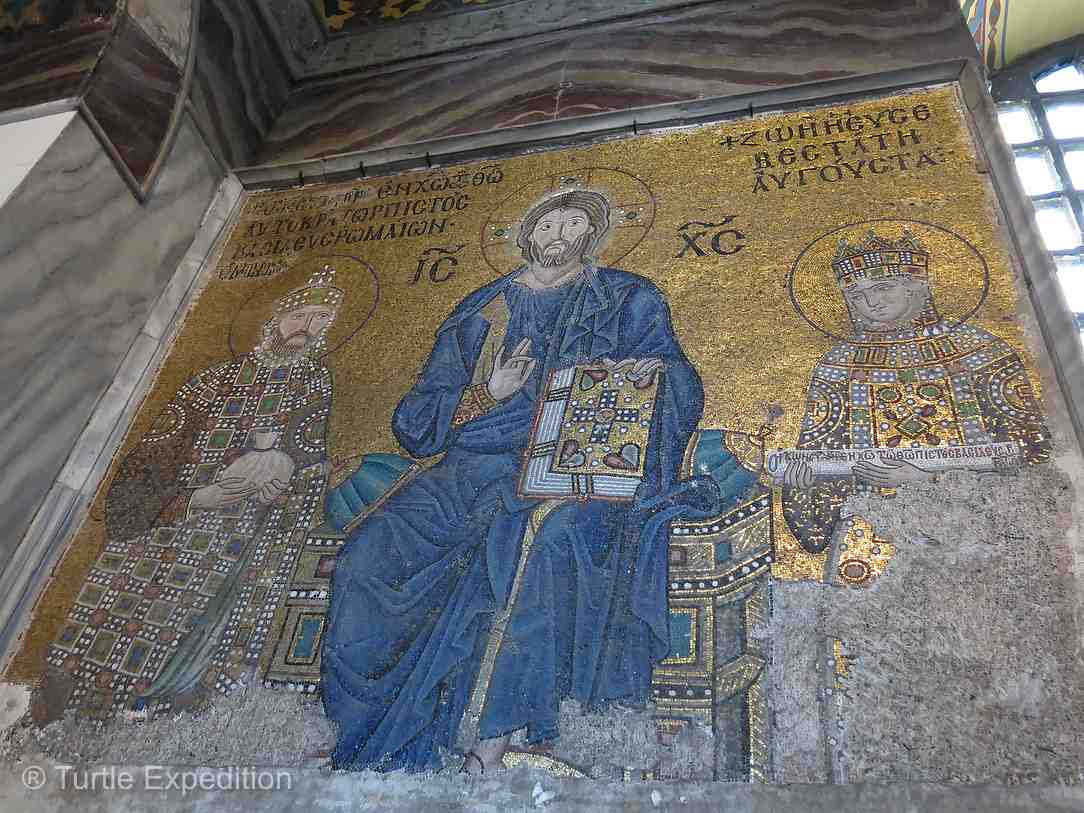
- The Royal couple donated money to Hagia Sophia.
-
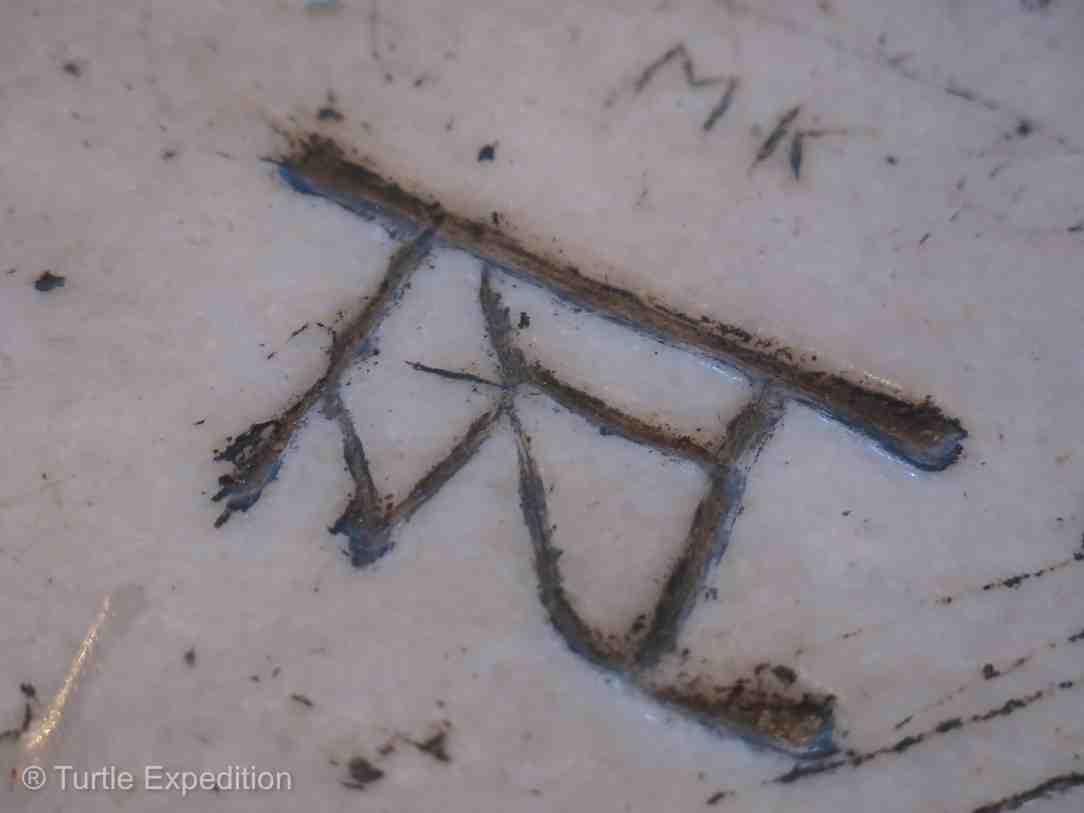
- Carved into marble in the upper balcony this inscription was written by a Viking Imperial guard of the Eastern Roman Empire. Was this the beginning of graffiti?
-
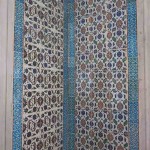
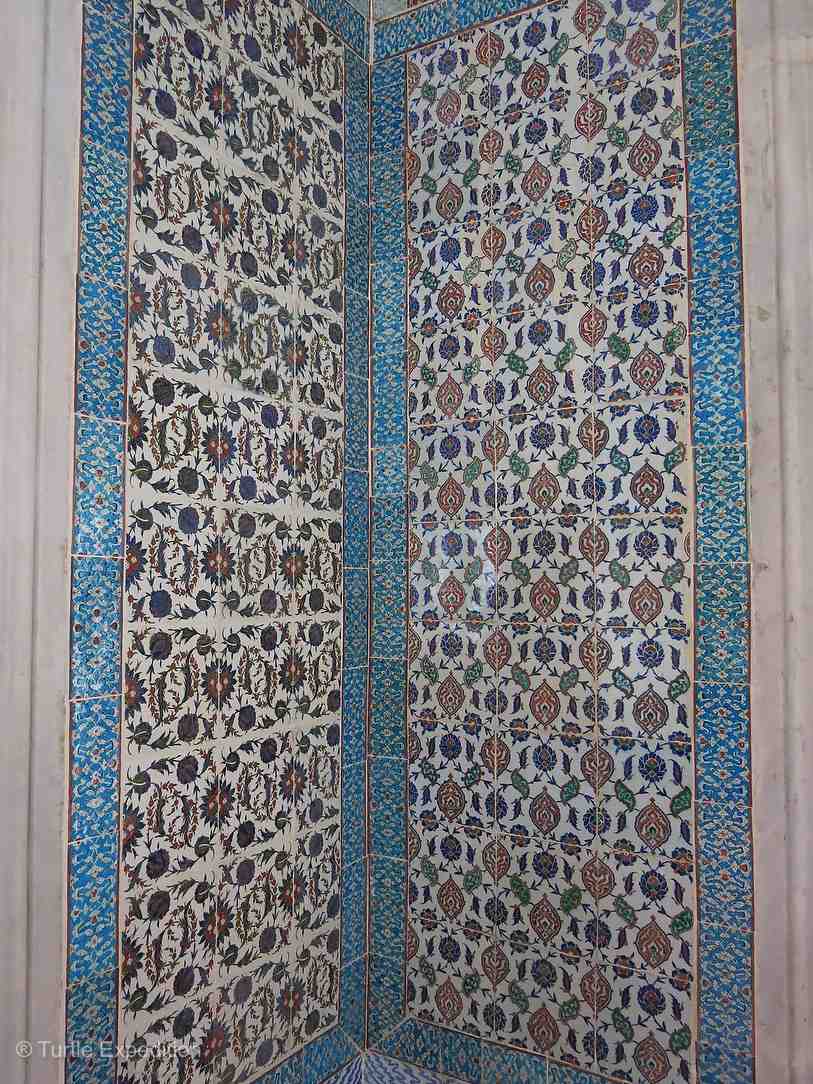
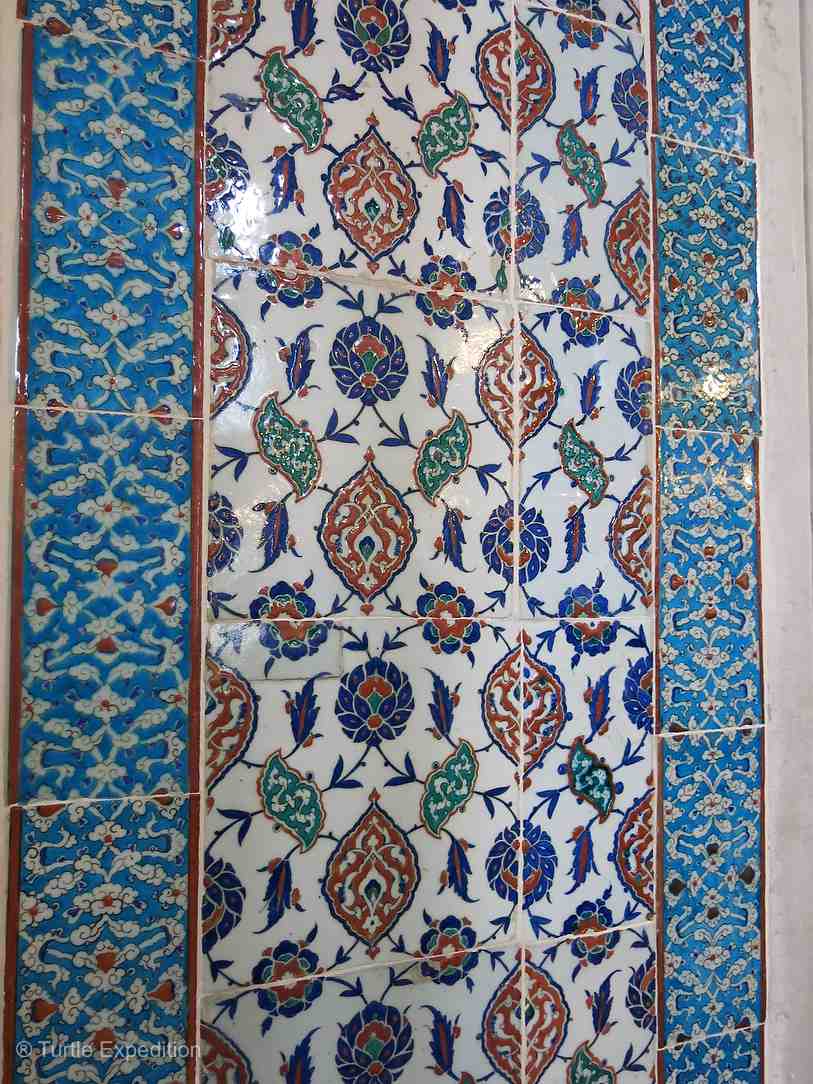
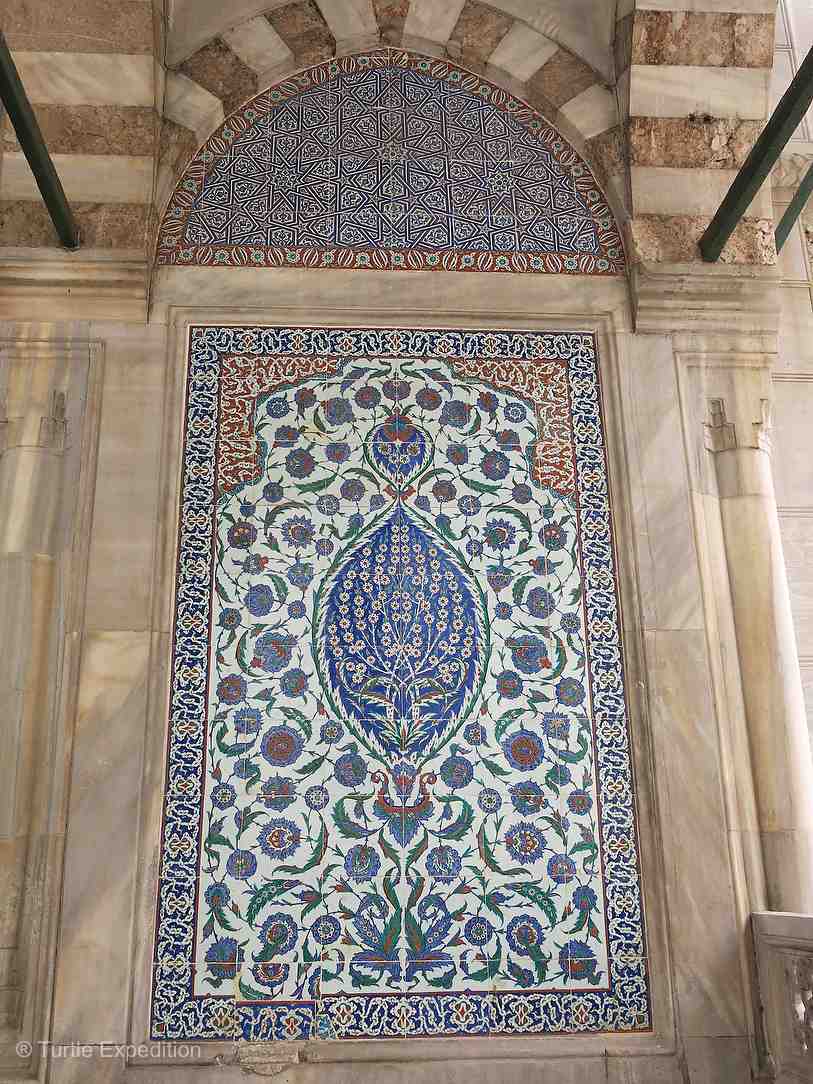
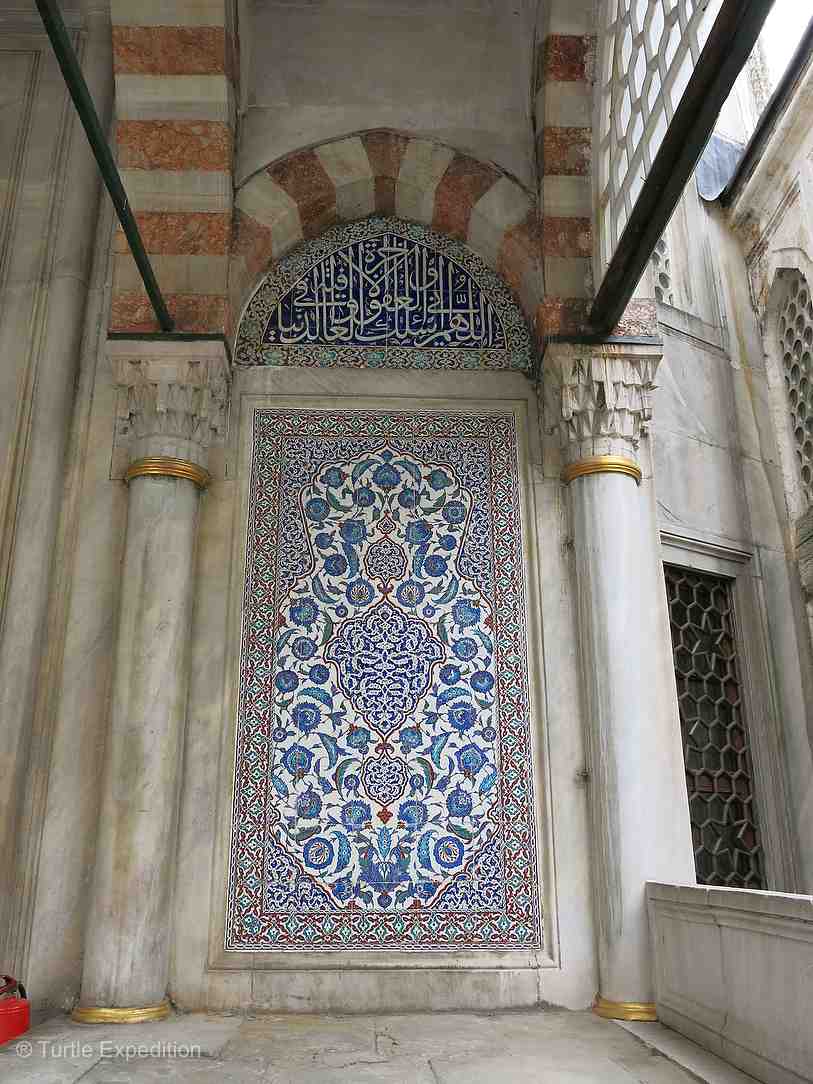
- Aside from the amazing details of the mosaics, the walls of beautiful Iznik tile from a later period were equally impressive.
-
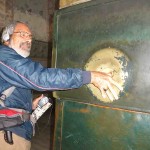
- Gary puts his thump into the weeping hole to make a wish for safe travel along the Silk Road.