

China # 1 – Arriving in Kashgar – August 28, 2014
China! We had started our process to drive across all of China months before. Working with Lisa Li at NAVO Tour in Chengdu, we explained to her what our overall plan was; to drive from the Atlantic Ocean to the Pacific Ocean, across all of Eurasia, following the Silk Road. To drive our own vehicle in China, we would need a guide, whether it was one vehicle or ten. Three would be nice so the cost of the guide and other paperwork could be shared. In the end, by the time we had reached Turkey, others who had said they would go with us wimped out. We were not about to turn back! In retrospect, it turned out to be the best decision we made.
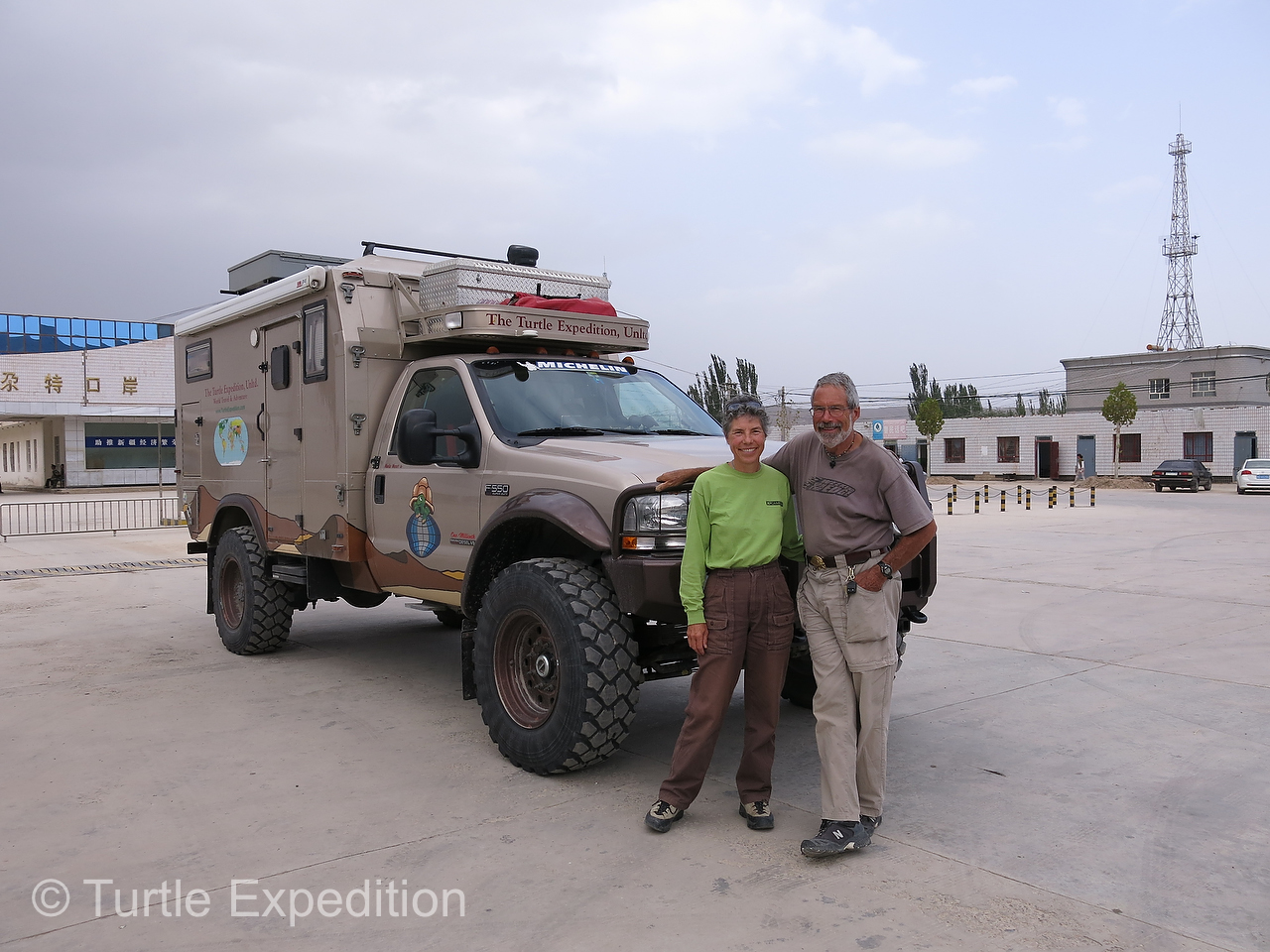
Evidence! Only 5,000 miles to go to reach the Yellow Sea and the North Pacific Ocean.
The paperwork involved detailed information about our truck and ourselves. Really detailed!! Then a route needed to be designed so that we could enter at an exact place and time and exit at a specific border and time and stop at some of the historical and cultural highlights of this huge and very complex country like the Great Wall of China and the famous Terracotta Warriors. We also wanted to cross the Taklamakan Desert. In Chinese, Taklamakan means, “If you go in, you won’t come out.” Well yeah! Our mandatory guide would ride with us every inch of the way, and once our route was decided on, we could not deviate from it for more than 35 km, (21 miles), or risk heavy fines which would be imposed on us and on NAVO Tour. An advance deposit of $2,500 was made and we were committed.
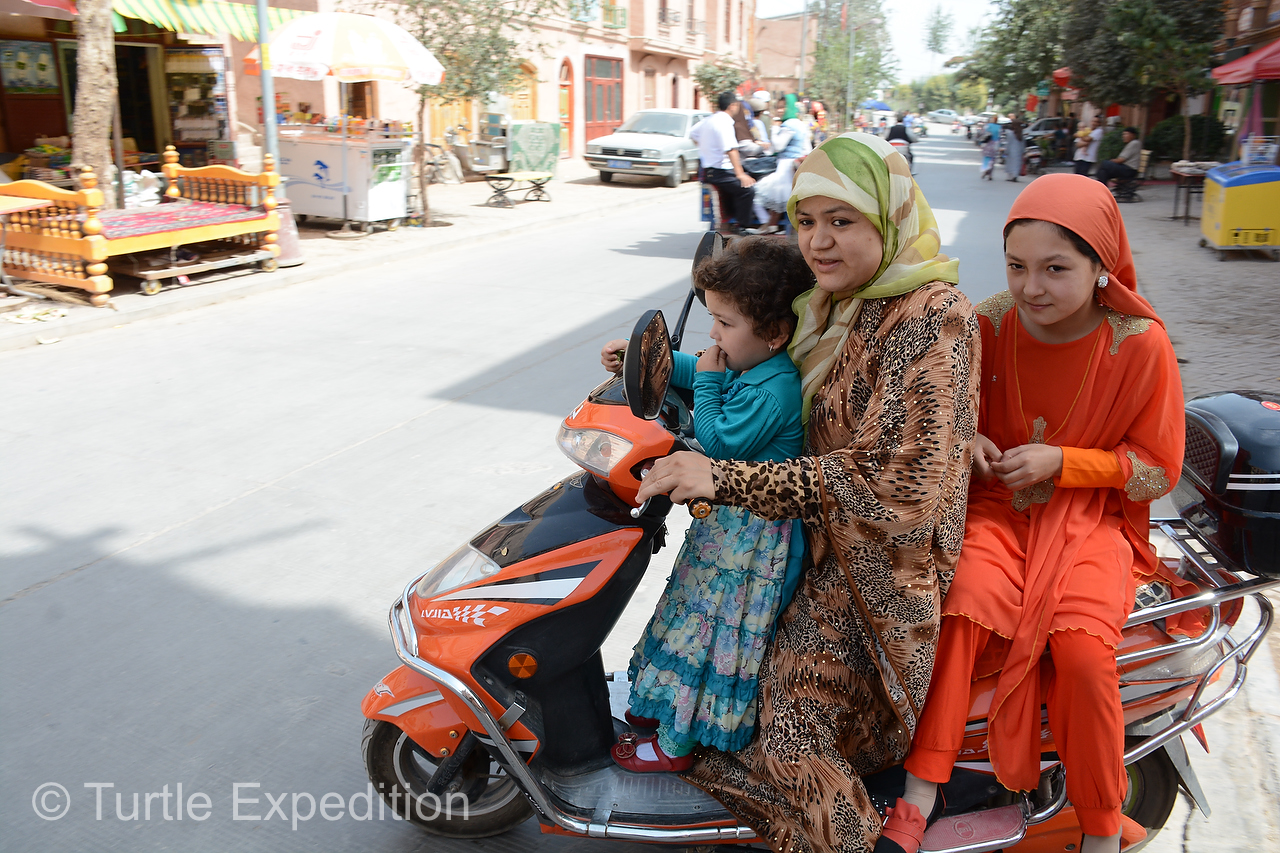
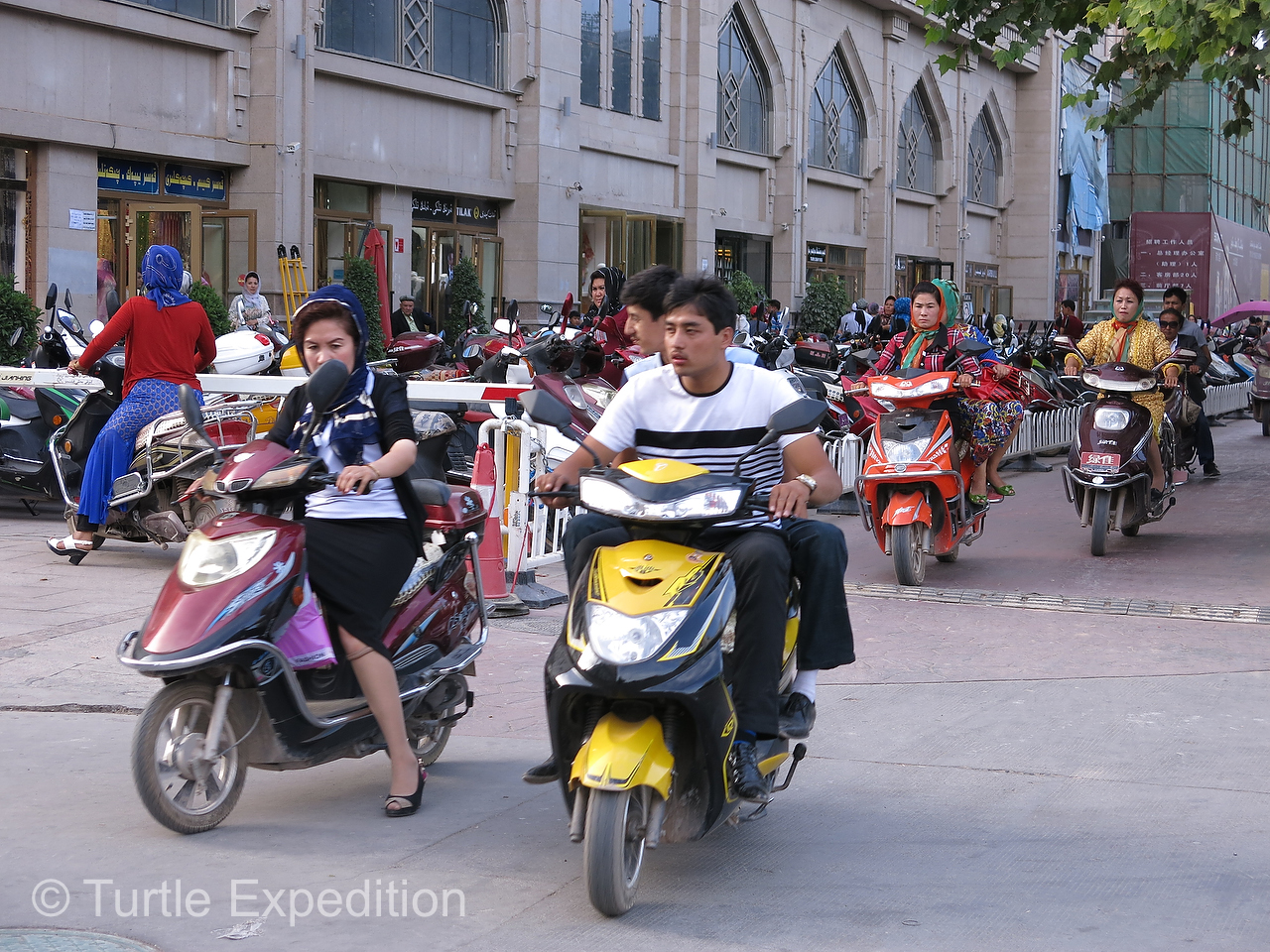
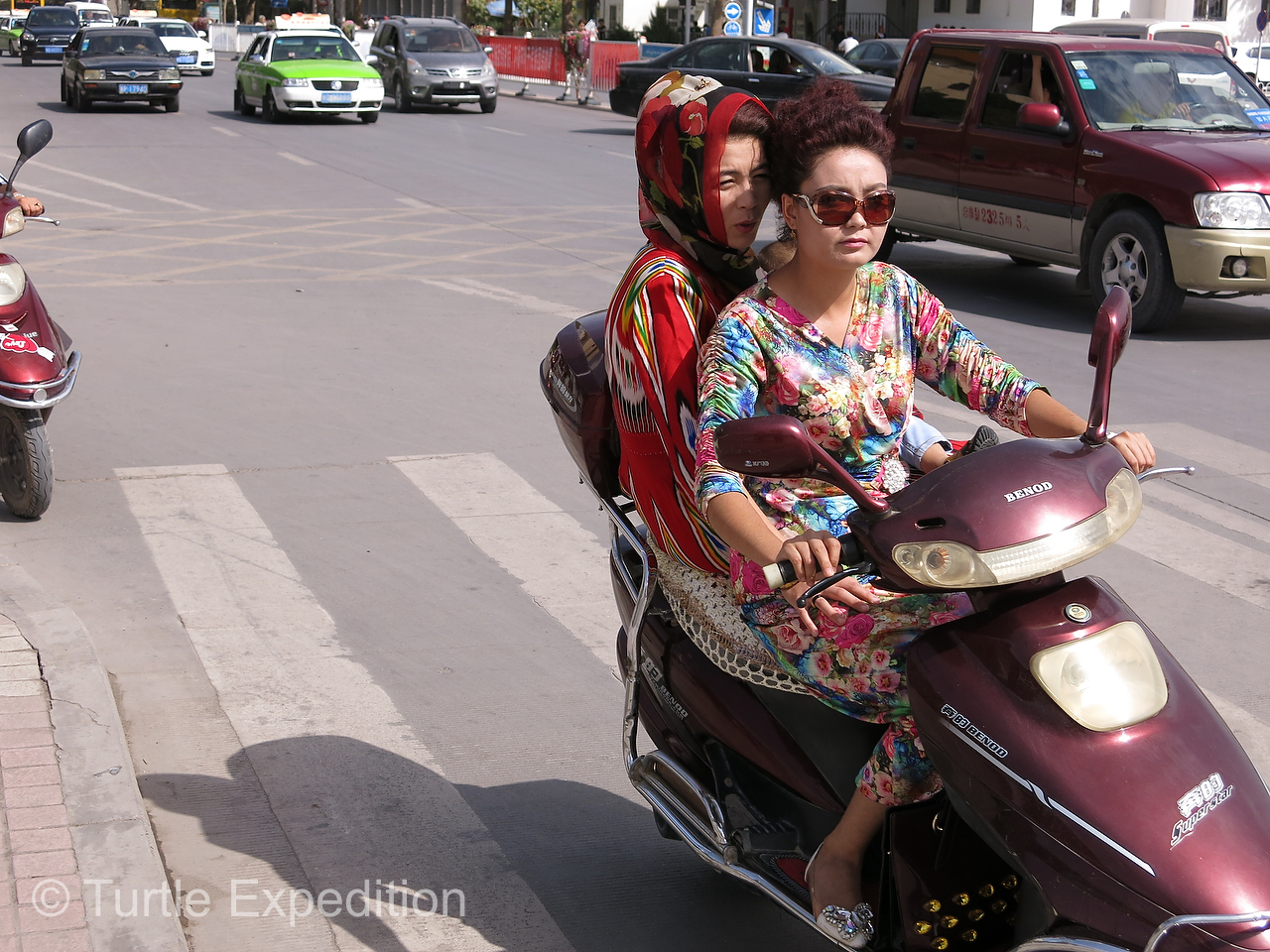
Women rode their motorscooters very proficiently.
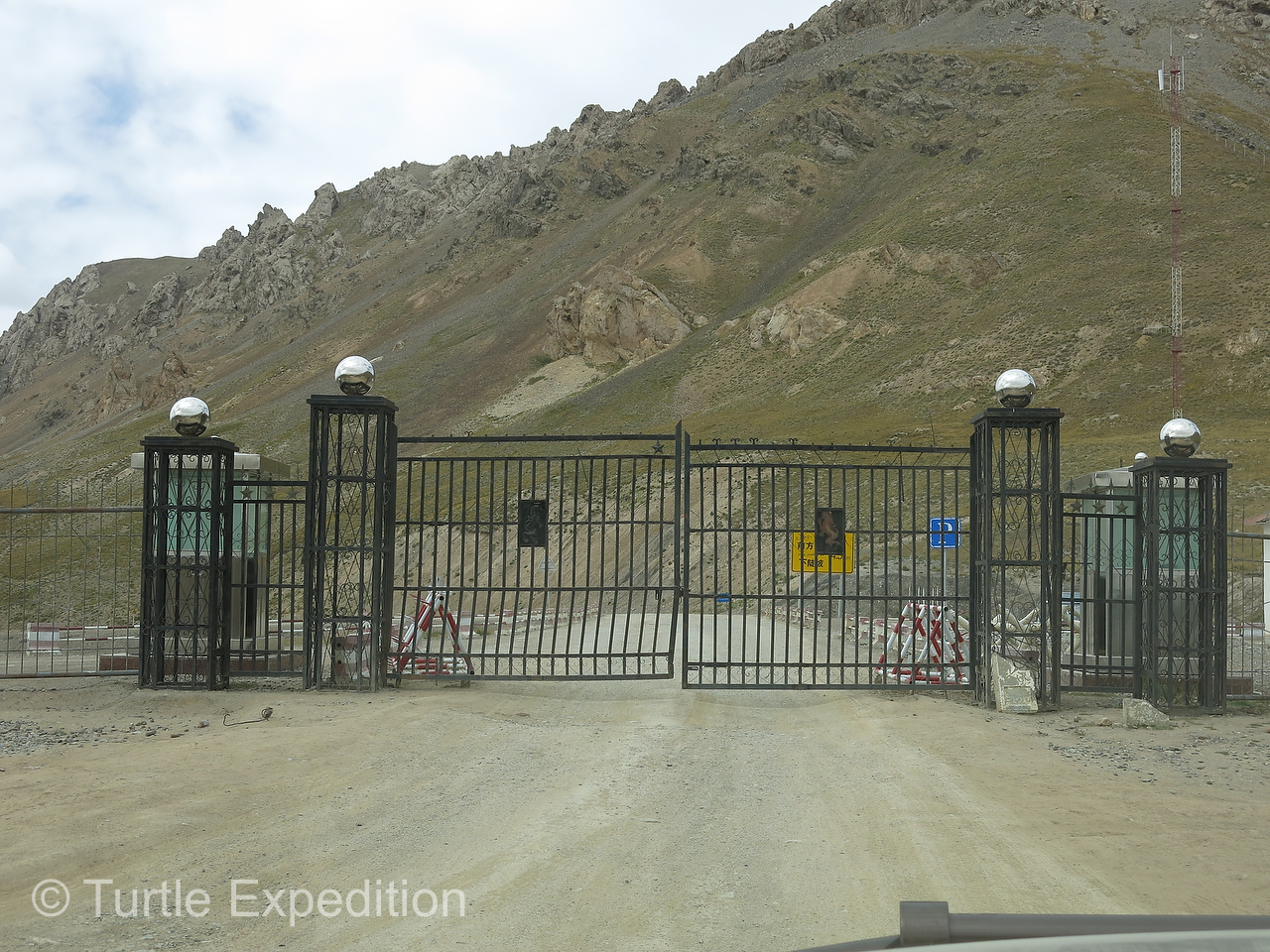
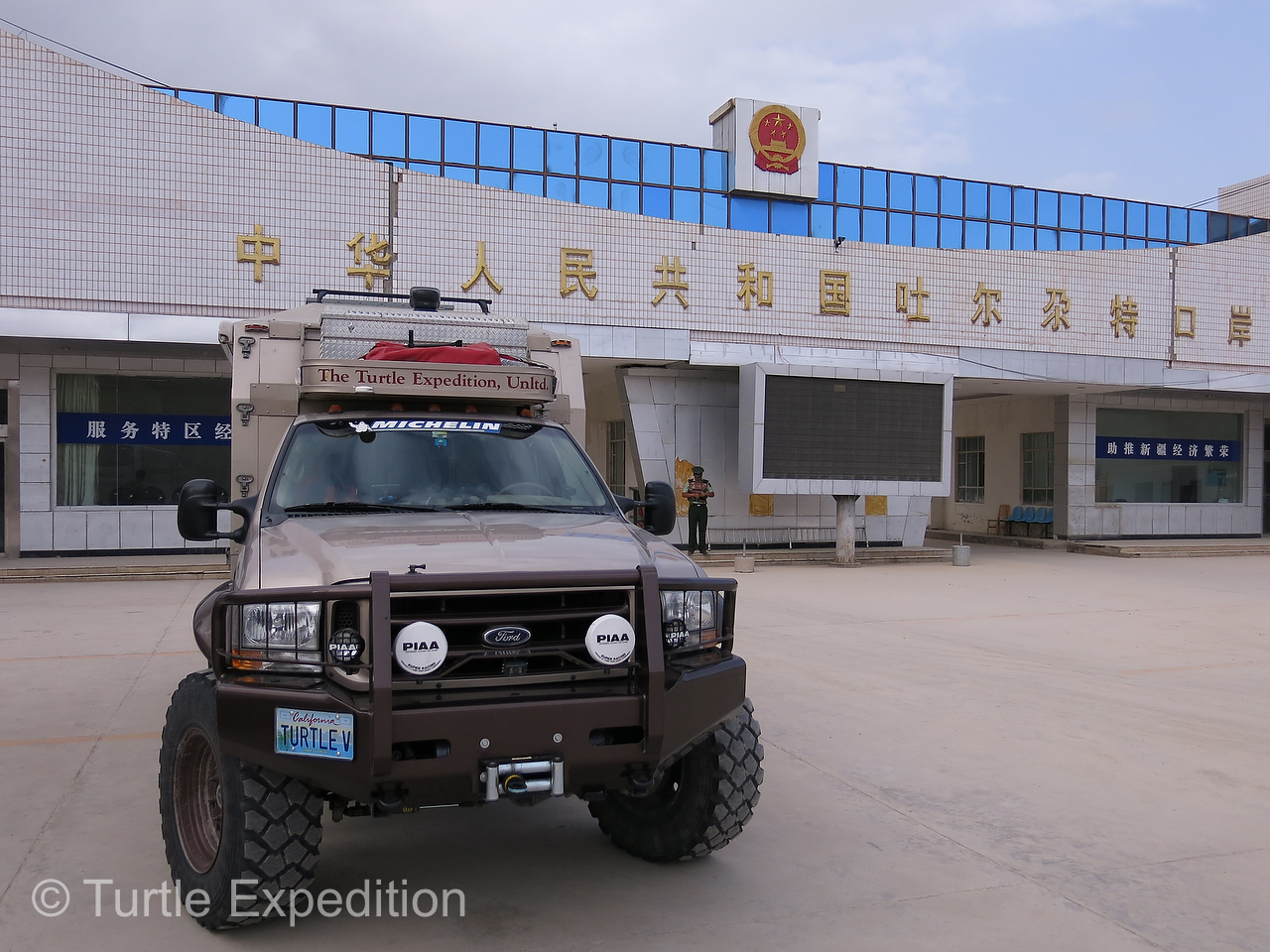
Through all of this process, Lisa at the NAVO’s head office was extremely efficient and patient, answering our every question and advising us of what we should not miss. (en@navo-tour.com) If we had a problem, she had an answer. Now, with our truck parked a few yards from the gate at the Chinese border at the Turugart Pass, 3,752 meters, (12,909 feet), we waited for an intermediate guide to meet us.
The lengthy 2-hour lunch lethargically crept by and our first guide finally showed up. We presented our papers and proceeded to the second Customs and Immigration center an hour away, still an hour’s drive from Kashgar where we would meet our real guide that evening. We would need to drive to yet another Customs and Immigration center outside of Kashgar the next day with our temporary guide for even more inspections and paper work; Chinese driver’s license, temporary import license plate etc., etc. Every inch of our expedition camper and truck was checked, measured, weighed and scanned.
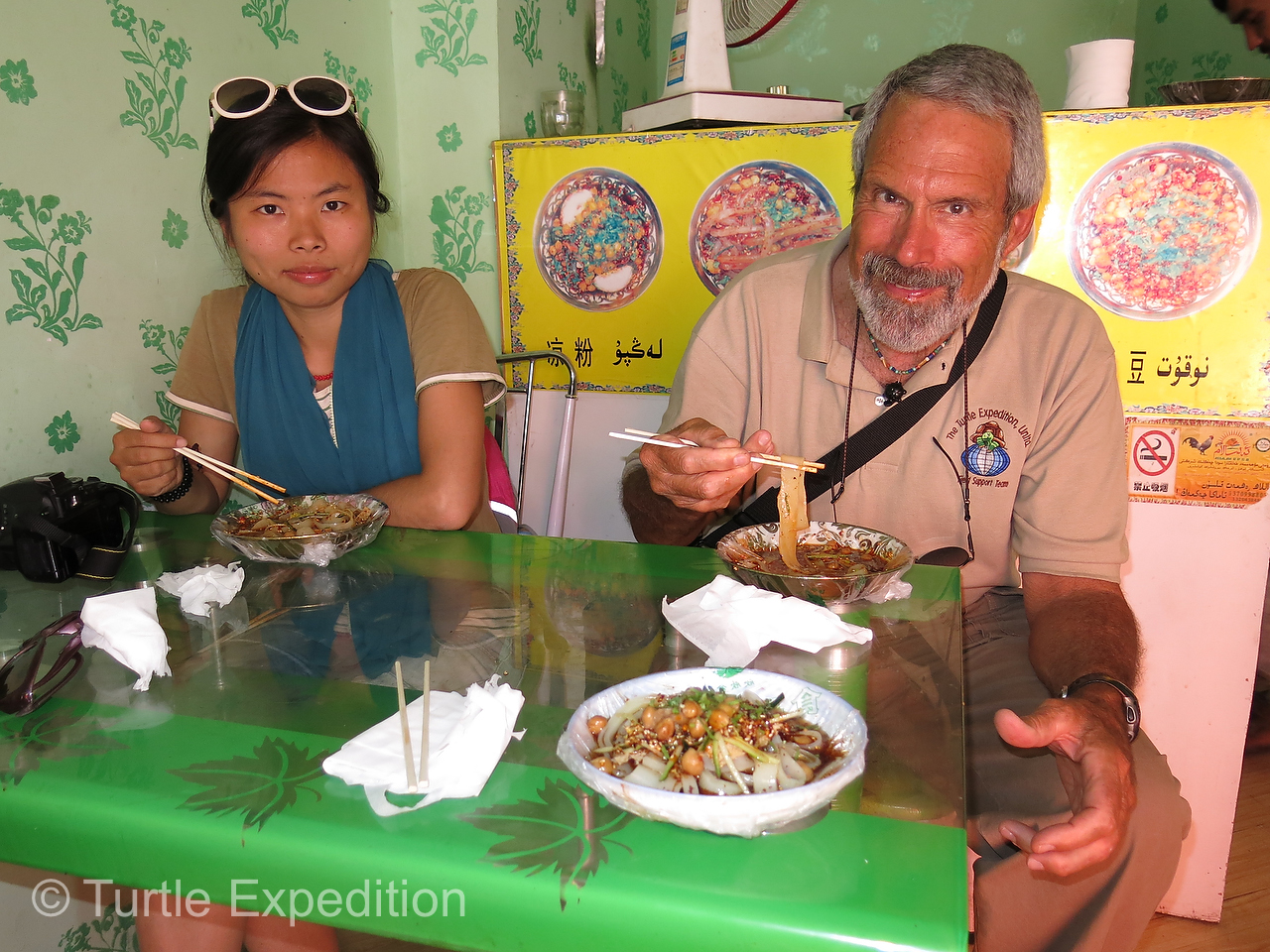
Green spotted a cute hole-in-the-wall café and I tried to remember how to use chopsticks.
Our official real guide was waiting for us at the Hotel Seman, the old Russian embassy, where we could park and camp for the night. We had asked Lisa to find someone who was short, thin and spoke fluent English. Picky, picky, but knowing the guide would need to sit on a make-shift seat on the center console for a month between us, this was very important. Green was perfect. She was born on Earth Day so she gave herself the English name Green. She was excited to travel with us. We would camp every night possible and weather permitting, Green would sleep outside in the MSR tent we carried. Every third night, we would try to find a hotel where she could stay and we would camp in the hotel parking lot.
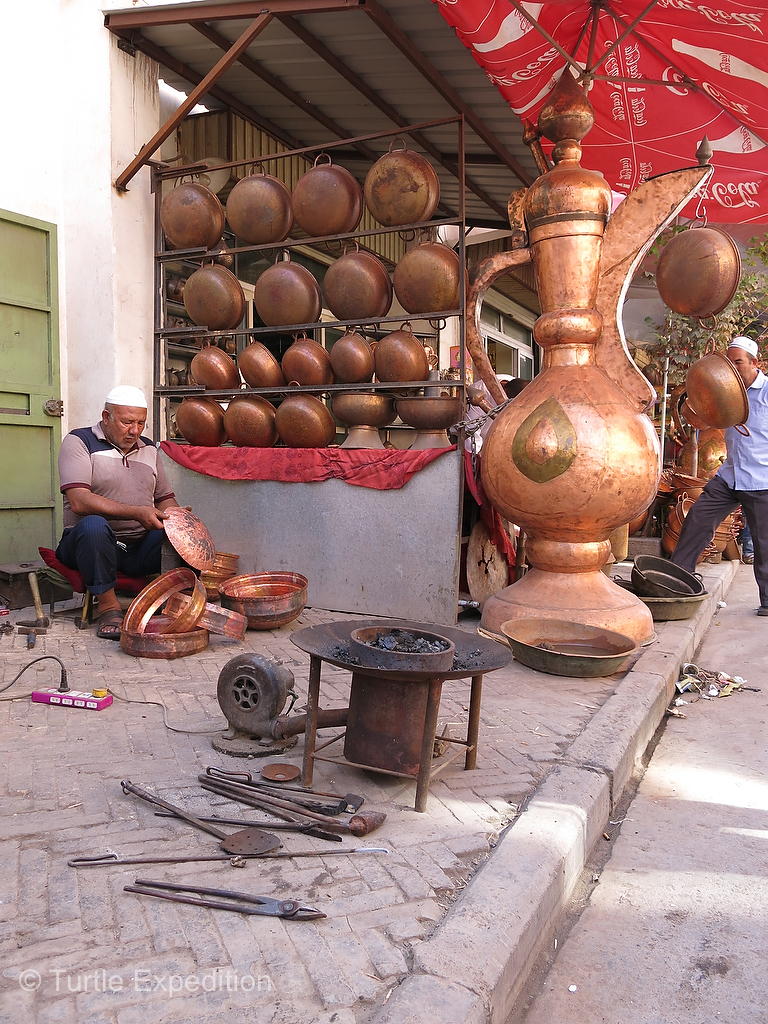
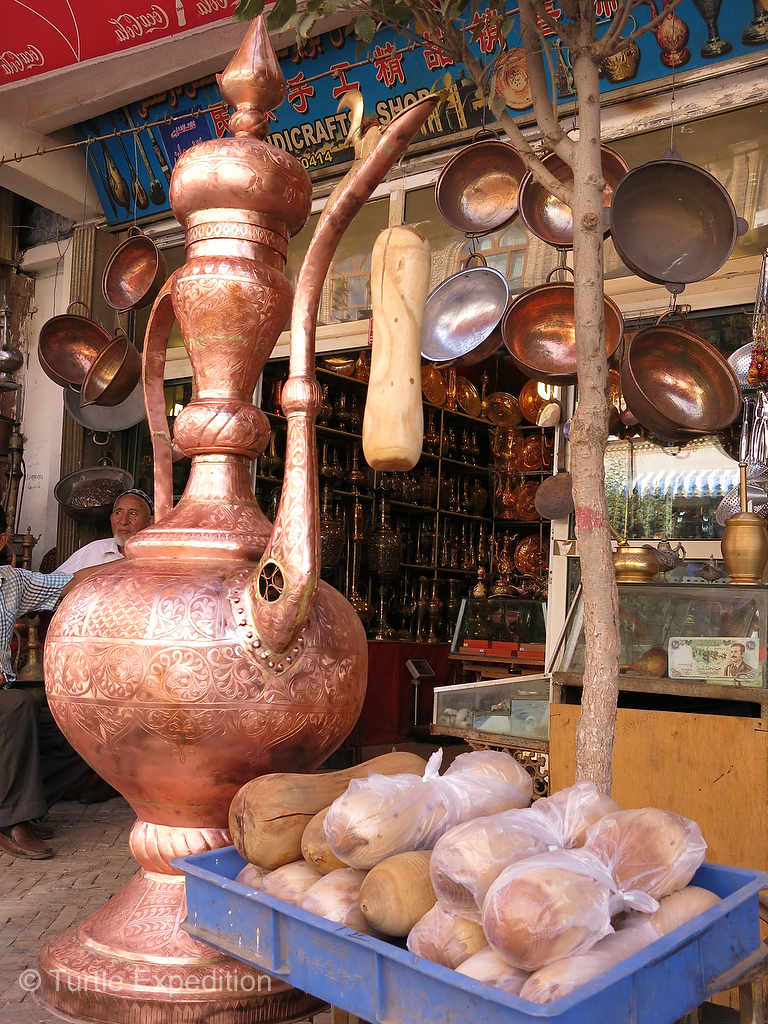
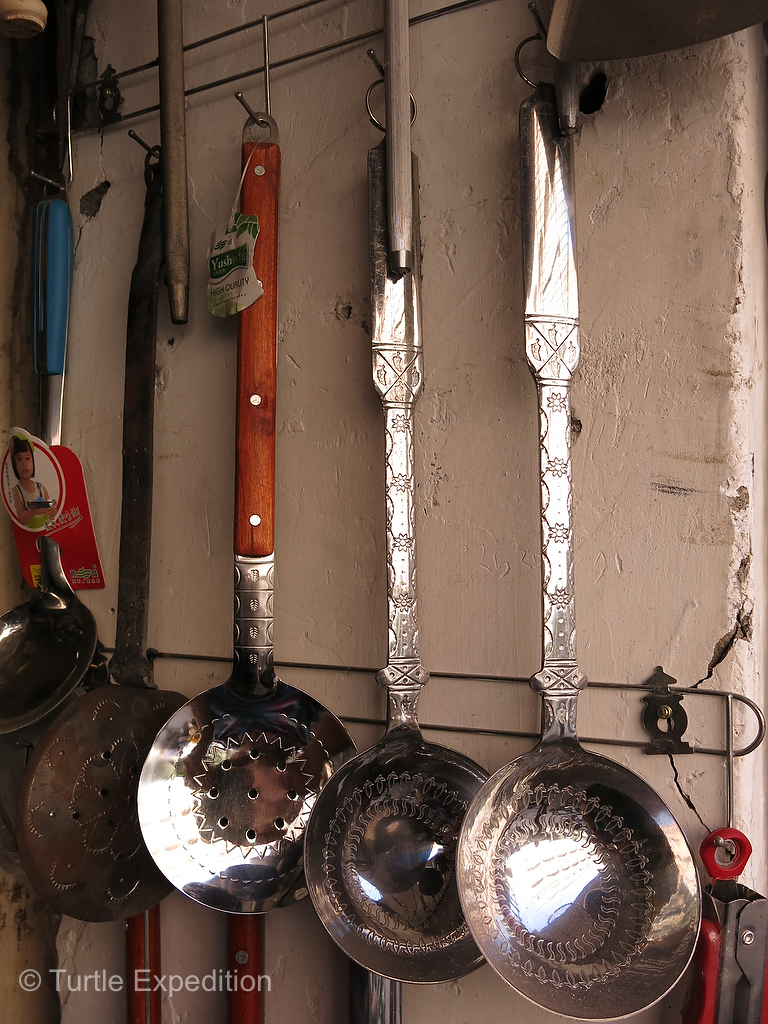
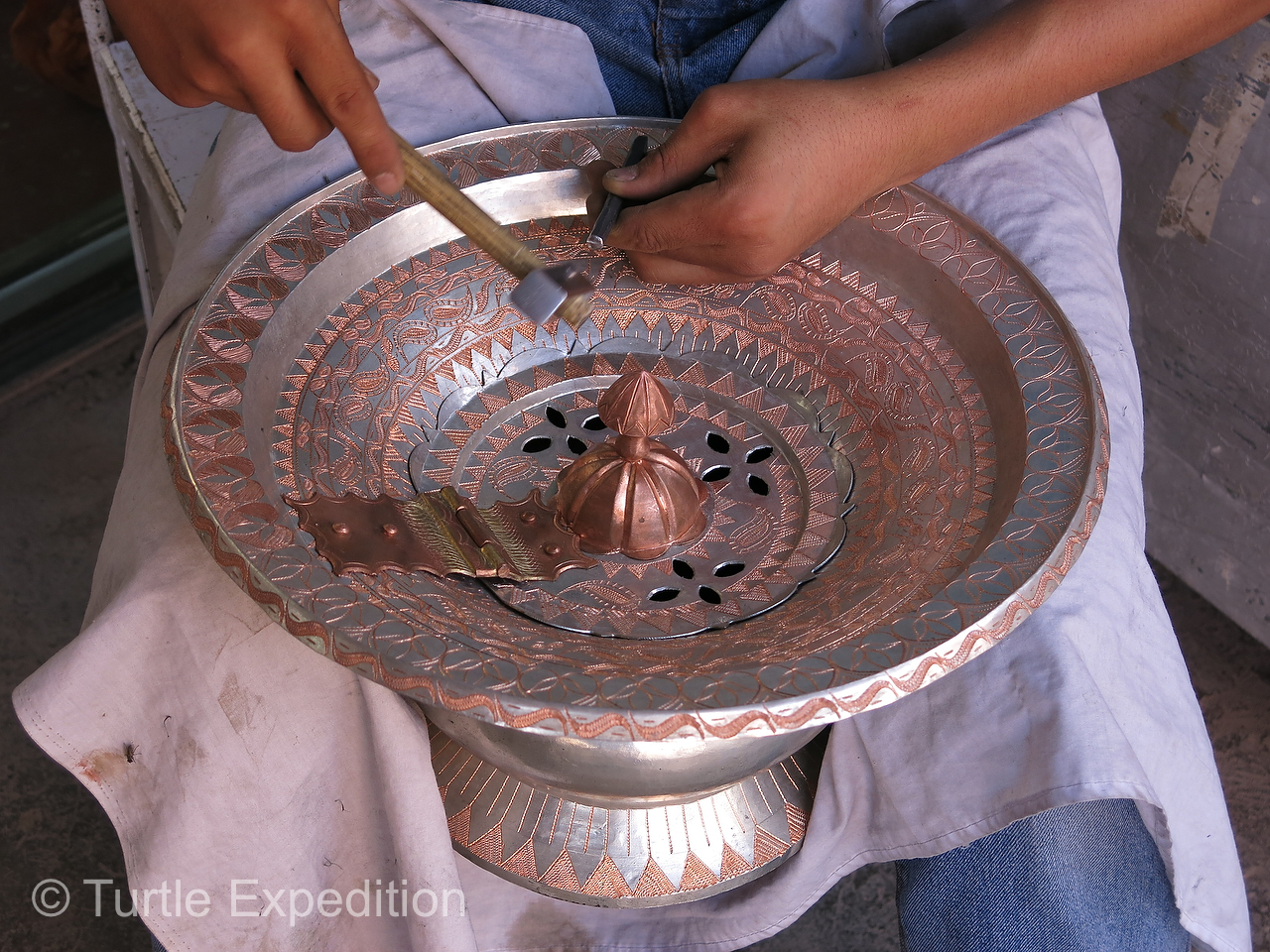
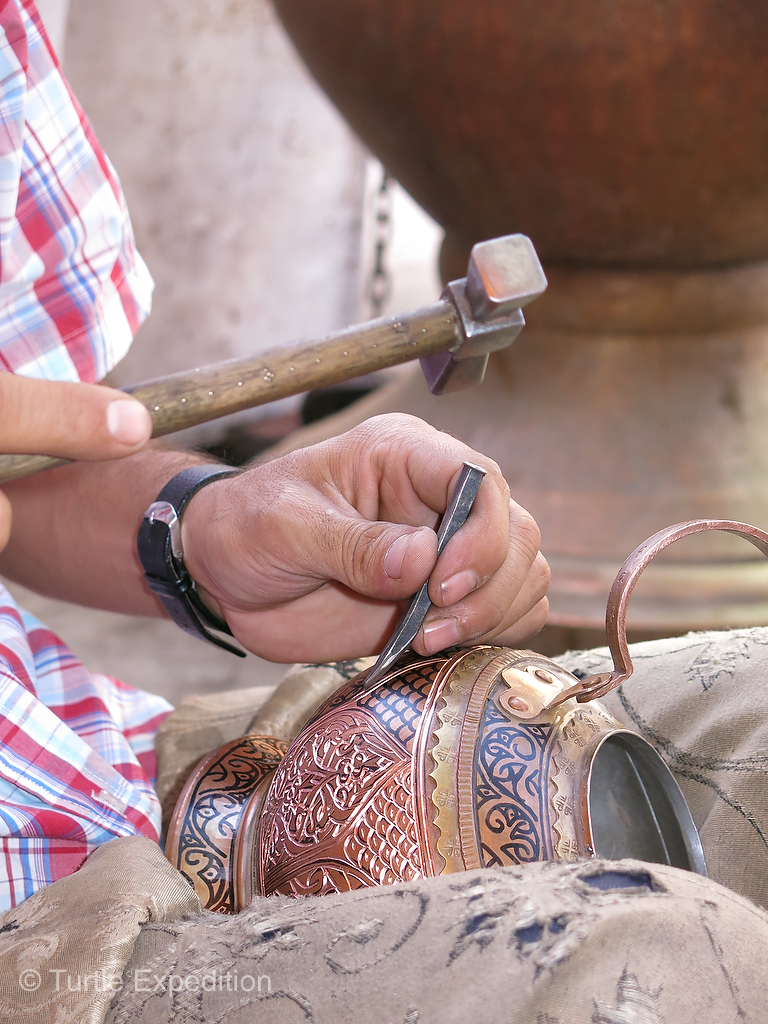
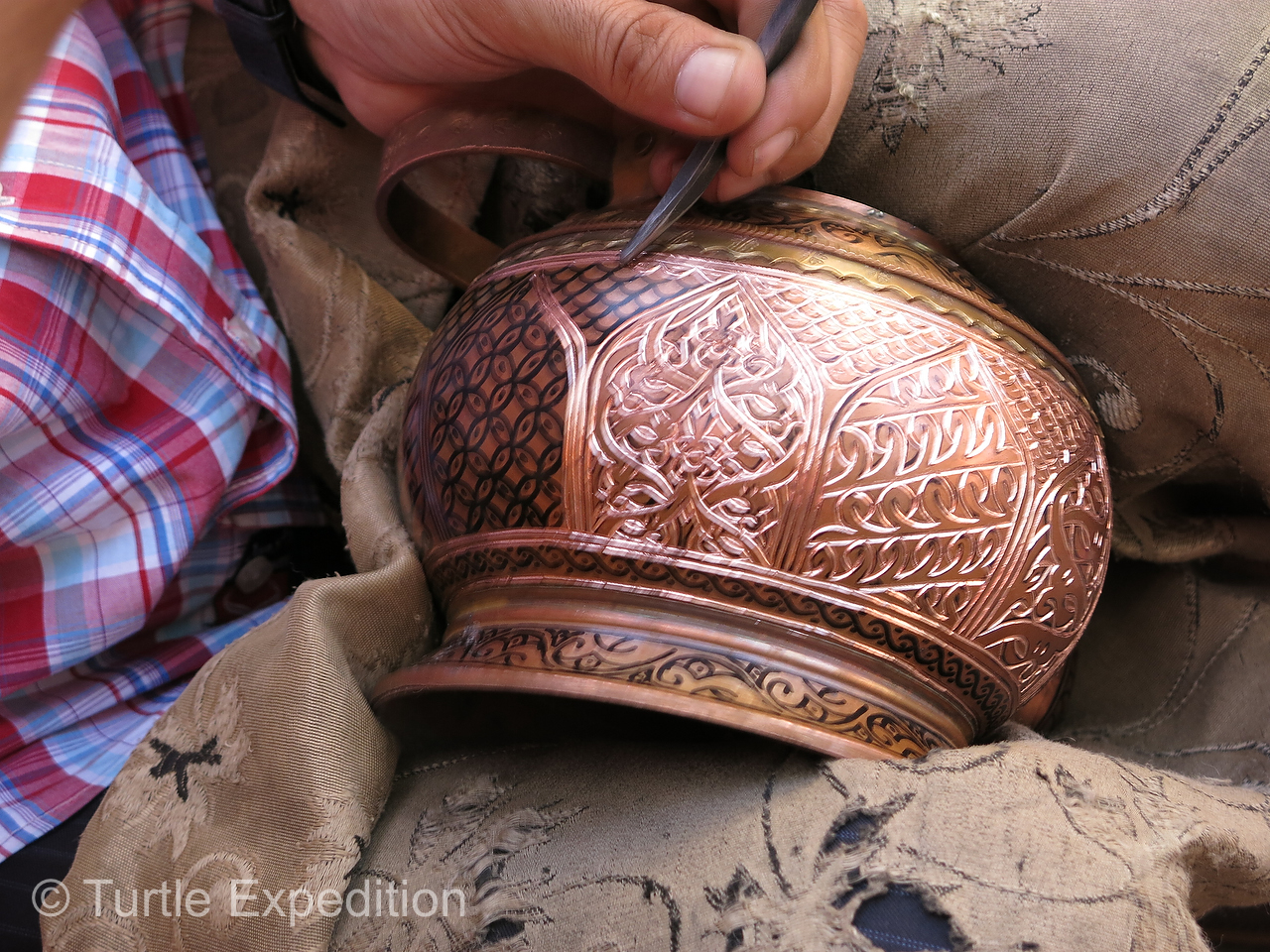
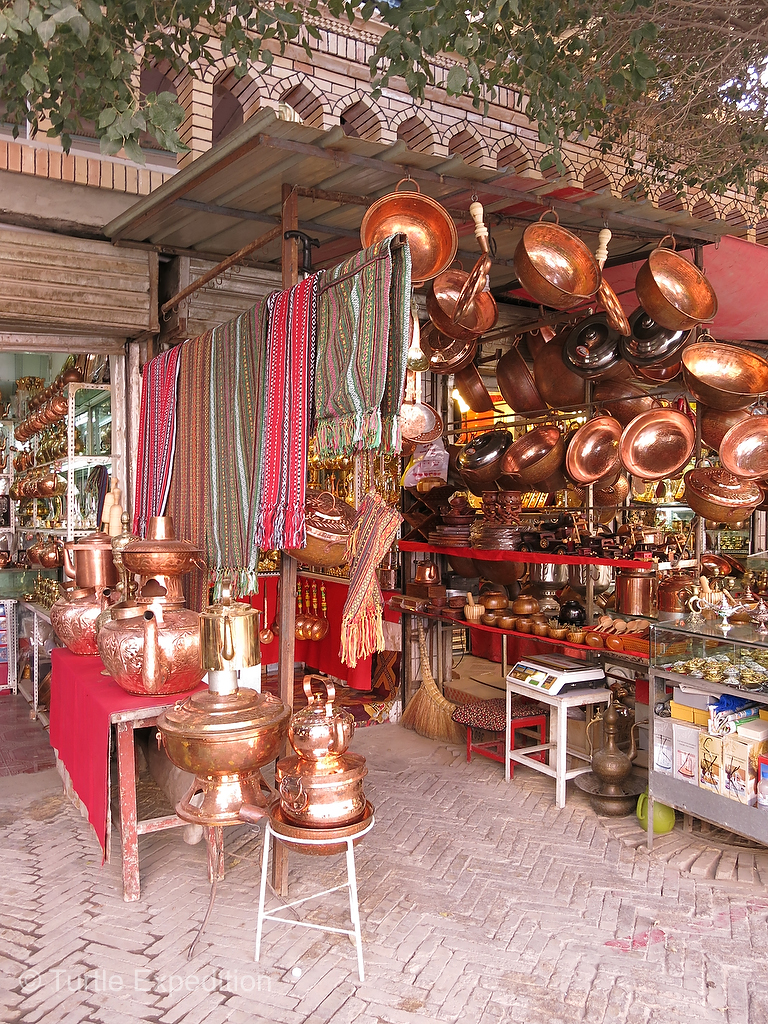
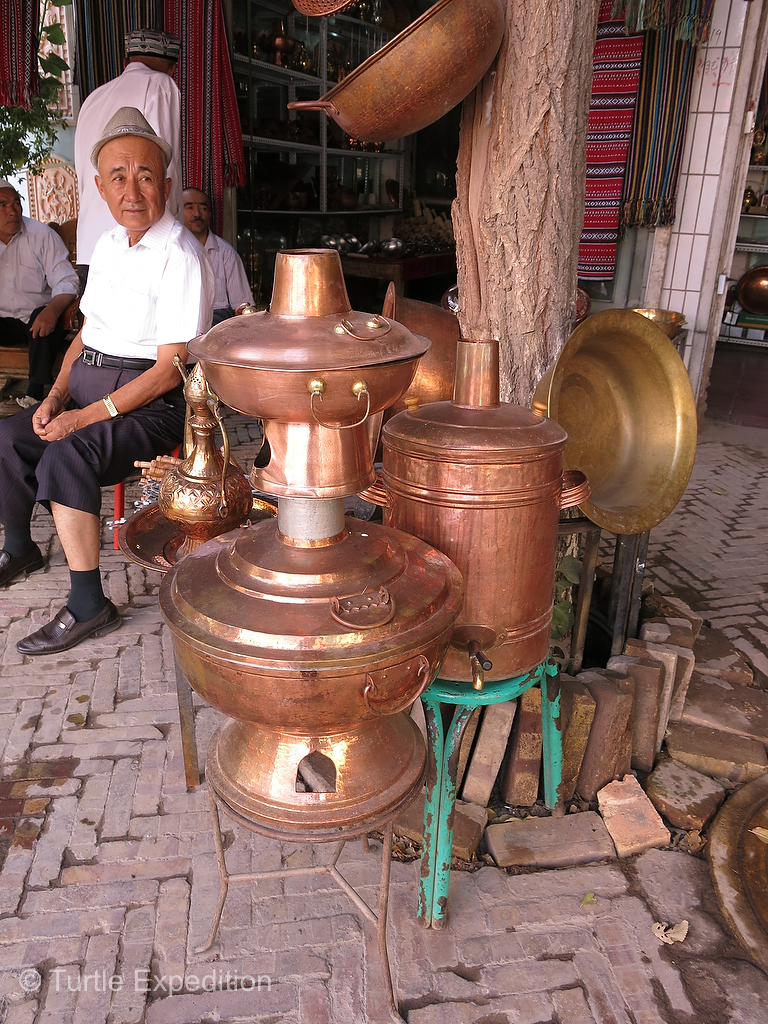
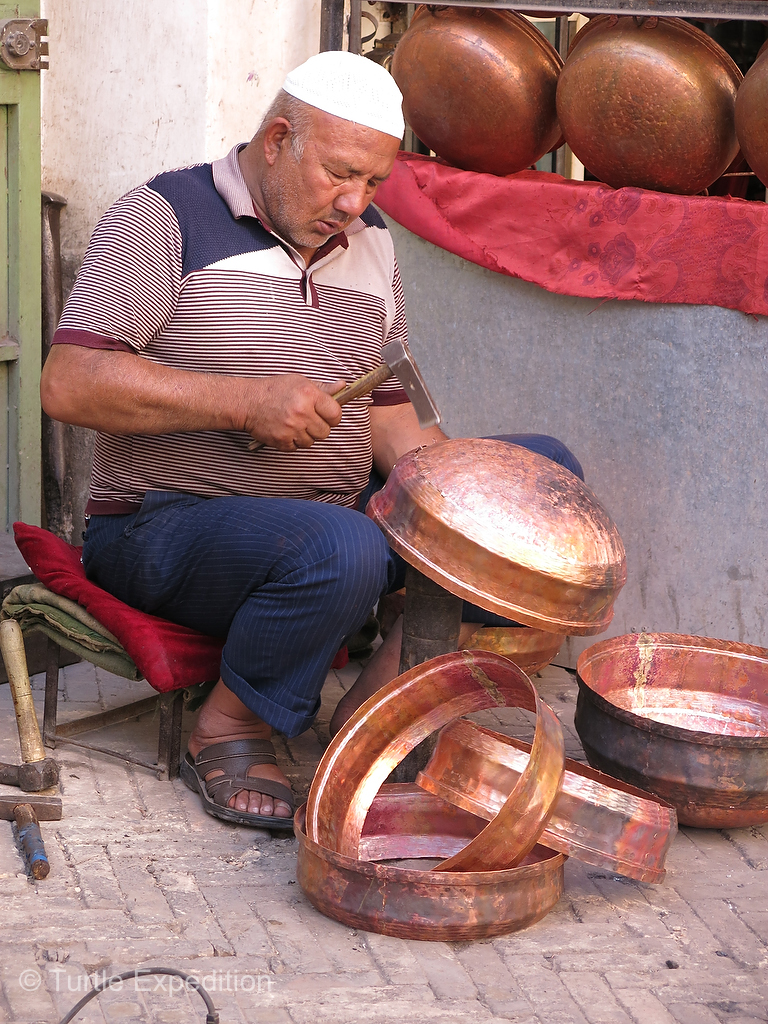
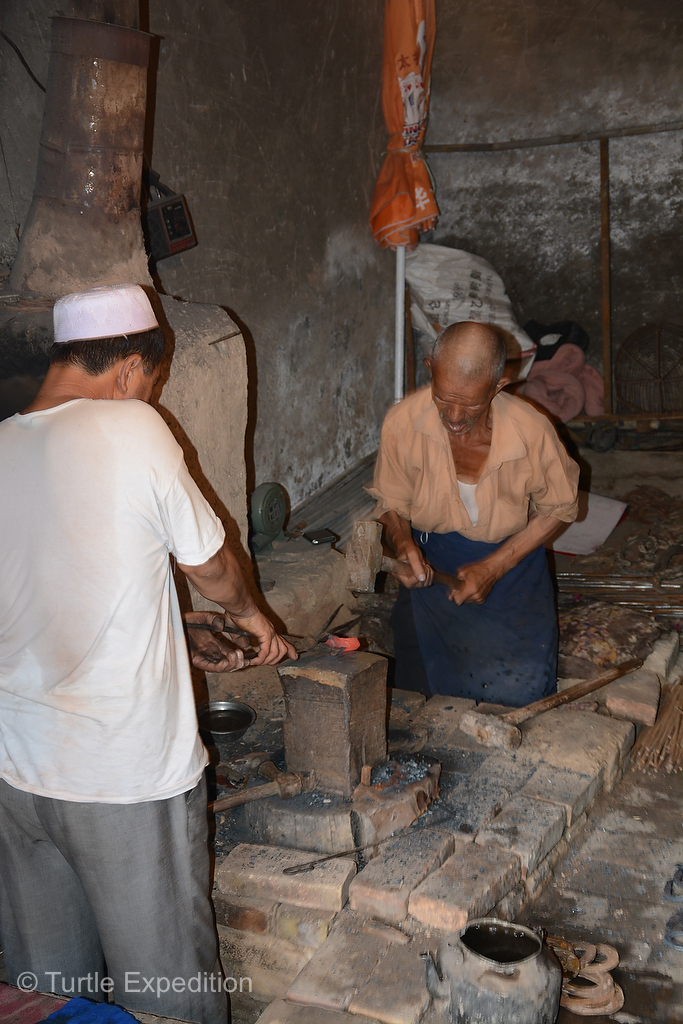
At Kashgar’s Copper Market craftsmen were still using traditional hand tools.
Green had an astounding knowledge of China and had prepared well to be our guide in Kashgar. The next day, we headed straight to some of the many markets and learned very quickly that she was a “food junky”, in a good way. She could spot tasty street food or a safe hole-in-the-wall café wherever we went. Having a guide was a huge advantage. There are at least eight different linguistic groups, with hundreds of dialects and variations. Often they are not mutually understandable. Green was fluent in at least a couple of the main languages.
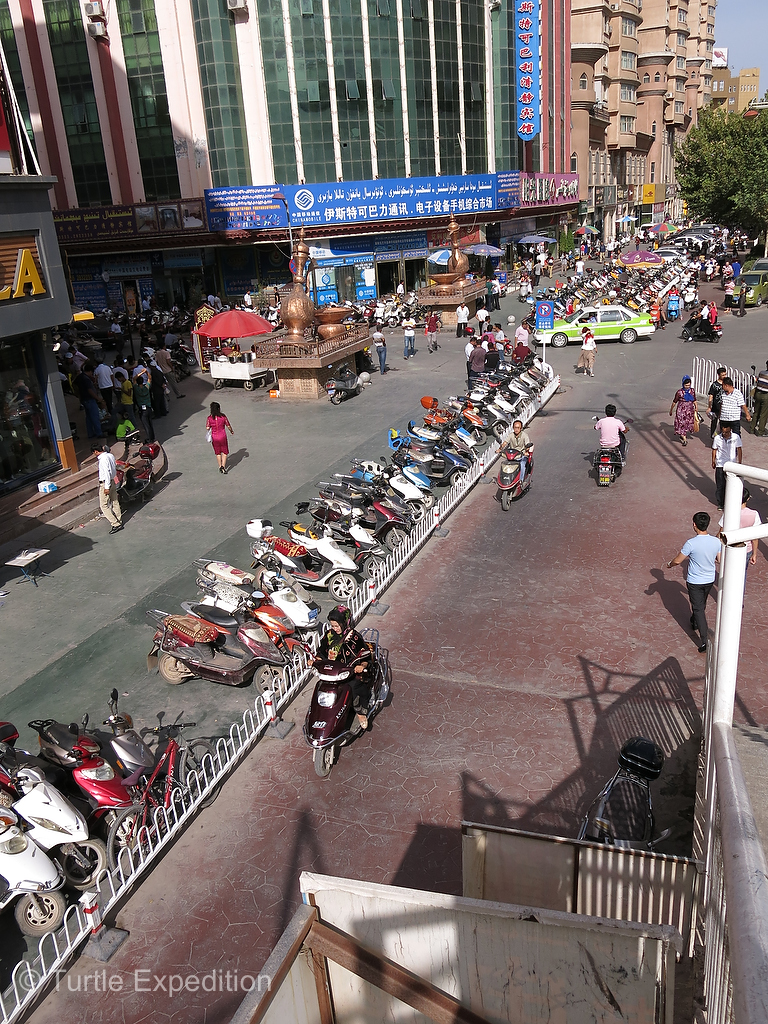
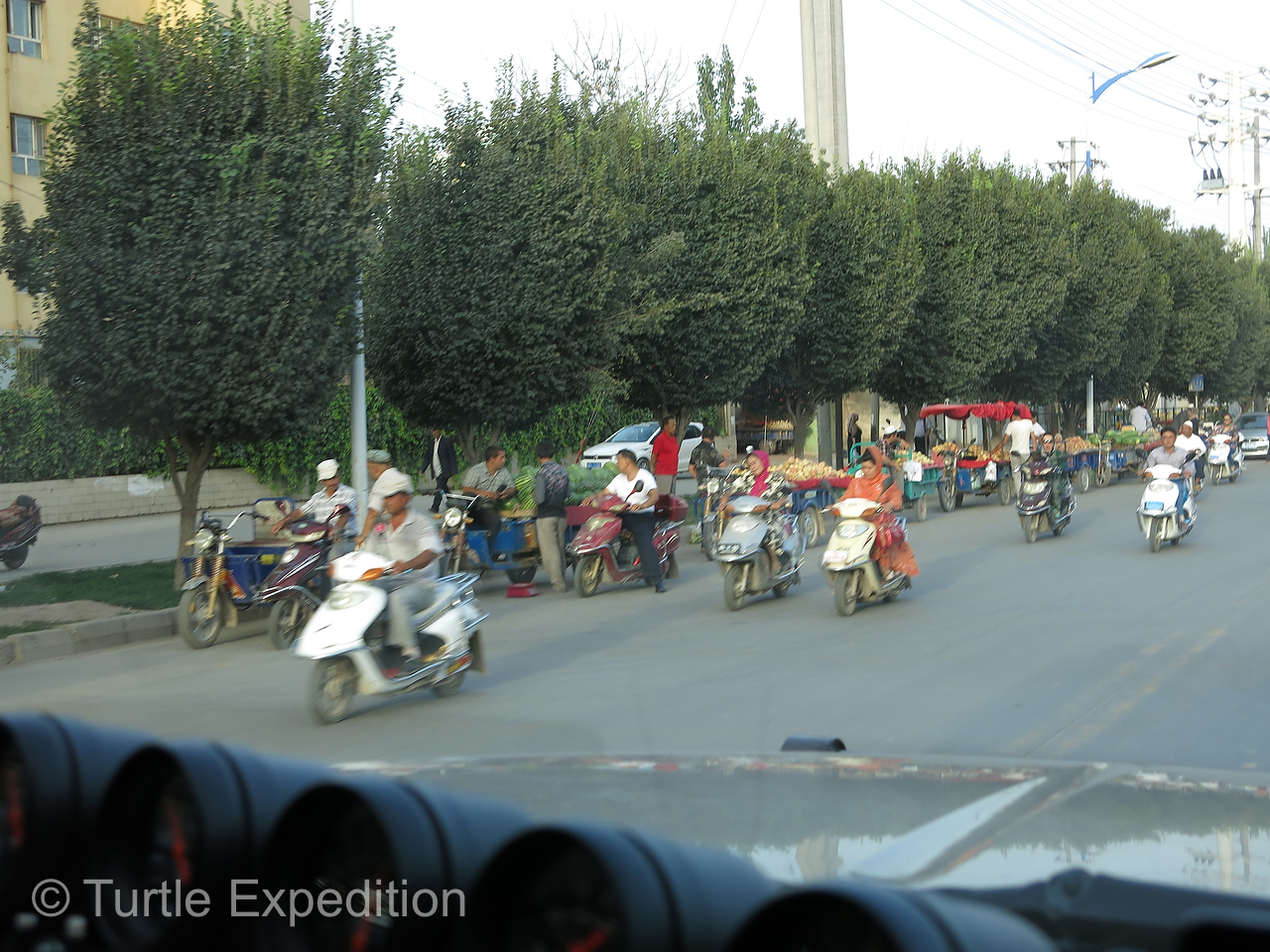
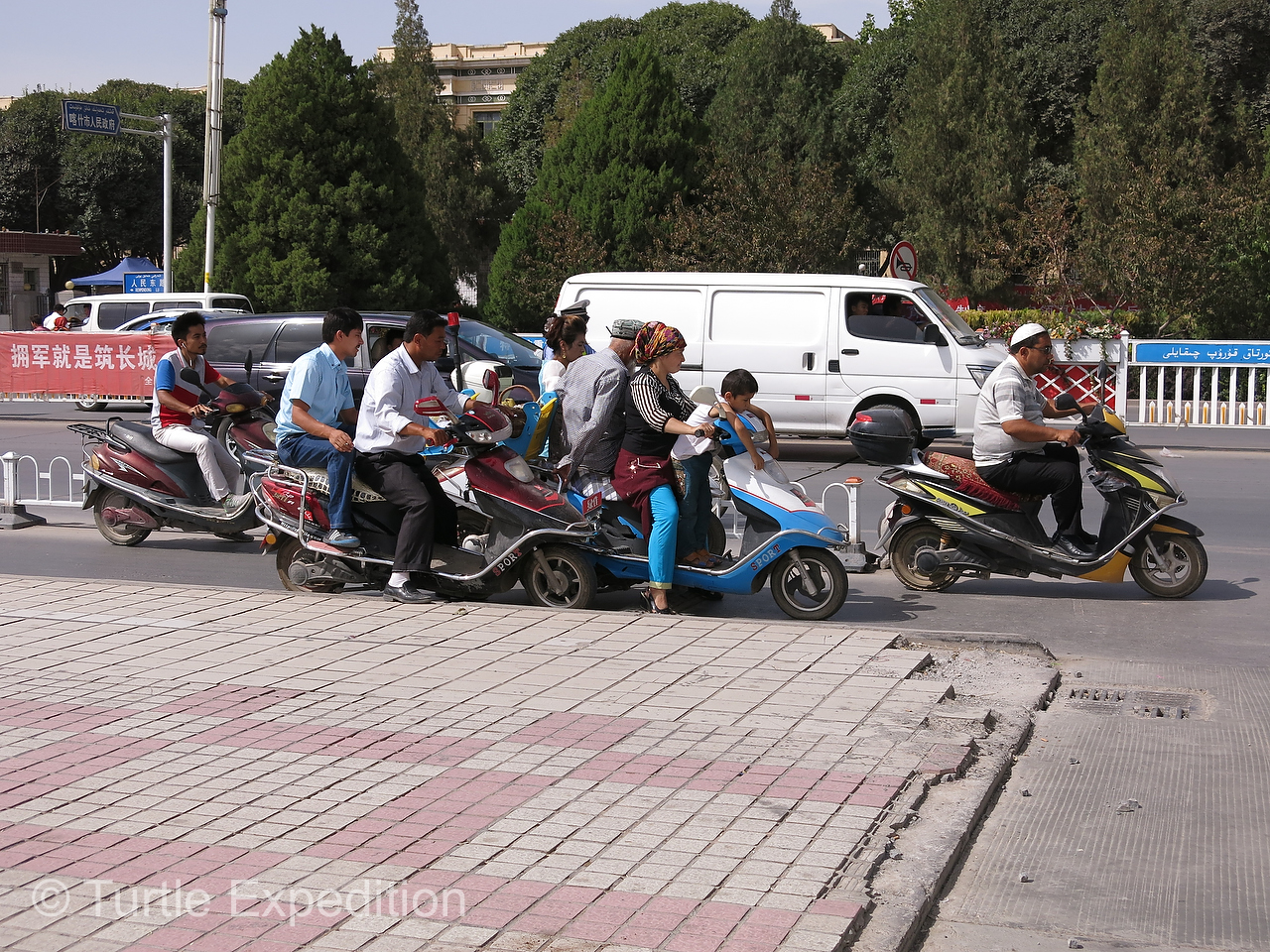
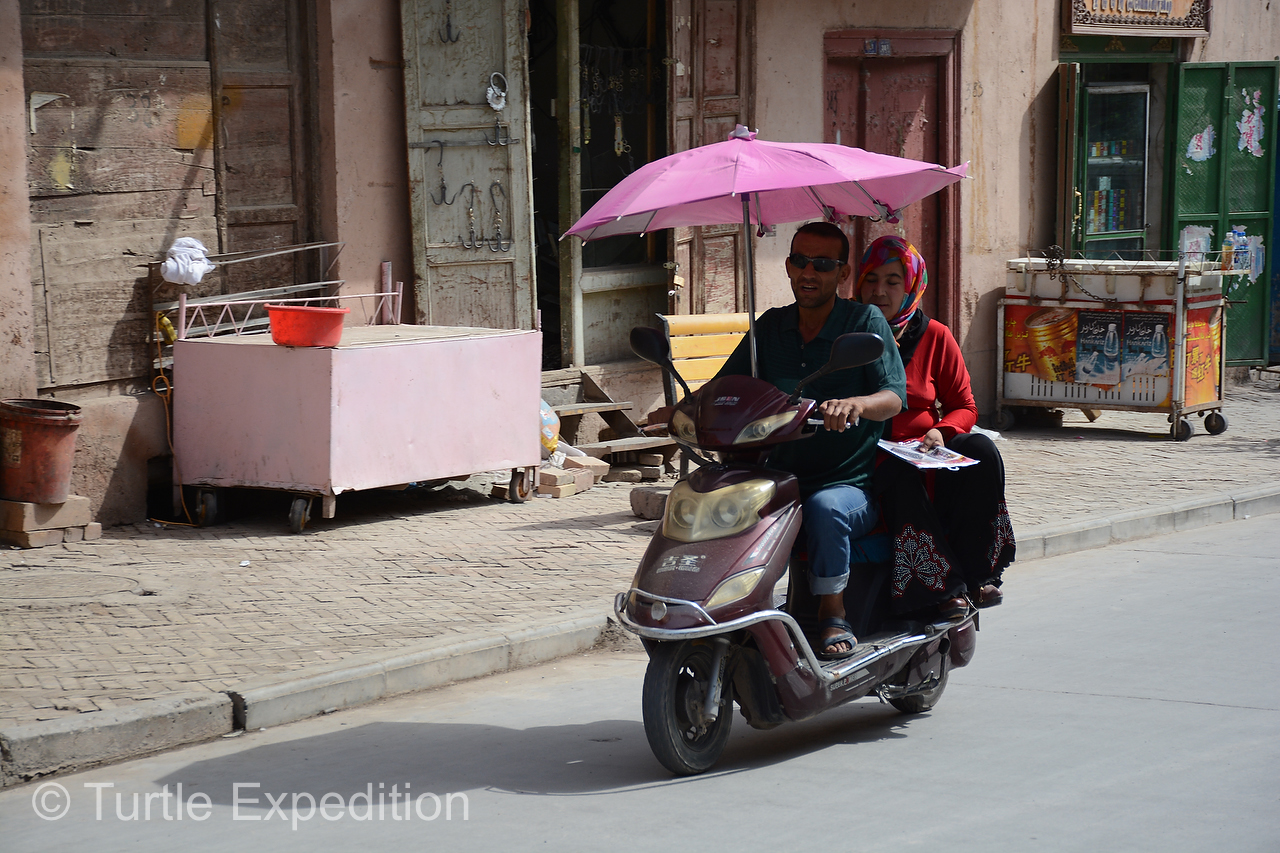
Driving in Kashgar was—huh—exciting. Eighty percent of the traffic was by motorscooter and 95% of those were electric, so we could not hear them coming. Drivers are totally unpredictable. Painted lines are just decoration and pedestrians will simply walk out in front of an oncoming vehicle without even looking. Thank the gods for our two very loud Fiamm air horns. “Loud Horn” is an international language! As a method of survival, we used taxis to get around big cities. Our first stop was the bank to change money, then lunch, one of Green’s specialties, and then on to the copper market. Let the photos tell a little of the story. Too many words get in the way of the experience we want you to have.
-
- The gate! Chinese take their 2-hour lunch break seriously.
-
- Lisa Li at NAVO Tour was extremely efficient and patient, answering our every question and advising us of what we should not miss. Yes, she is as nice as she looks.
-
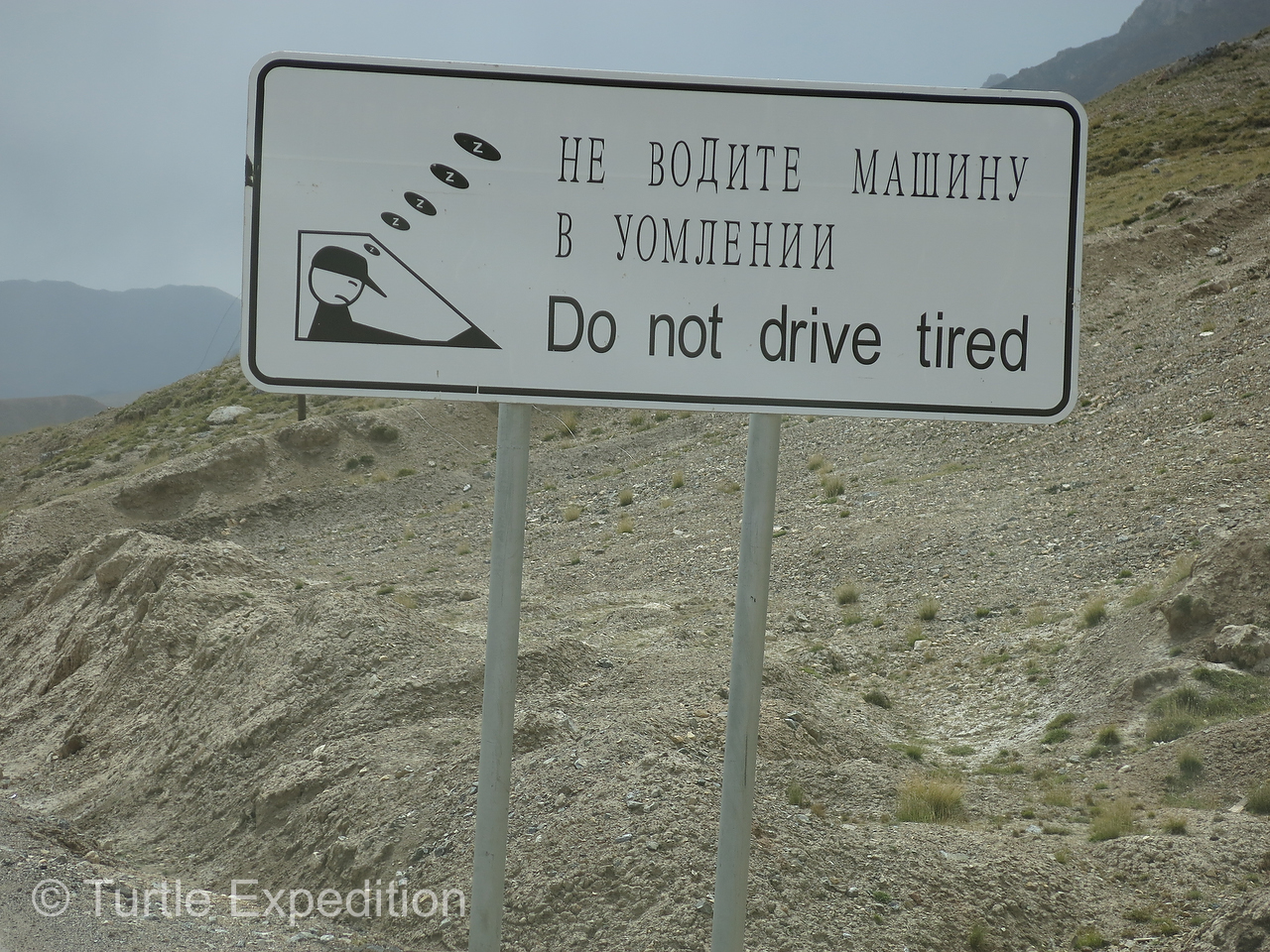
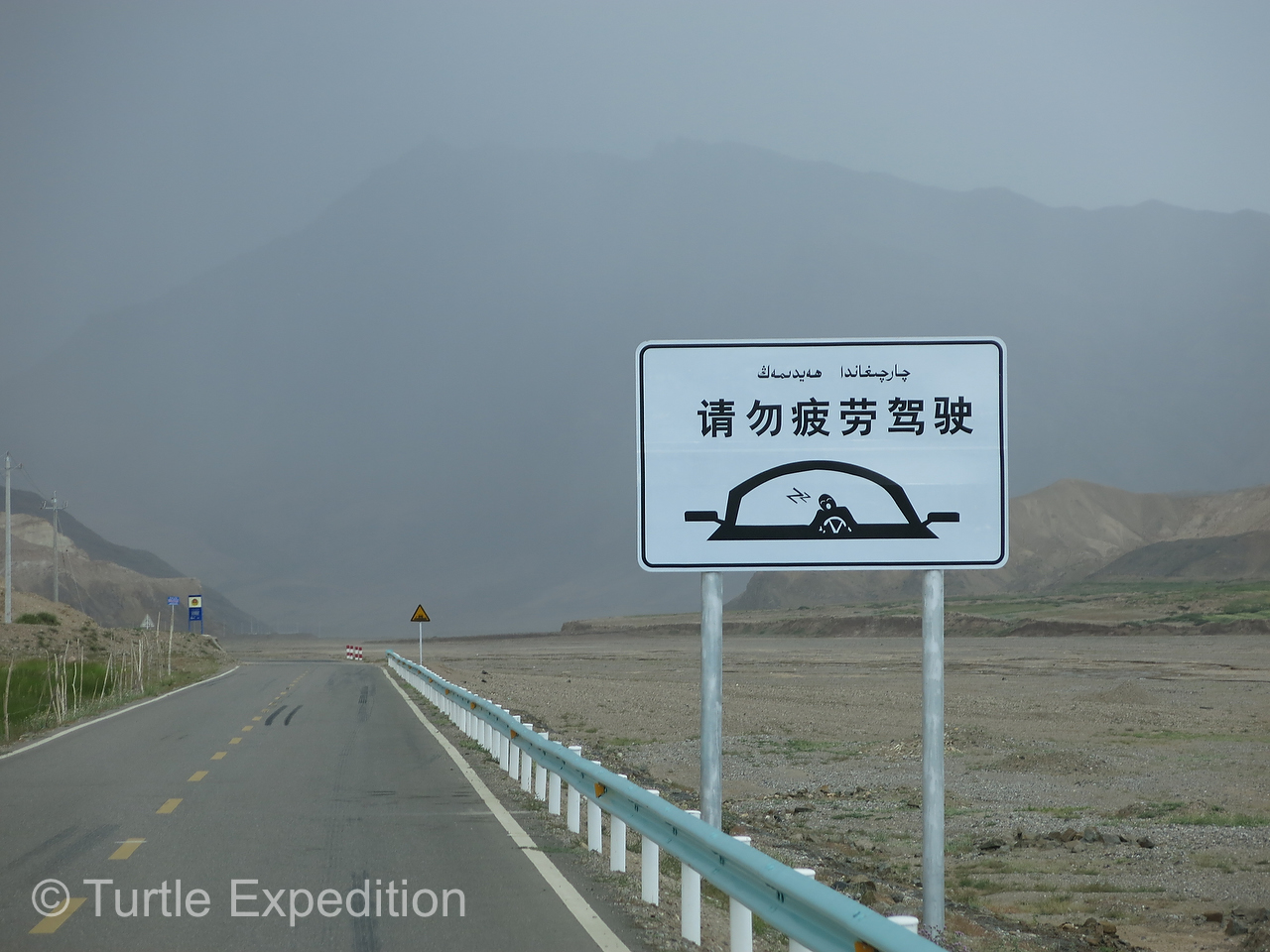
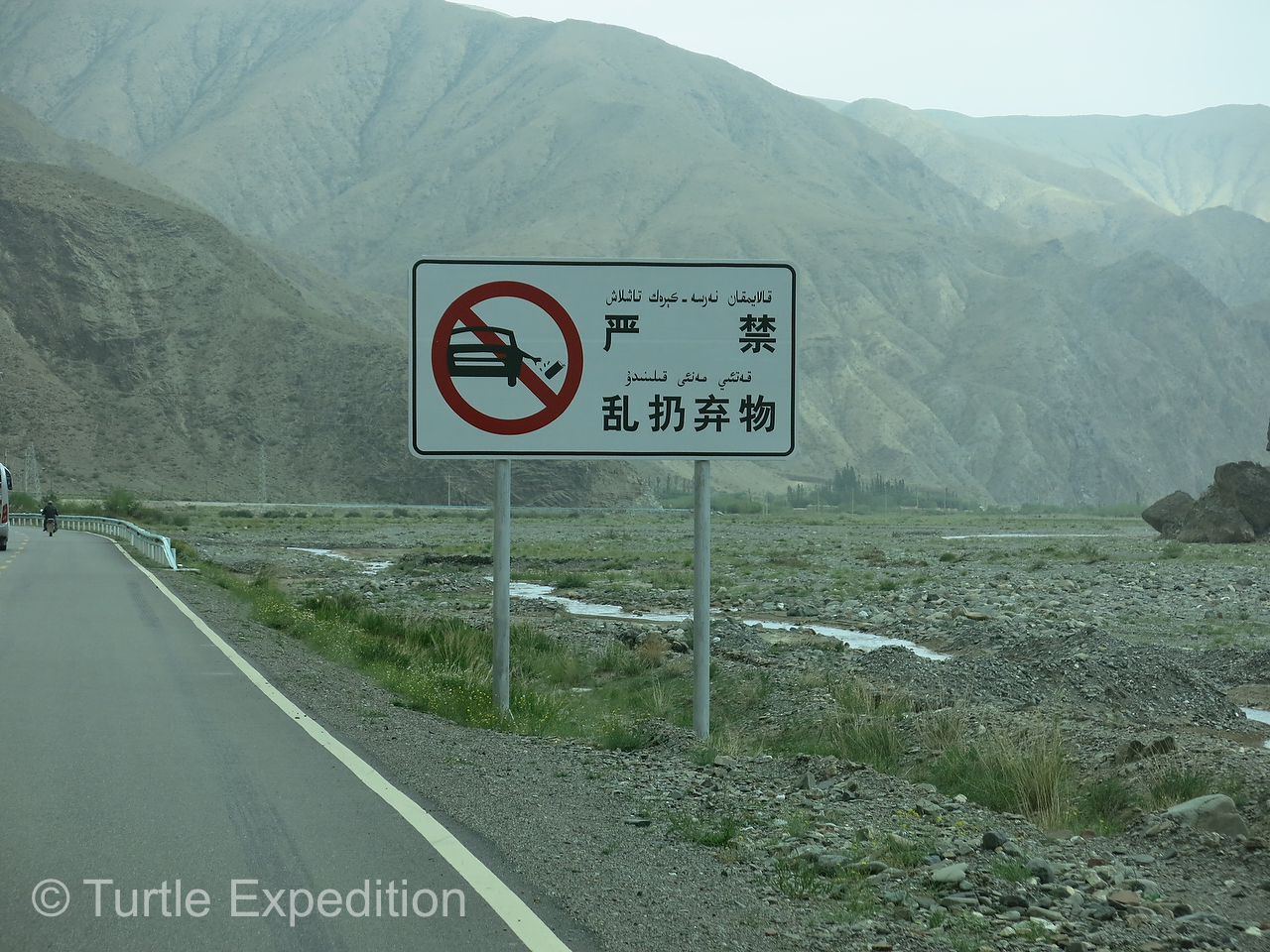
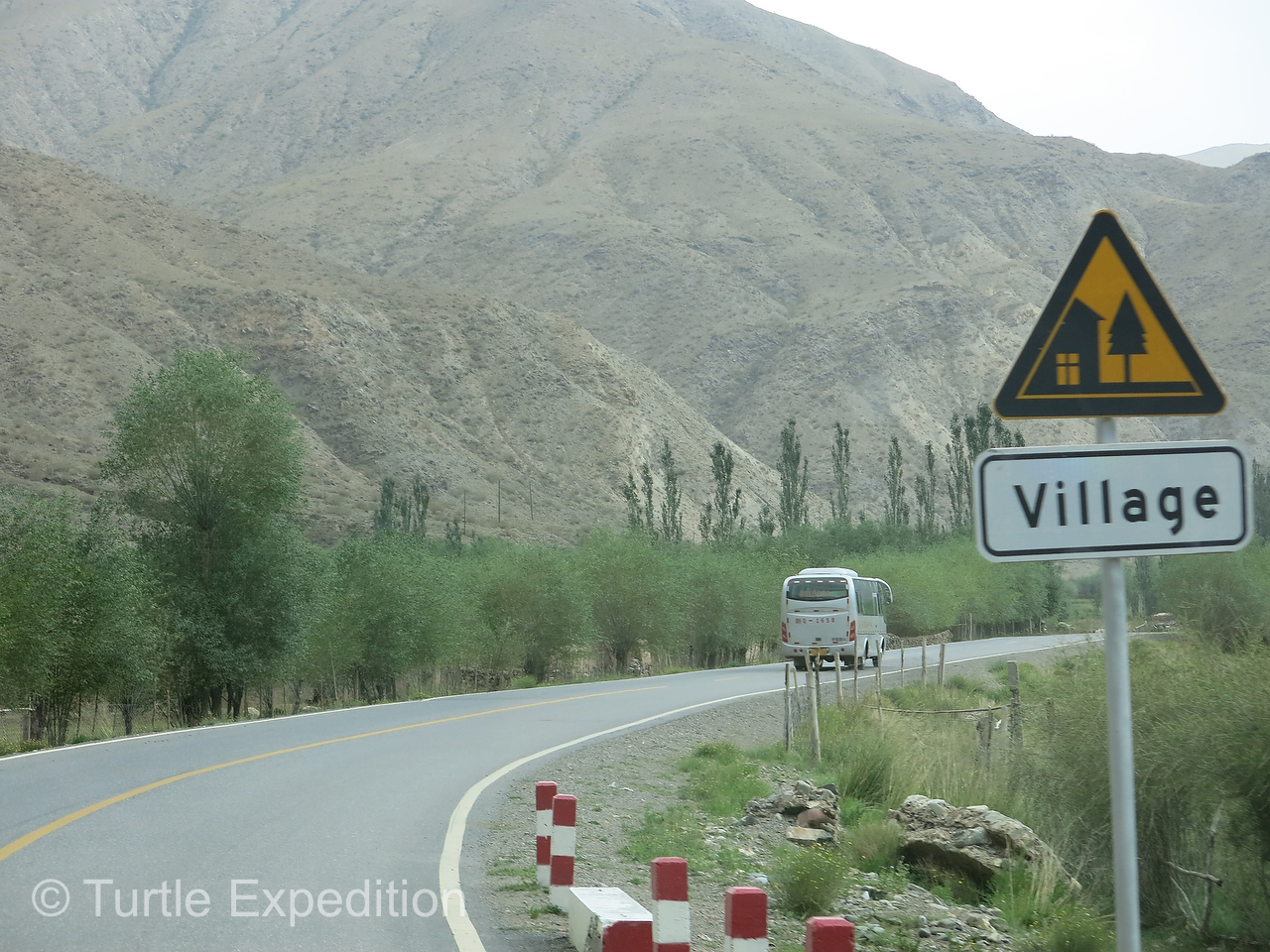
- Road signs from the border to the main immigration and customs station were graphic.
-
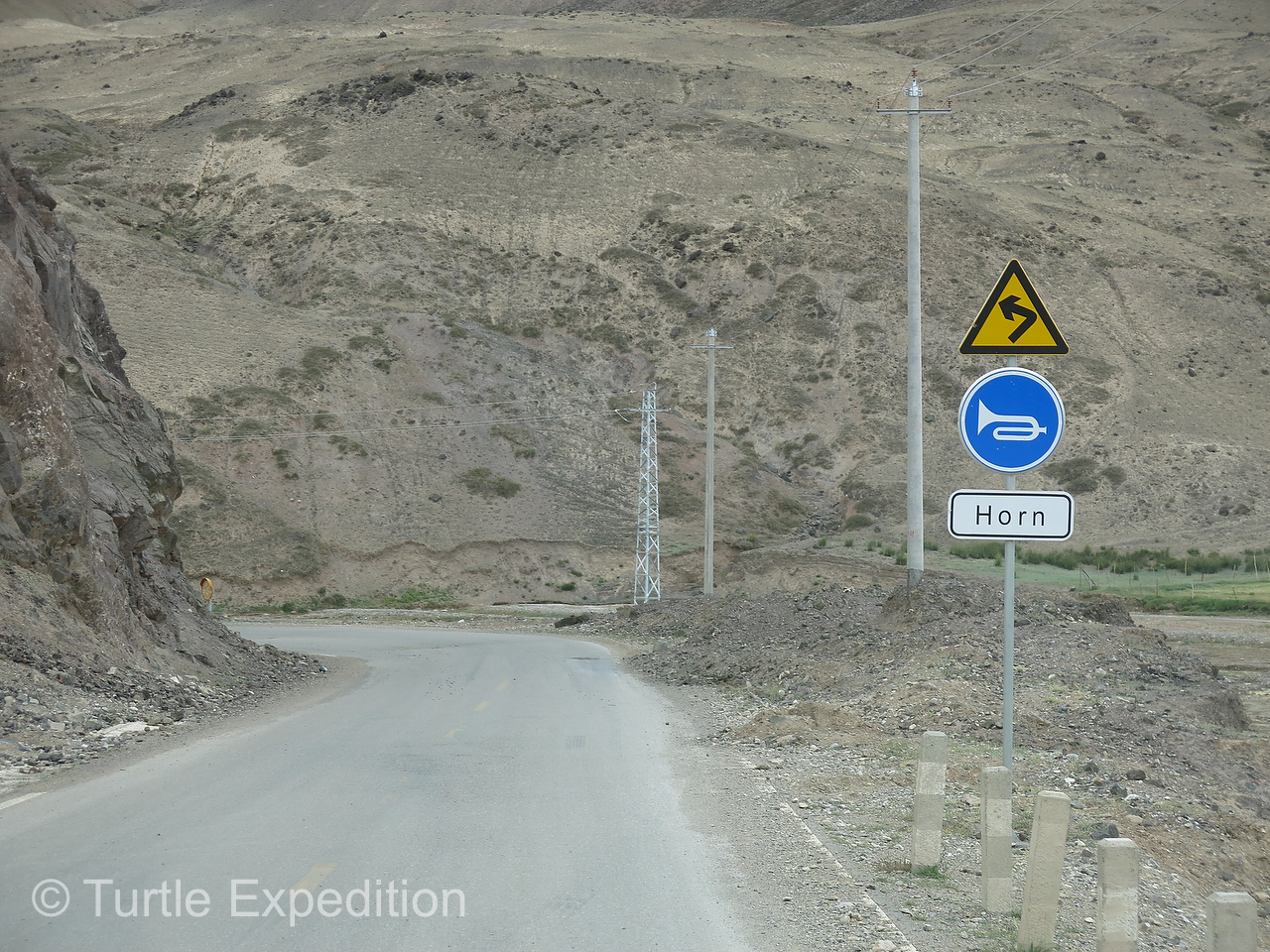
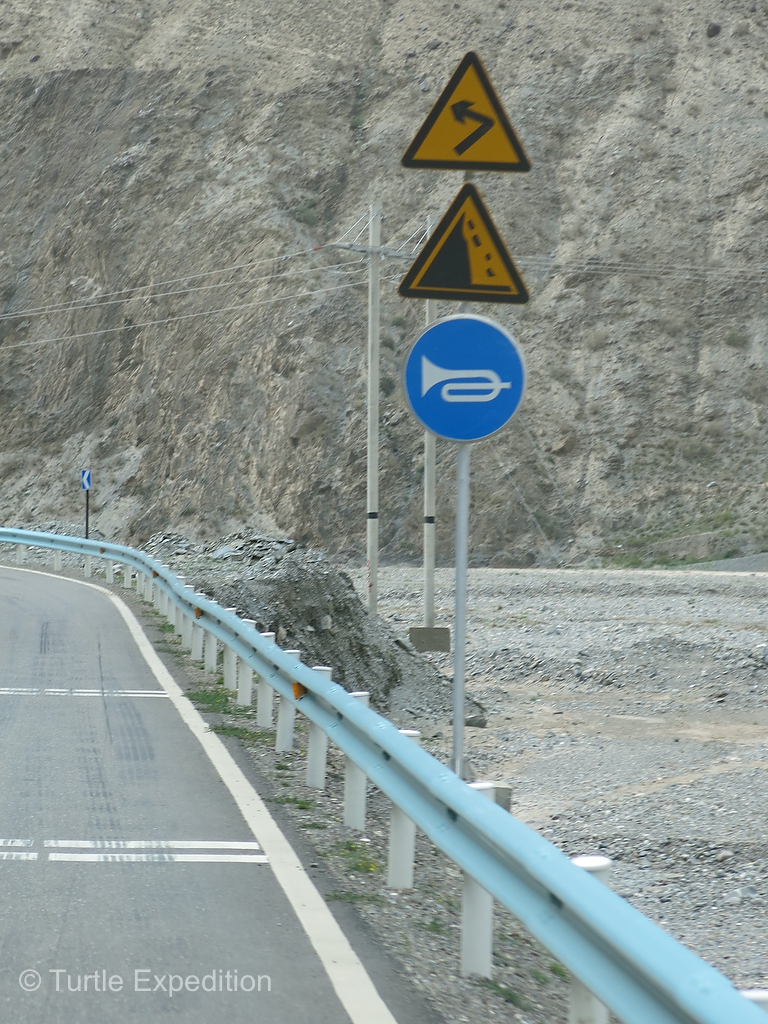
- Road signs were easy to read in any language.
-
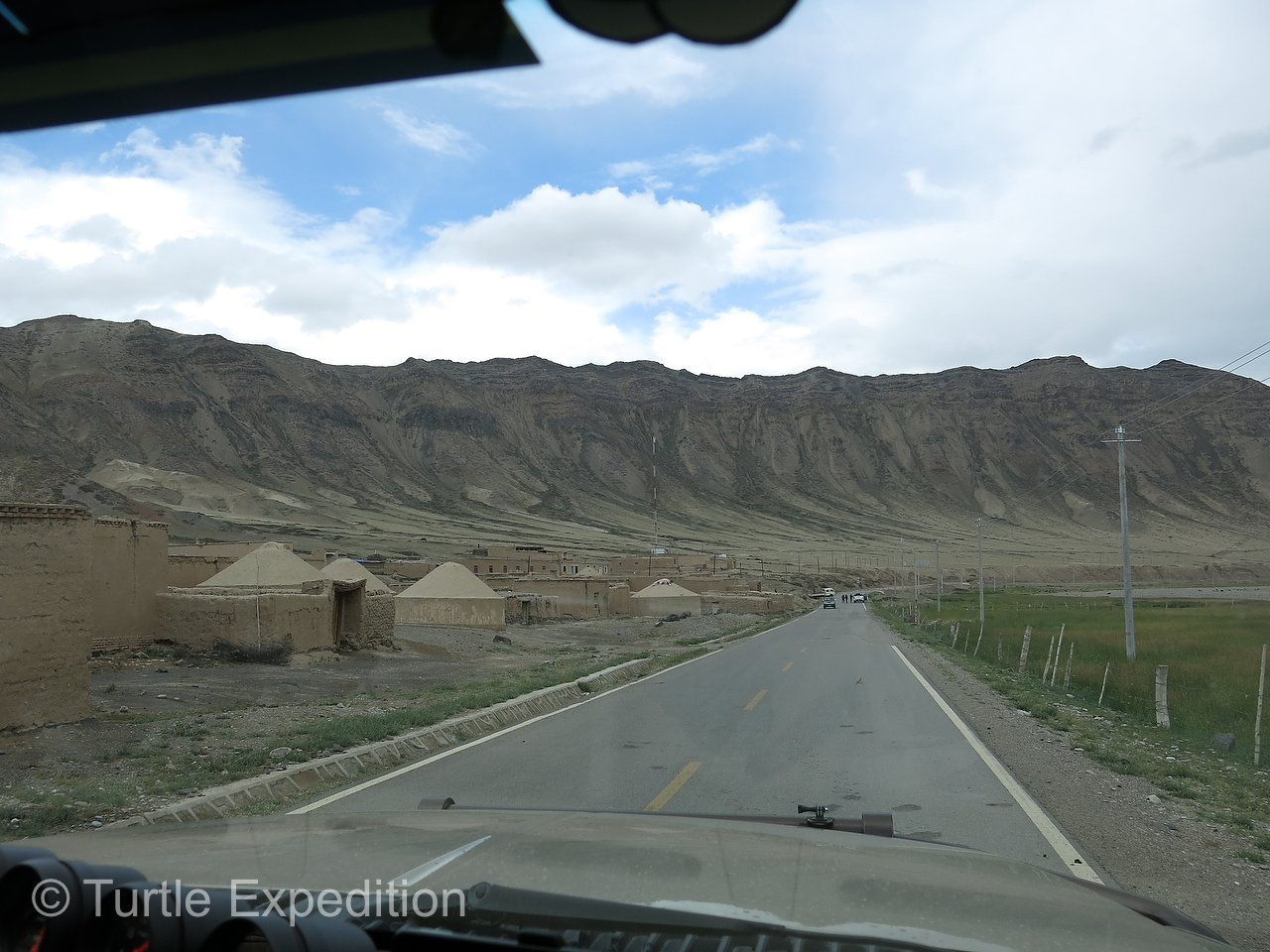
- More yurts, but Chinese style, made of what appeared to be cement instead of felt. Not very portable – on purpose?
-
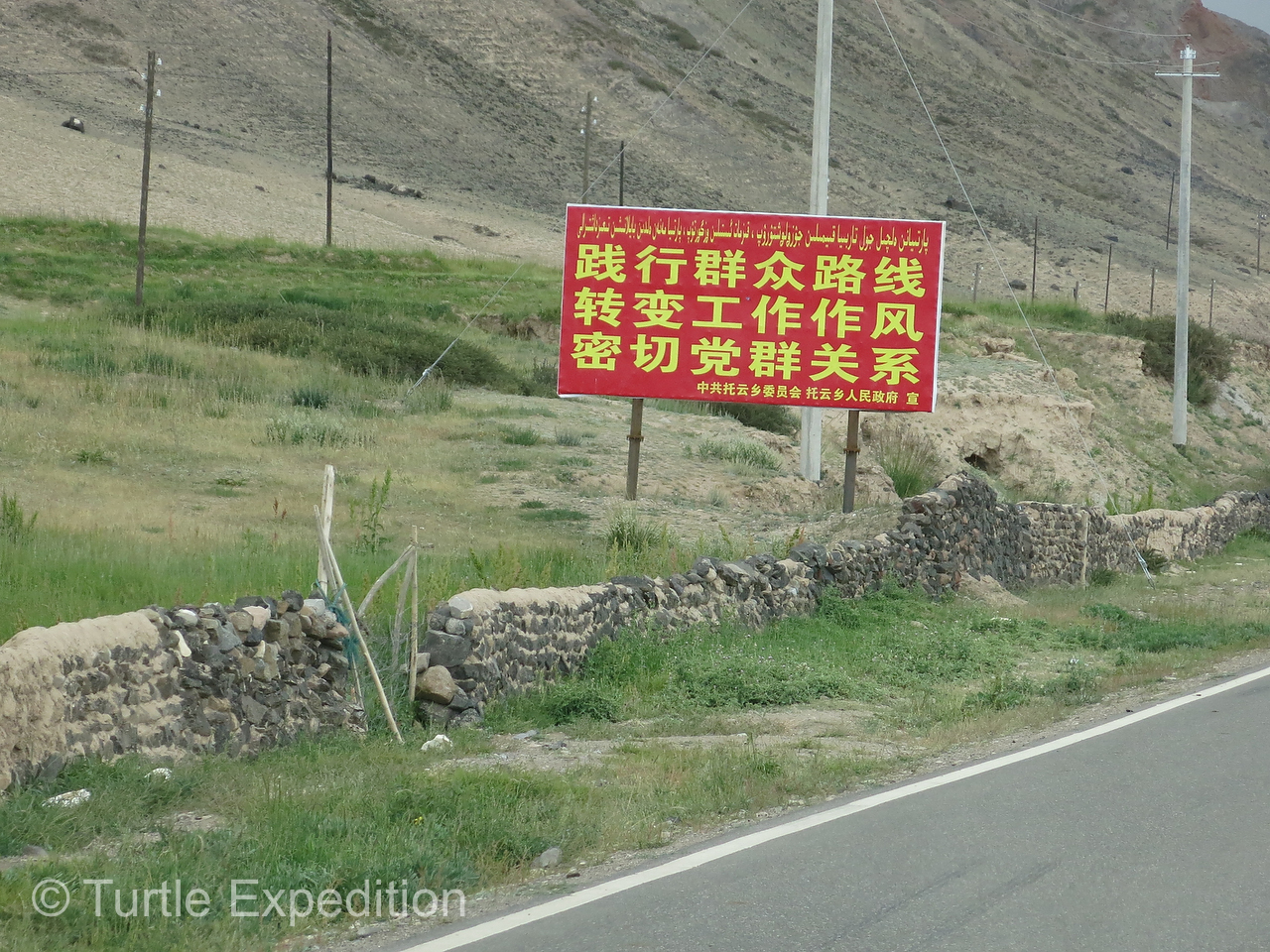
- Yes, I agree with whatever it says.
-
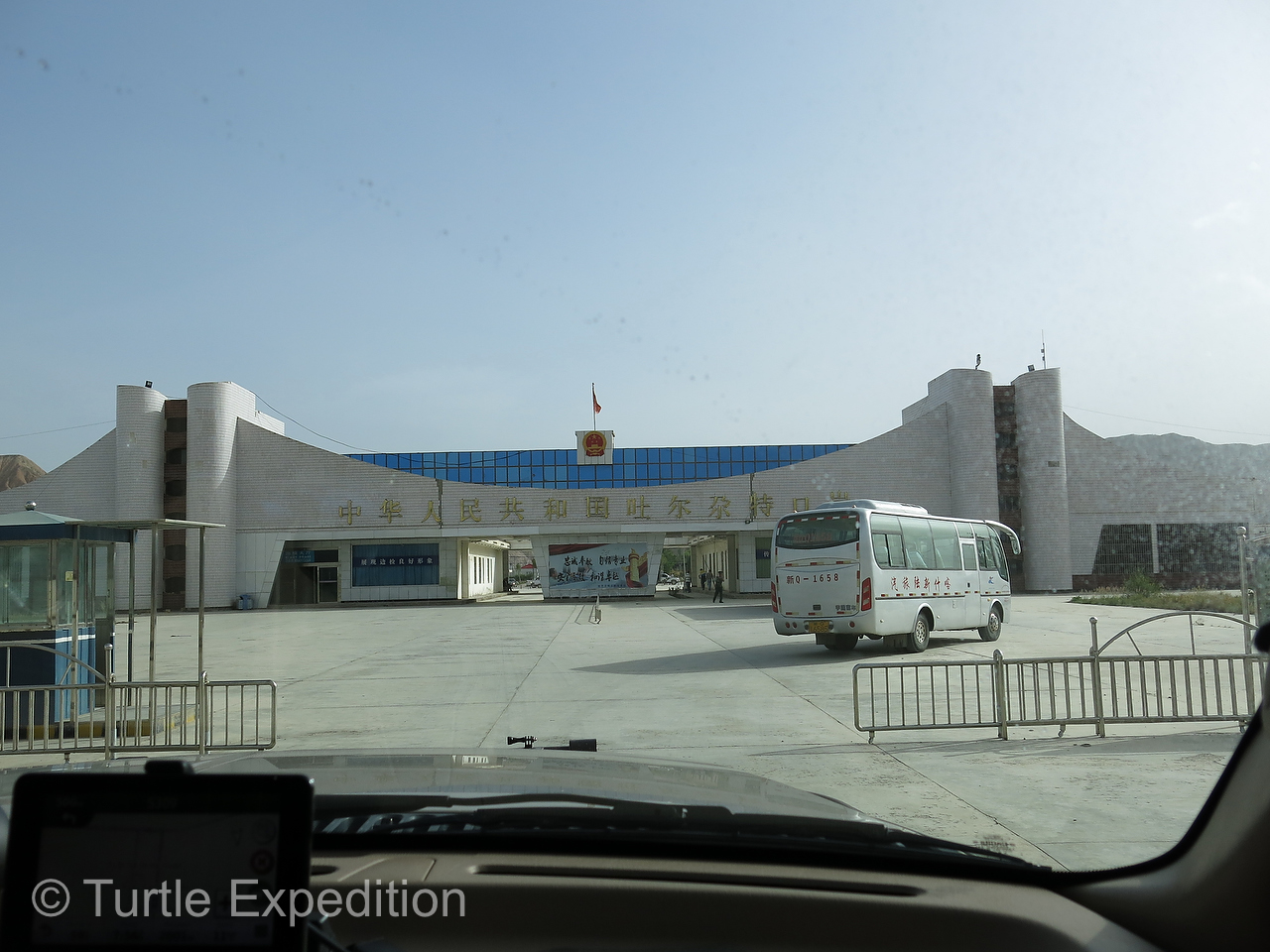
- The main Immigration and Customs Center. We would come here twice to have inspections and paper work; driver’s permits, temporary import license etc., etc.
-
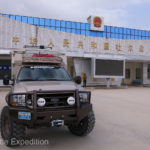
- Every inch of our expedition camper and truck was checked, measured, weighed and scanned.
-
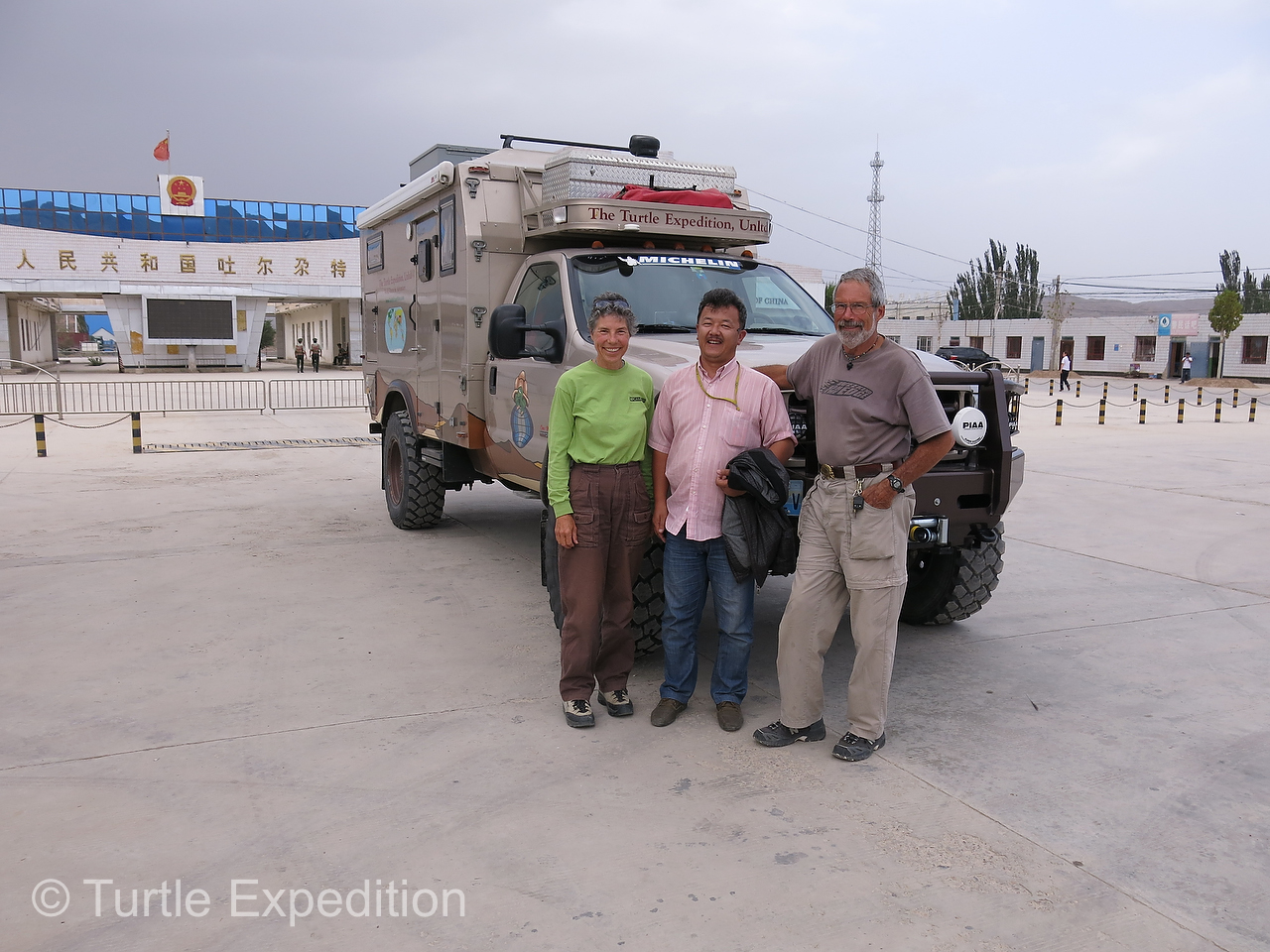
- We are posing with the immigration/customs specialist guide after all the paperwork was finally finished.
-
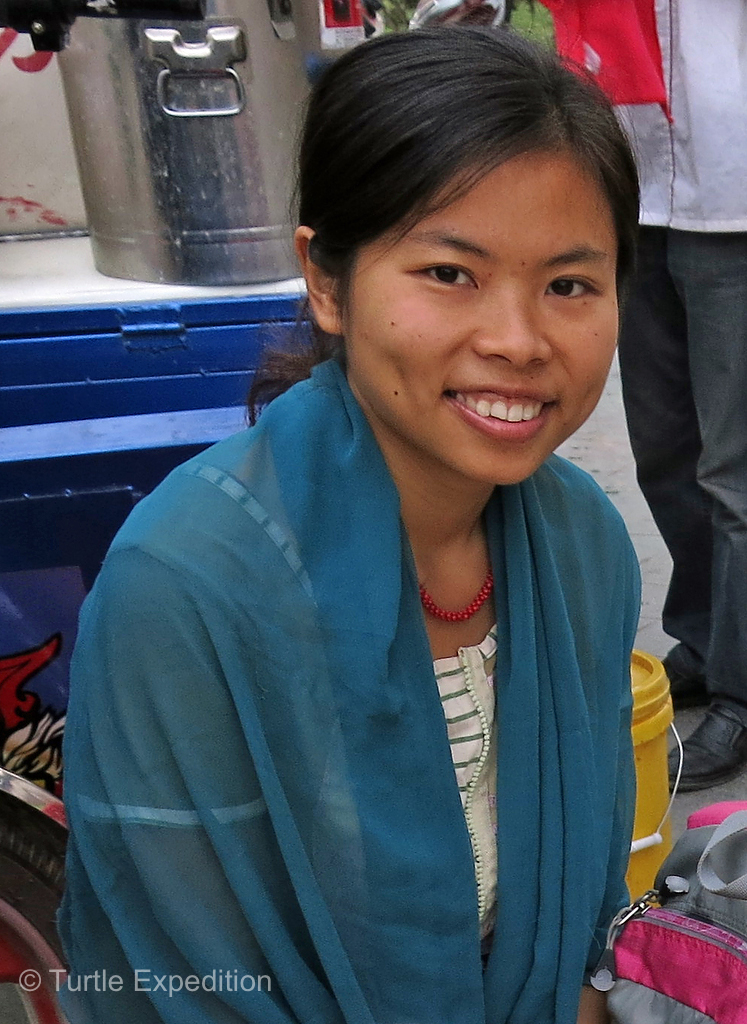
- Green, our official guide. Short, thin, speaks English—-smart, adventurous, professional, knowledgeable, funny, a food-junky, a good cook and cute. What’s not to like about this young lady?
-
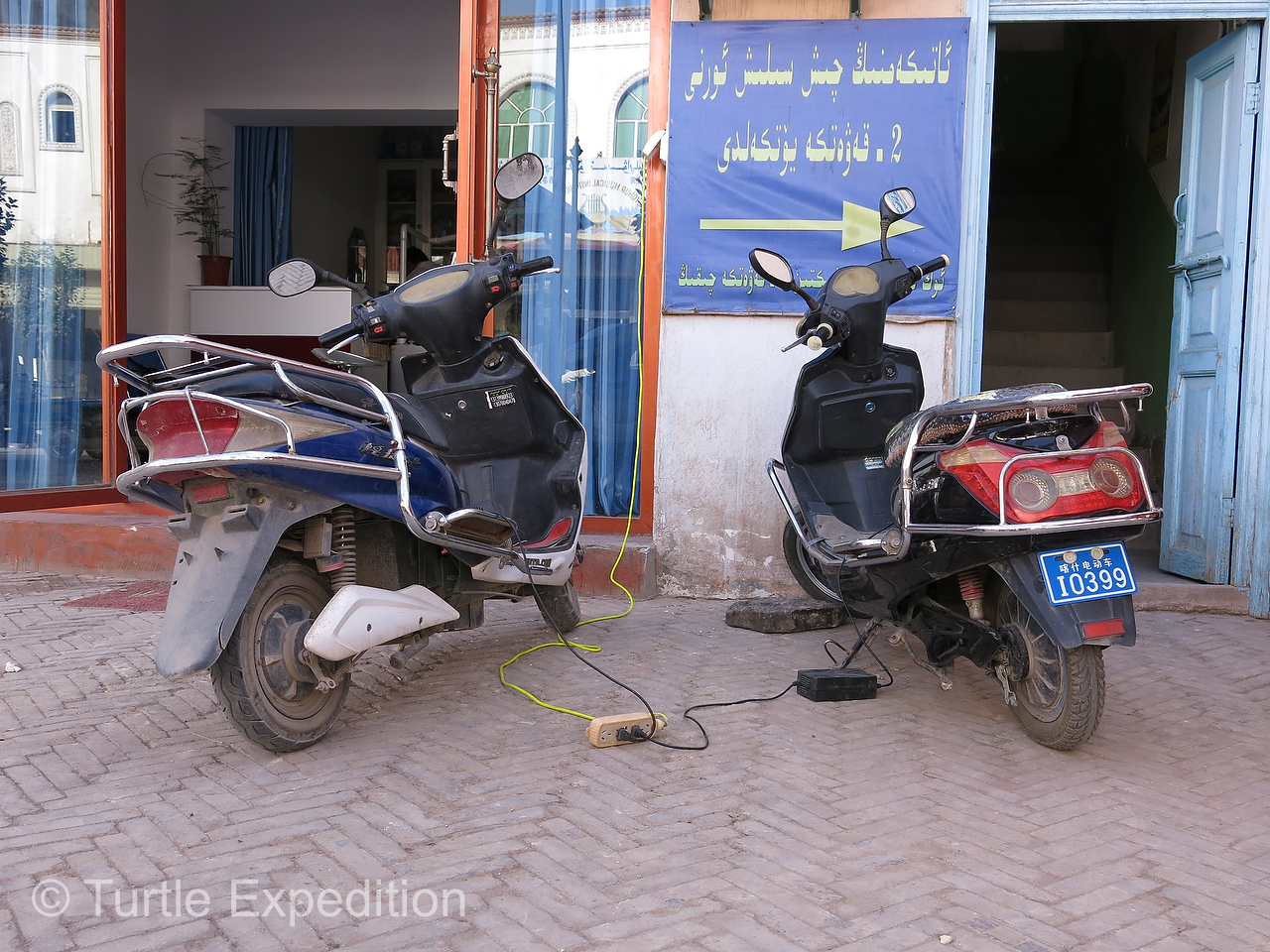
- Motorscooters, thousands of them, and hardly a sound cuz they are all battery-powered. The primary mode of transportation in Kashgar.
-
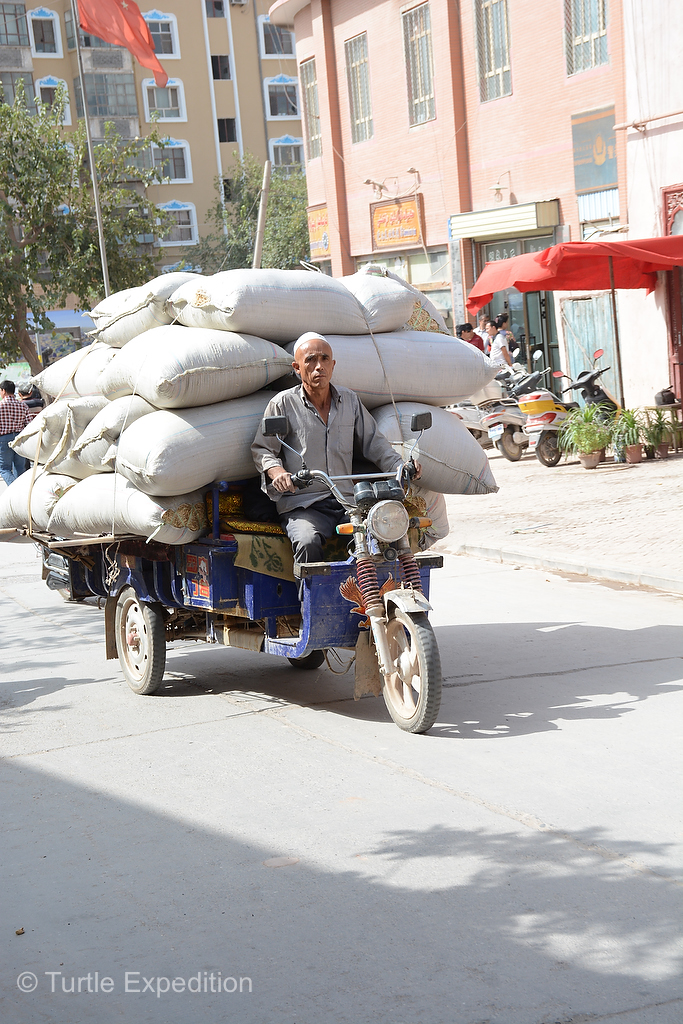
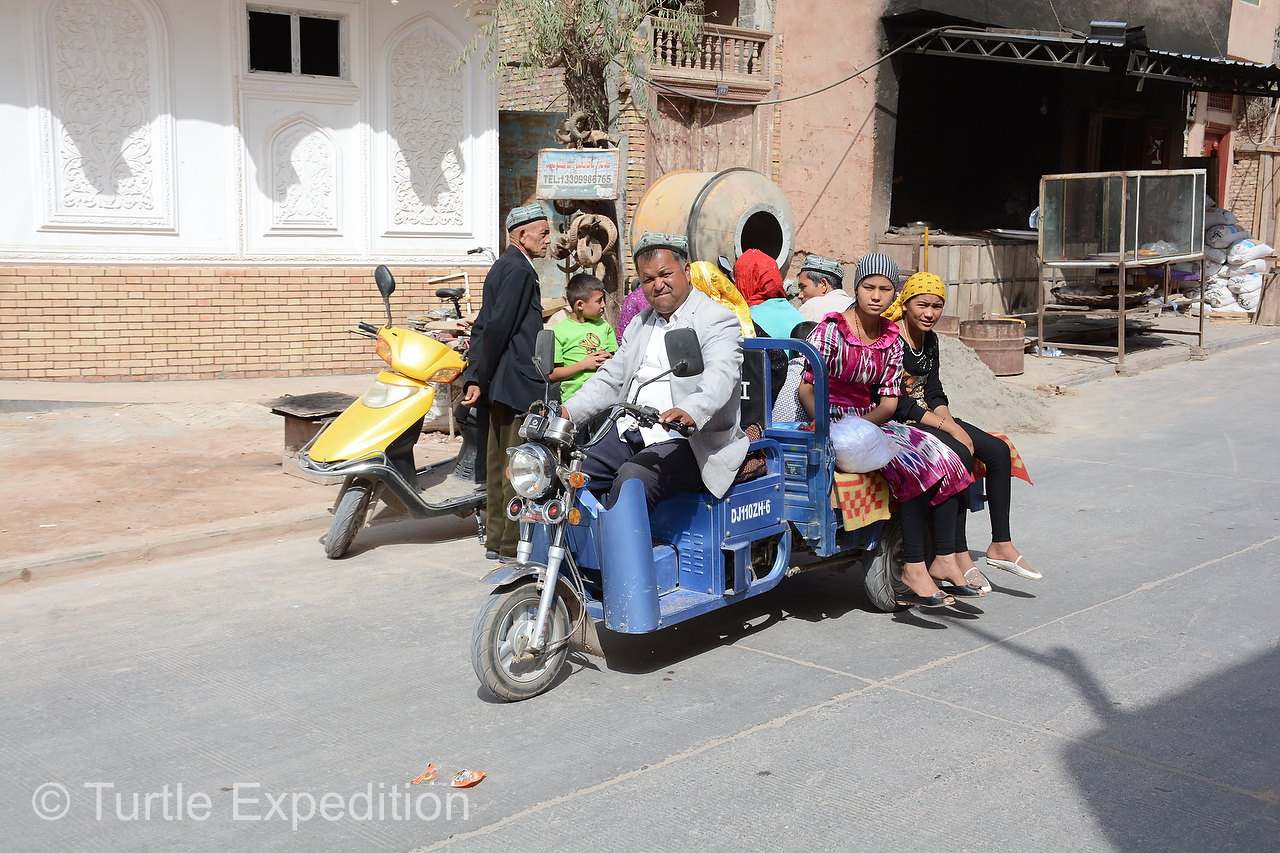
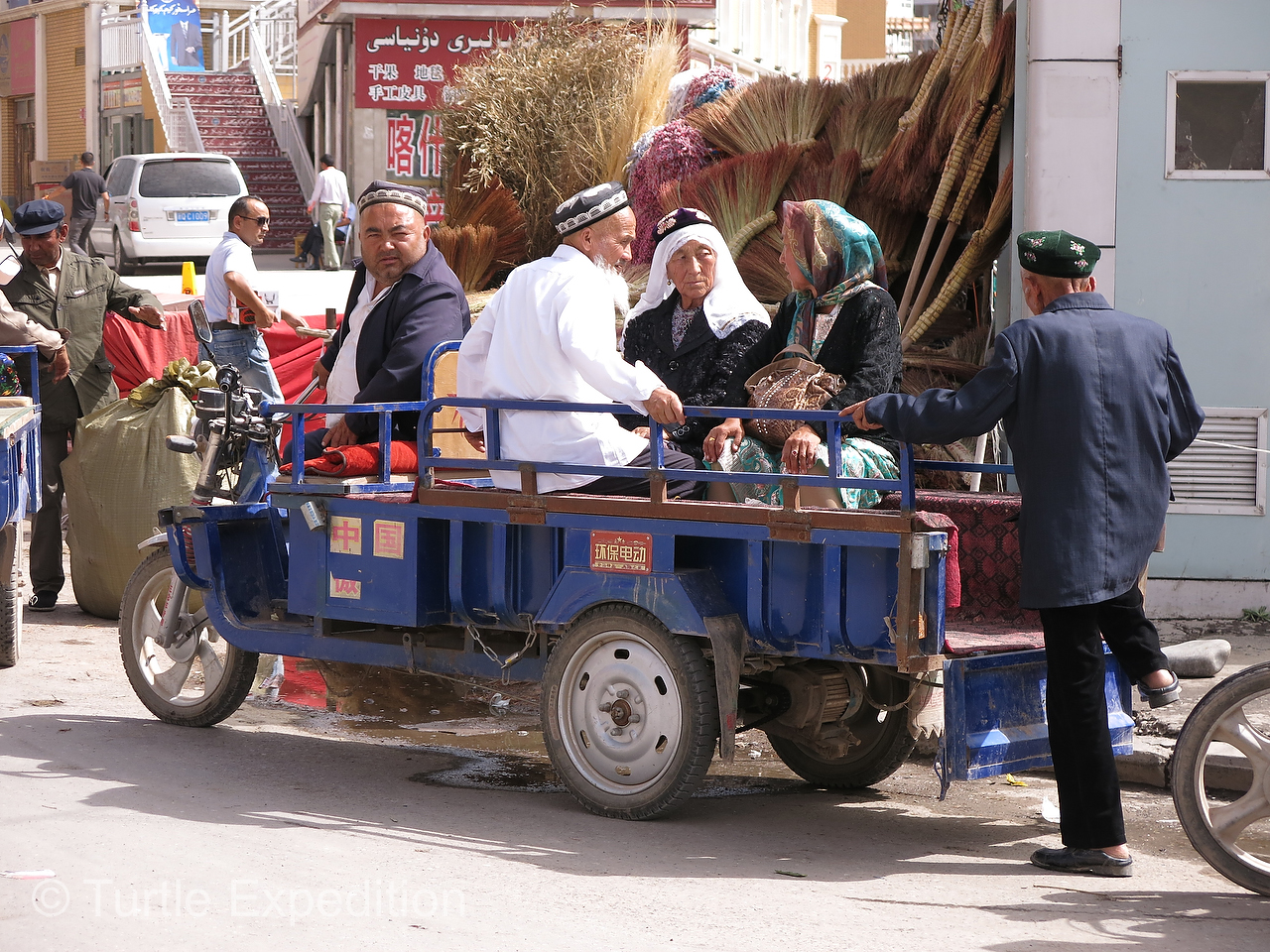
- These three-wheel carry-everything MPVs (multi-purpose vehicles), were also mostly electric and seemed to have no weight limit.
-
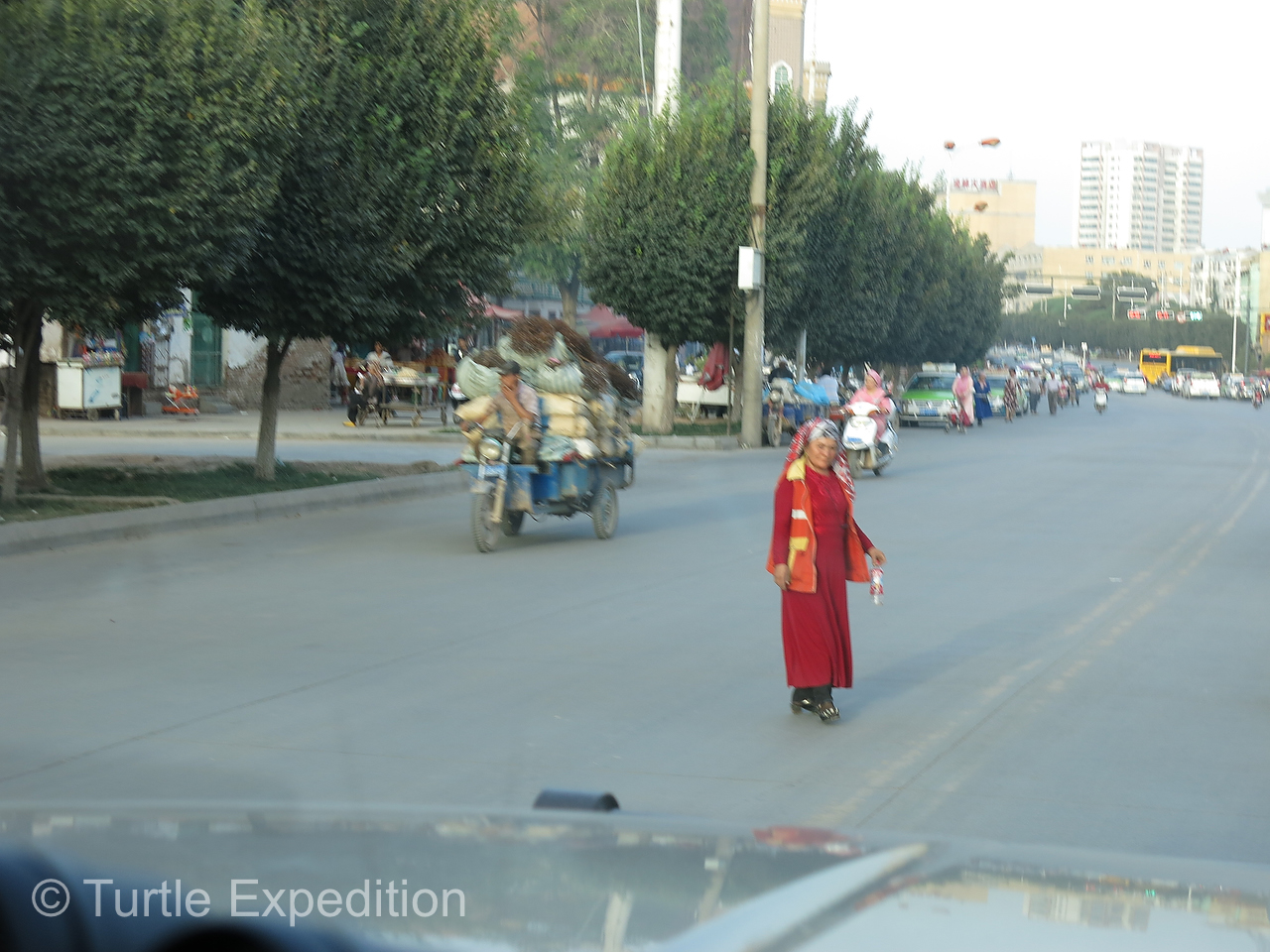
- Yes, I see you, and yes, I am just going to walk out in front of you because I know/hope/think/don’t care and you will slam on the brakes and give me a dirty look.
-
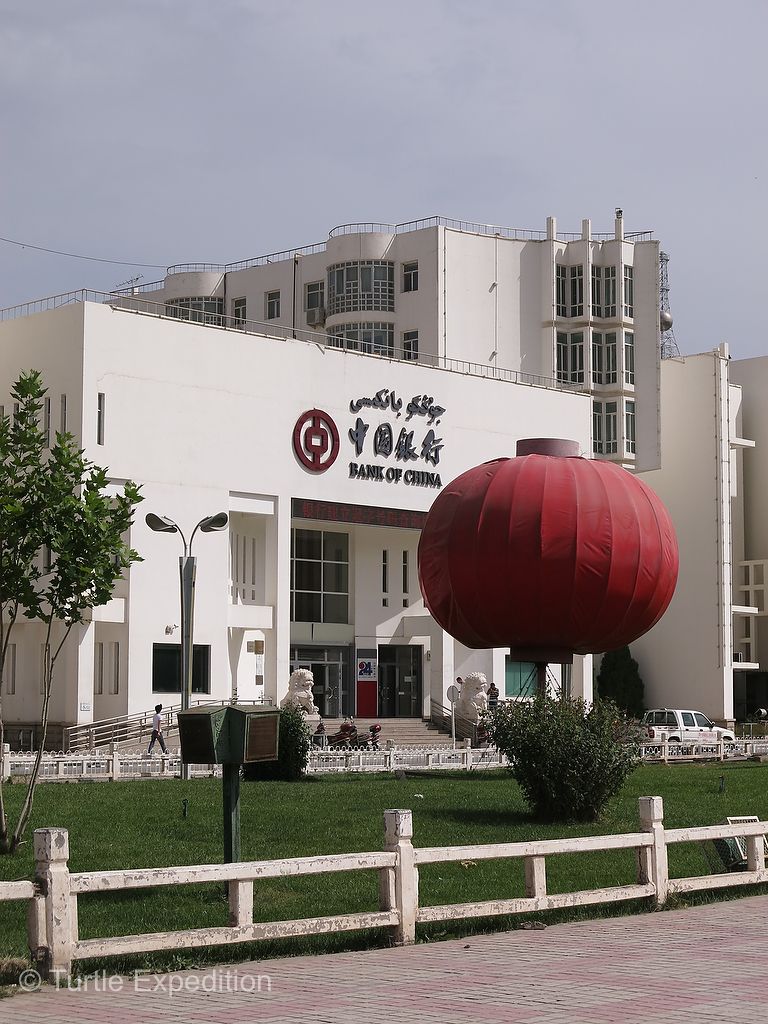
- The bank—maybe the only bank—where it took over an hour to change Dollars to Yen, and there was no line, just paperwork.
-
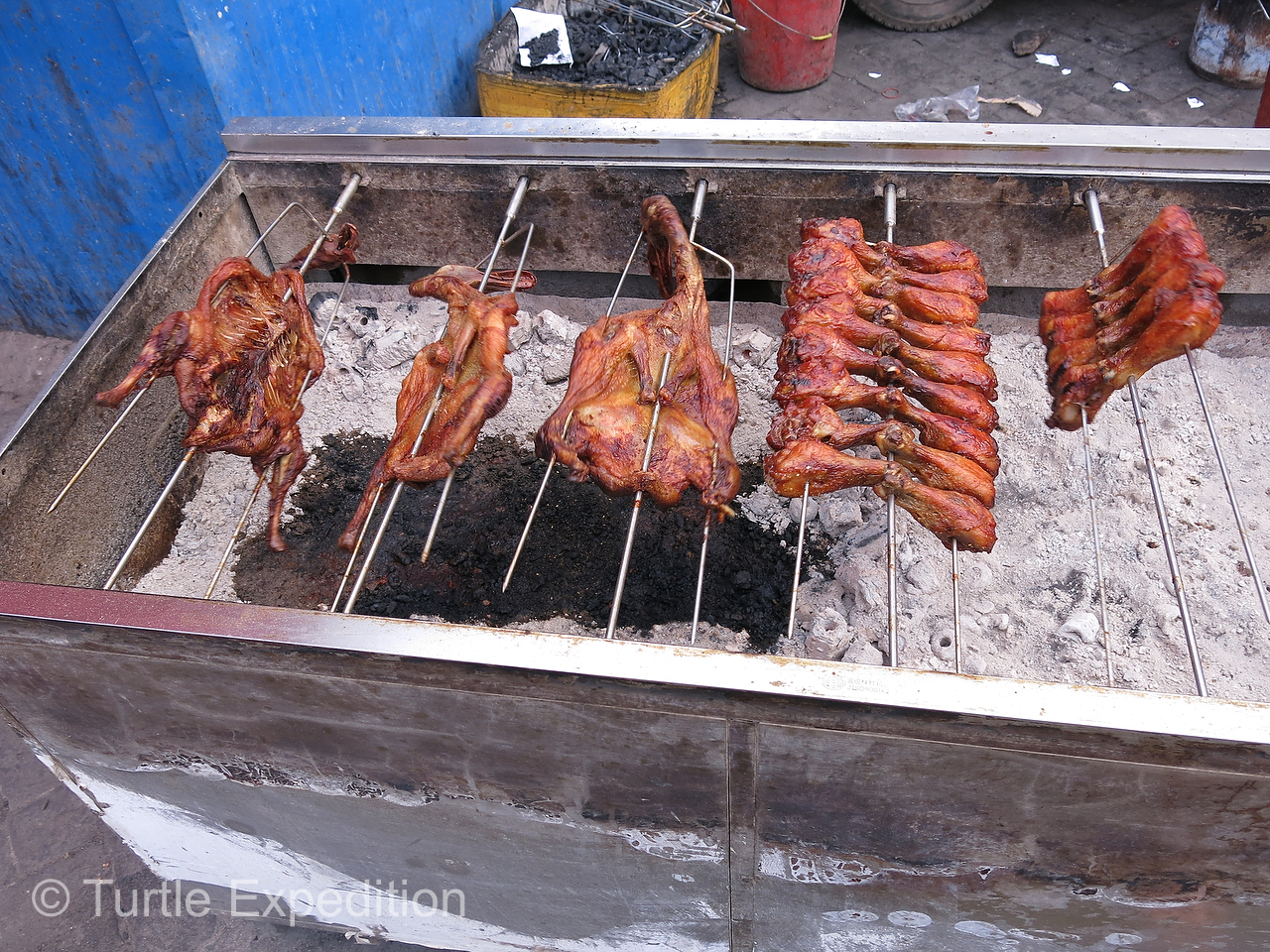
- Barbequed duck, one of Green’s favorites.
-
- Barbequed something we didn’t get to try.
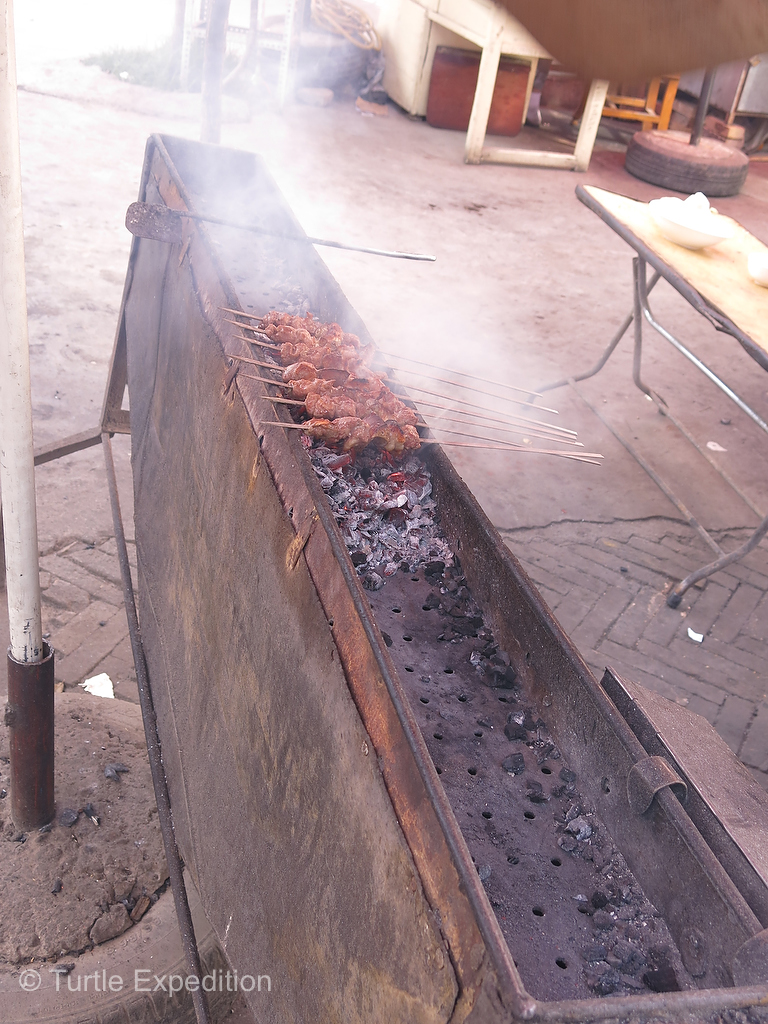
-
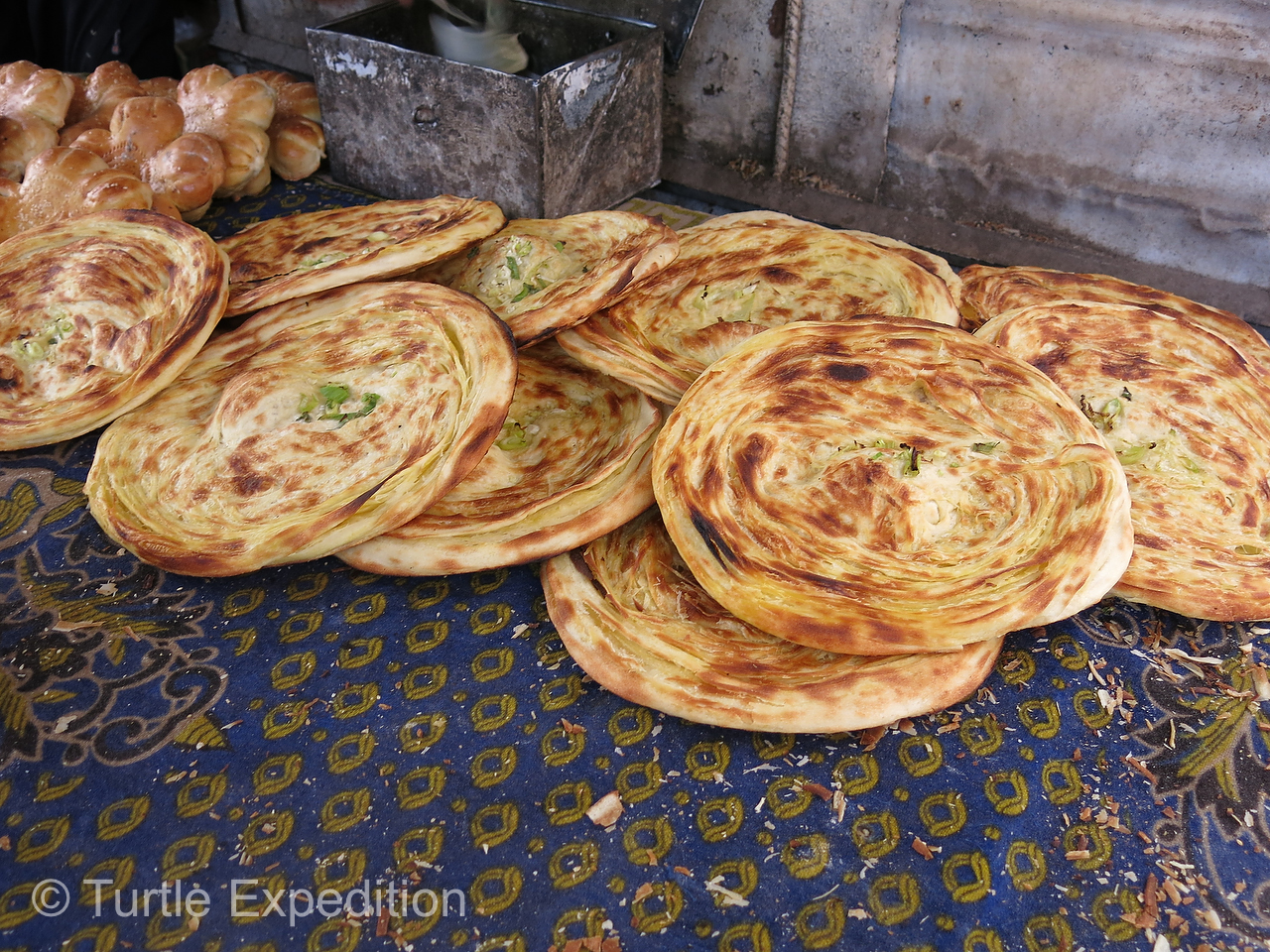
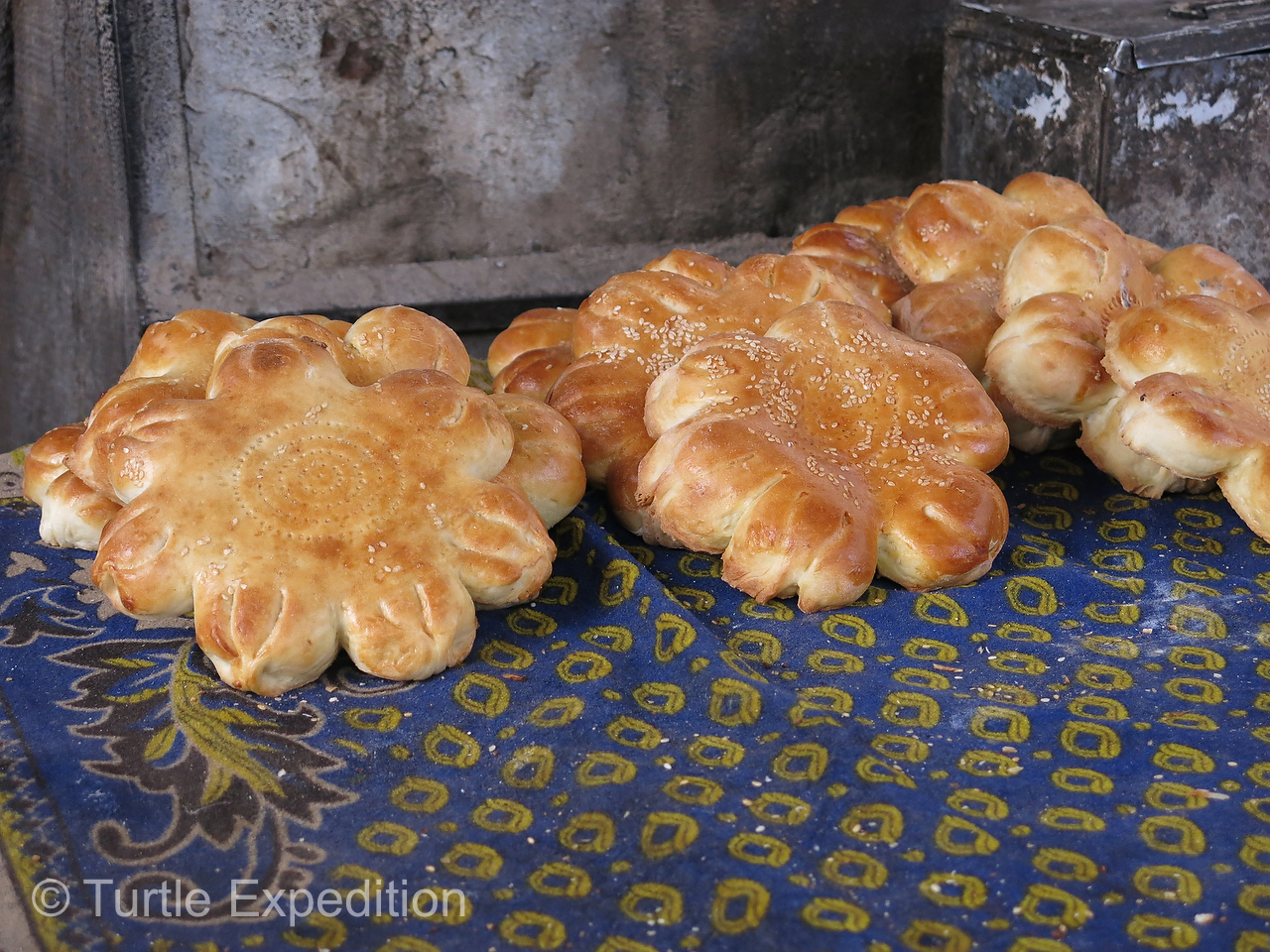
- Stuffed bread, fancy bread, “nan” bread, interesting because we almost never saw bread again for a month.
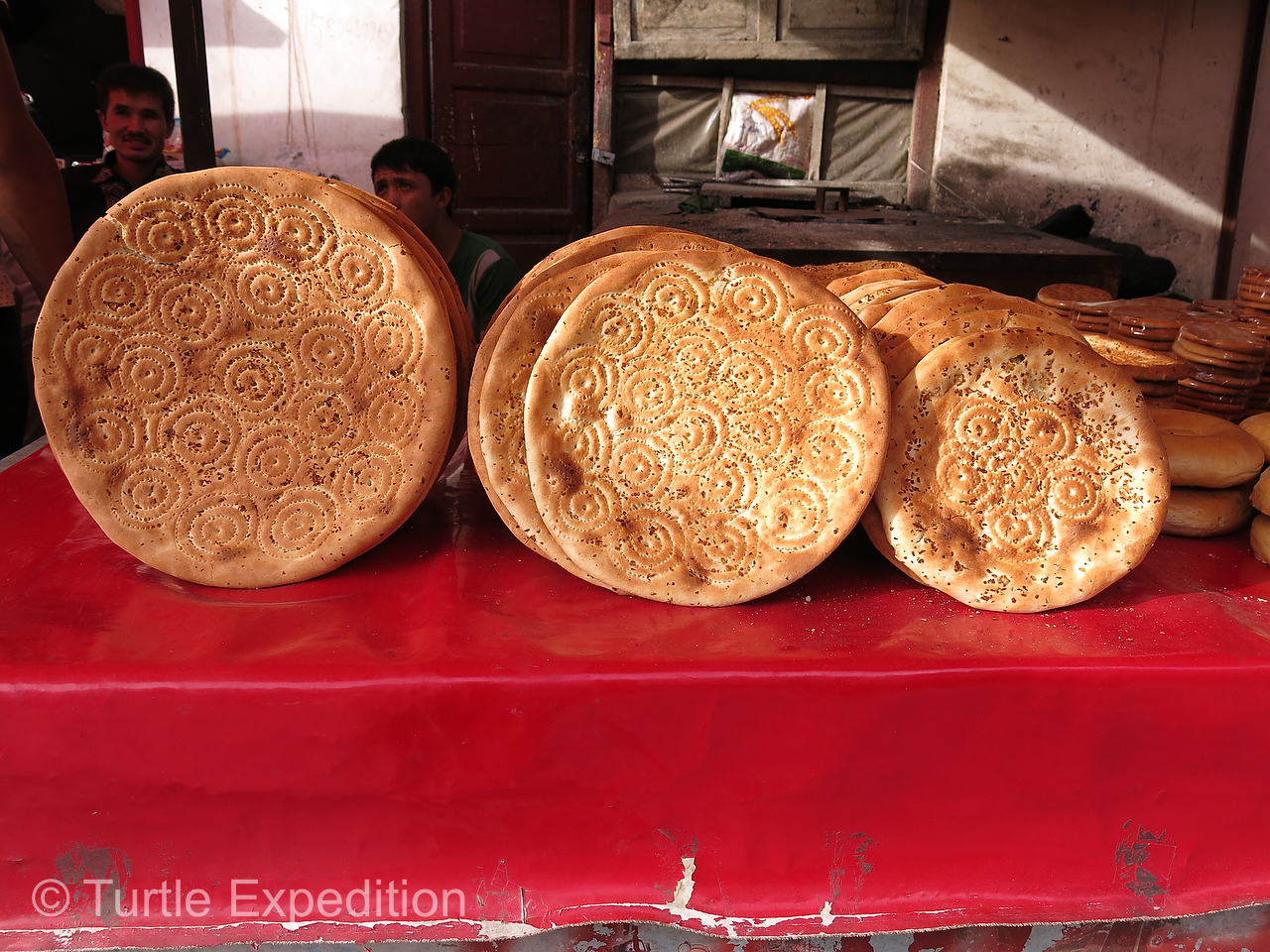
-
- Little stuffed puffs baked in an oven.
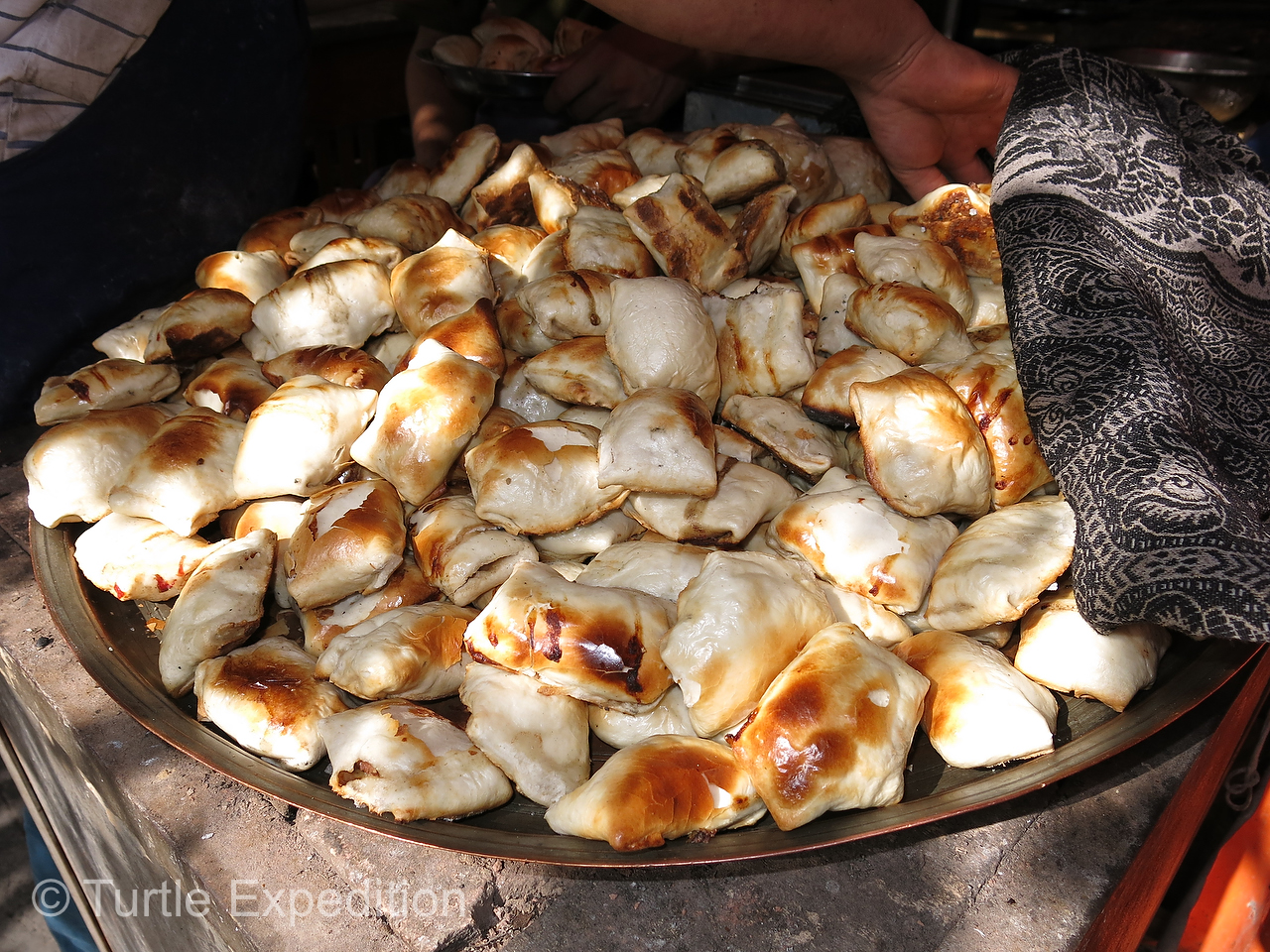
-
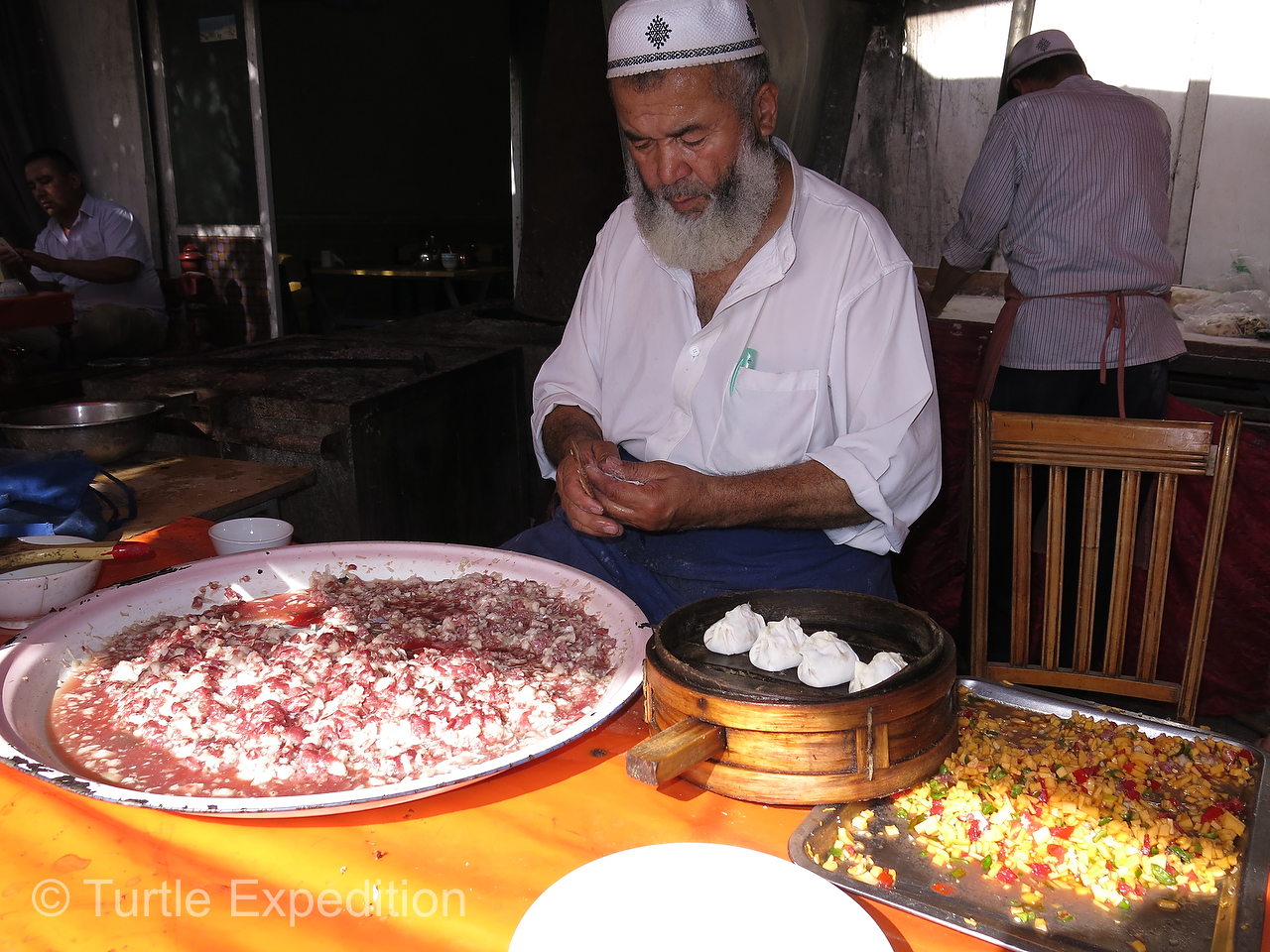
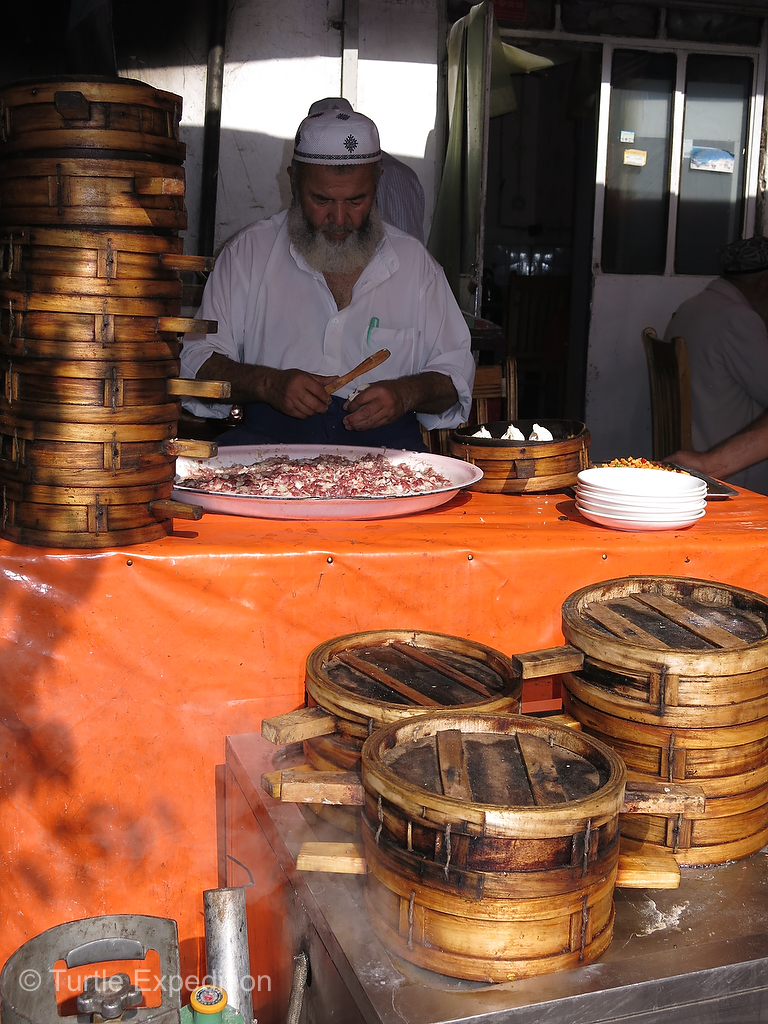
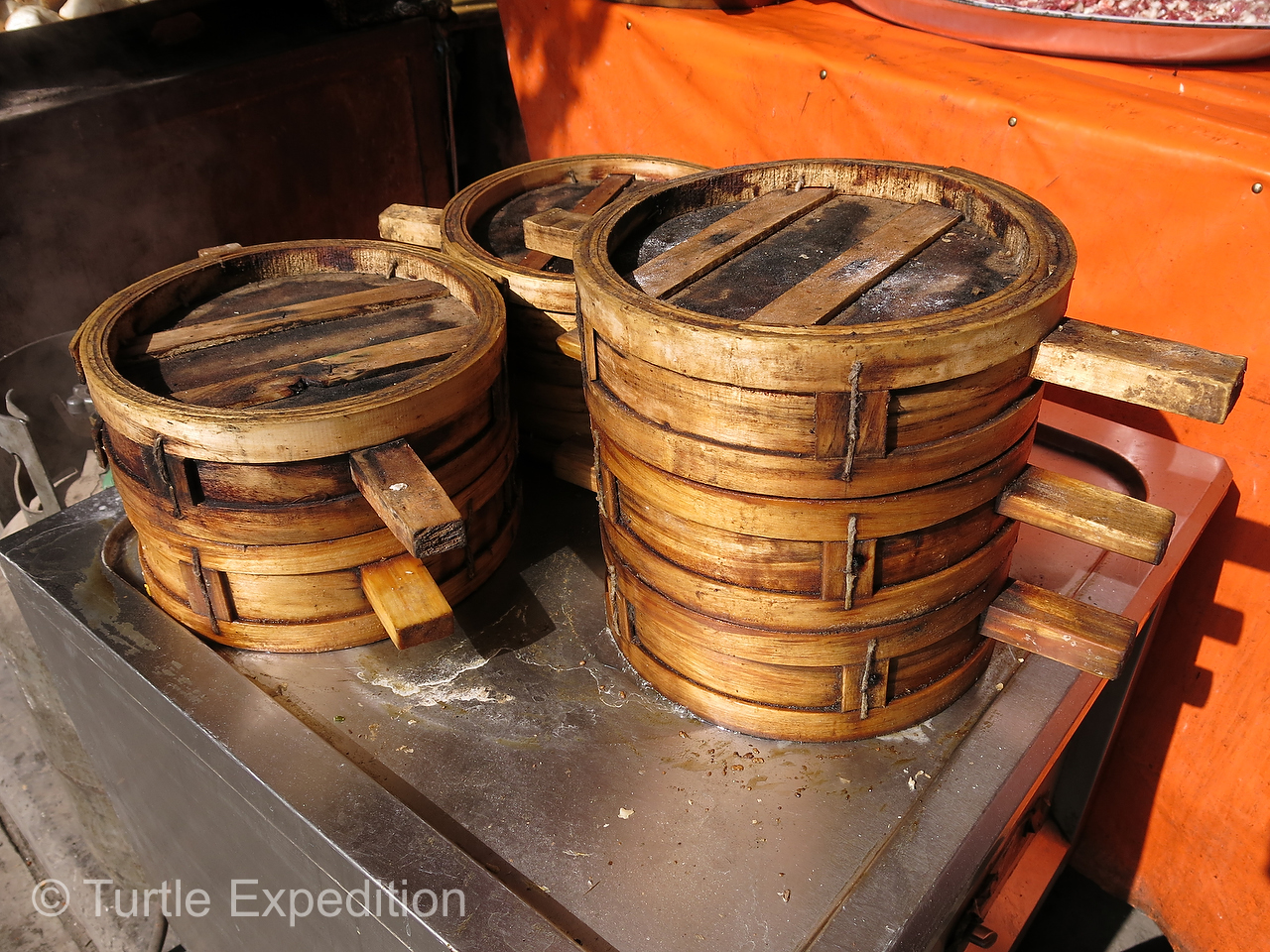
- Small stuffed bread roles that would be steamed in special wooden containers for take-away lunch.
-
- These boxes were full of little stuffed steamed bread.
-
- The Kashgar Copper Market had some amazing workshops where we could watch masterpieces being created.
-
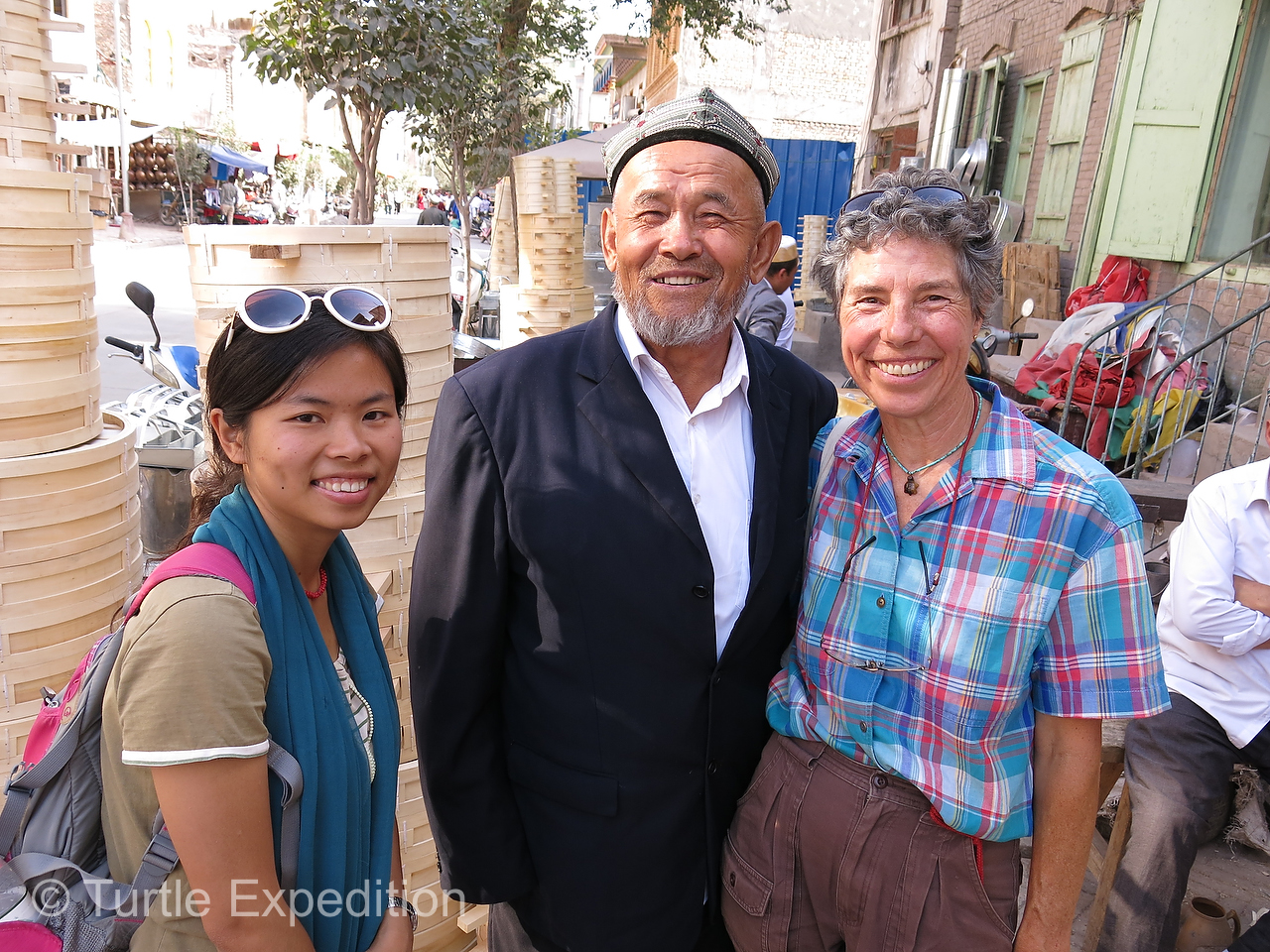
- Two pretty smiles always attract attention. Of course, it helped to have an interpreter to answer all our questions.
-
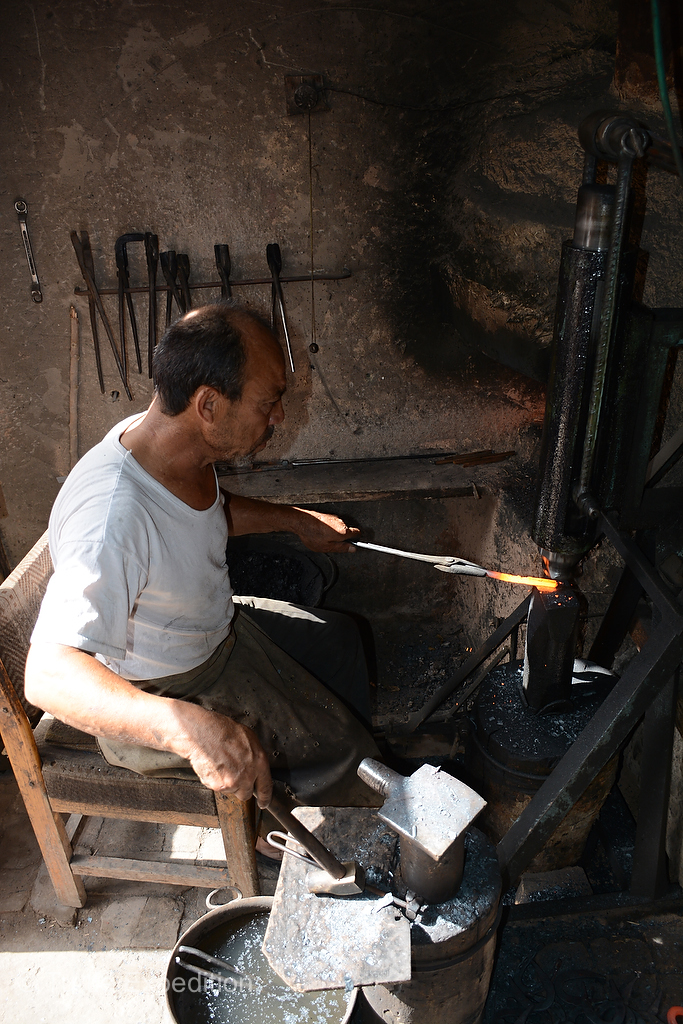
- It was interesting to see real blacksmiths working the metal the old traditional way without machinery.
-
- Beautifully engraved copper and silver masterpieces were true works of art.